


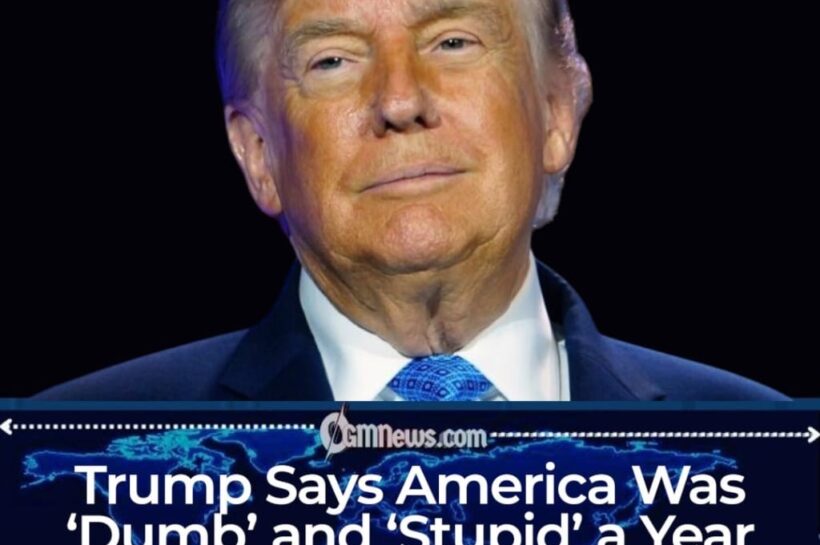

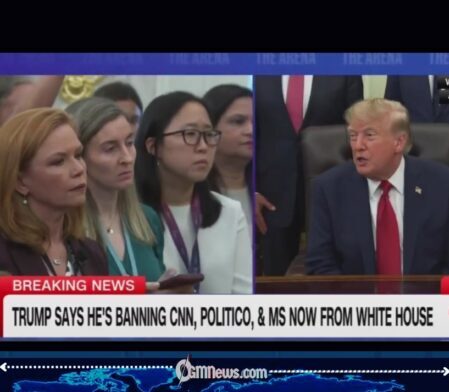
The White House press room had barely finished processing President Donald Trump’s latest restrictions on media access when the president produced another headline of his own. During a September 18 Oval Office question-and-answer session, Trump acknowledged that the United States could be described as “repressive also” while responding to a question about China’s treatment of journalists. The remark came shortly after he announced that CNN, MS NOW and Politico were being barred from the White House, citing what he called “fake news.”
The episode became an unusually crowded political theatre, with questions about press freedom sharing the room with Trump’s comments on childhood vaccines. The result was an Oval Office appearance that provided enough material for reporters, commentators and social-media users to spend the weekend dissecting what exactly the president meant—and whether the joke was supposed to be on the press, China, or everybody watching.
Trump’s “We’re Repressive Also” Remark Raises Eyebrows
Asked about China’s record on journalists, Trump pushed back against the description of China as one of the world’s most repressive countries for journalists. He then said, “I think we’re repressive also,” before distinguishing his criticism of what he calls “fake news” from outright repression. The comment came immediately after the president had announced restrictions against three major media organizations, making the timing particularly difficult to ignore.
The administration’s latest media restrictions are part of a broader and increasingly contentious relationship between Trump and news organizations. On September 18, the president announced that CNN, MS NOW and Politico would be excluded from the White House, while indicating that other outlets could face similar treatment. The affected organizations and press-freedom advocates have challenged the move, while legal questions remain over whether government officials can restrict press access because they object to the content of coverage.
Five Vaccine Visits, One Press Fight and Plenty of Questions
As if the media controversy needed another subplot, Trump also used the Oval Office appearance to discuss his administration’s plans for childhood vaccinations. Reuters reported that the president said certain childhood vaccines should be divided into five separate doses given at six-month intervals, arguing that the approach could reduce autism. He provided no scientific evidence for a vaccine-autism connection, a claim that has repeatedly been rejected by scientific research.
The remarks follow Trump’s August executive order seeking major changes to childhood vaccination recommendations, including separating the measles, mumps and rubella vaccine into individual shots. The latest proposal therefore added another unusual chapter to an already controversial policy debate. Meanwhile, reports of Trump appearing to struggle to remain alert during some recent public appearances have added another layer of commentary around his performances, although visible tiredness or closed eyes should not be treated as proof of any medical condition.
The combination made Friday’s Oval Office session something of a political three-course meal: press restrictions for the opening, vaccine policy for the main course, and an unexpected confession about American “repression” for dessert. Whether Trump’s remarks were intended as irony, criticism of the media or an acknowledgement of the controversy surrounding his administration’s actions, they are certain to keep the debate over press freedom and presidential-media relations alive. OGM News will continue to watch for further developments and report new twists as the story unfolds.
[…] […]