








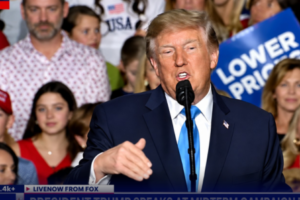

















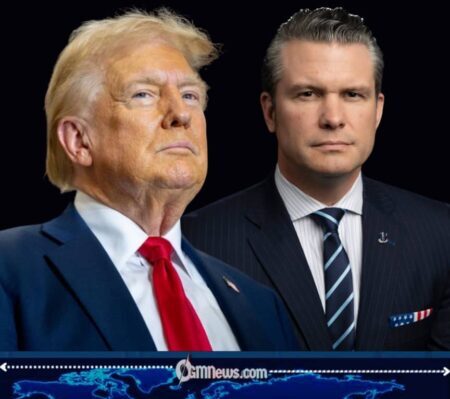
President Donald Trump has reportedly attributed early momentum for U.S. military action against Iran to Defense Secretary Pete Hegseth, stating that “Pete was the first to push for it.”
The claim, widely circulated across digital platforms, has intensified scrutiny over how the United States reached the decision to engage in the ongoing conflict. However, reporting from major international outlets suggests a more complex and collective process behind the escalation.
As the war continues, questions surrounding leadership, responsibility, and internal dynamics within the United States Government are drawing increased attention.
Trump’s Reported Remarks and Their Impact
President Donald Trump’s reported comments have fueled debate about whether divisions exist within the administration regarding the origins of the war. While the statement suggests that Hegseth played a leading role in advocating for military action, it has not been independently confirmed in exact wording by several major news organizations.
Nonetheless, the remarks have resonated widely, reflecting broader public concern about accountability in decisions involving armed conflict. Observers note that such statements, even when unverified, can shape political narratives and influence public perception.
The situation highlights the importance of distinguishing between confirmed reporting and circulating claims, particularly during periods of heightened geopolitical tension.
The Role of Pete Hegseth in War Policy
Defense Secretary Pete Hegseth has emerged as a prominent figure in articulating the administration’s military strategy toward Iran. Public statements attributed to him emphasize the need to counter perceived threats and maintain U.S. strategic interests in the region.
Hegseth has defended the campaign as necessary and aligned with national security priorities. He has also indicated that military operations could continue without a clearly defined timeline, reflecting the uncertain trajectory of the conflict.
While he is seen as a strong advocate for the war effort, available reporting does not conclusively identify him as the sole or initial driver of the decision to engage.
Collective Decision-Making Within the Administration
Coverage from reputable international outlets indicates that the decision to initiate military action against Iran involved multiple stakeholders within the U.S. government.
President Donald Trump ultimately authorized the operation following consultations with senior officials and international allies. Intelligence developments and regional dynamics also played a significant role in shaping the decision.
This broader context suggests that responsibility for the war cannot be attributed to a single individual, but rather reflects a complex interplay of strategic, political, and security considerations.
Influence of Allies and External Factors
International actors have also influenced the trajectory of the conflict. Allies in the Middle East, particularly Israel, have reportedly engaged in discussions with the United States regarding coordinated actions and shared security concerns.
These external pressures, combined with evolving intelligence assessments, contributed to an environment in which military action became increasingly likely.
Analysts emphasize that such decisions are rarely made in isolation, and often reflect a convergence of domestic and international factors.
Public Messaging and the Question of Accountability
Public statements from the Trump administration have generally emphasized unity and shared responsibility, rather than internal disagreement. Officials have framed the conflict as a strategic necessity rather than a choice driven by individual advocacy.
The emergence of claims suggesting internal blame introduces a different narrative, one that raises questions about transparency and accountability in wartime decision-making.
As the conflict continues, the extent to which responsibility is publicly acknowledged or contested may shape both domestic political discourse and international perceptions.
Broader Implications for U.S. Policy
The evolving narrative surrounding the war underscores broader challenges in U.S. foreign policy, particularly in balancing decisive action with clear communication.
For President Donald Trump, the situation represents a critical test of leadership during a period of international instability. The way in which the administration addresses questions about decision-making could have lasting implications.
Ultimately, the debate highlights the complexity of modern warfare decisions, where political, military, and diplomatic considerations intersect in ways that are not always immediately transparent.
Ae888covenuscasino, okay, I'm curious. Gonna check out this site and try to find some amazing...