












U.S. President Donald J. Trump, currently serving a second term, has ignited fresh global concern after posting a highly provocative message on his Truth Social platform, outlining plans for a combined strike operation targeting Iran. In the post, Trump declared that Tuesday would mark what he described as “Power Plant Day and Bridge Day,” suggesting a coordinated military action focused on critical infrastructure.
The message, which included explicit language and direct warnings to Iranian authorities, President Trump called for the immediate reopening of the Strait of Hormuz. The escalation comes amid an already volatile geopolitical climate, with tensions between the United States, Israel, and Iran threatening to destabilize the broader Middle East.
Trump’s Message and Military Posturing
In his social media statement, President Trump issued a stark ultimatum, warning Iran of severe consequences if the Strait remains closed. His remarks suggested imminent military action and underscored a more aggressive posture by the Trump administration in response to the ongoing crisis.
The declaration of a combined strike operation targeting infrastructure such as power plants and bridges signals a potential shift toward direct confrontation. While no official Pentagon briefing has confirmed operational details, analysts interpret the message as part of a broader strategy to pressure Iran into reopening critical maritime routes.
Strategic Importance of the Strait of Hormuz
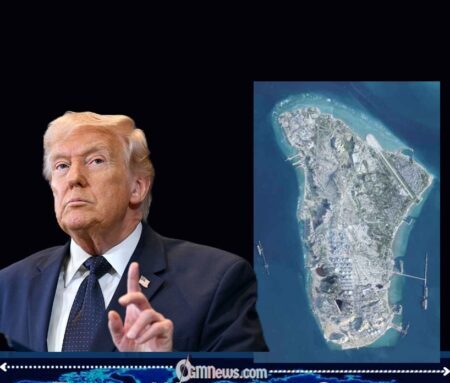
The Strait of Hormuz is one of the most vital chokepoints in global trade, particularly for energy supplies. Approximately 20–30% of the world’s seaborne oil passes through the narrow waterway, making any disruption a matter of international concern.
The closure has already triggered significant volatility in global energy markets, with oil and gas prices surging in response. Economies heavily dependent on imported fuel, including Nigeria, are experiencing sharp increases in costs, placing additional strain on households and industries.
Humanitarian Impact and Global Supply Chain Disruptions
Beyond energy markets, the crisis is severely affecting humanitarian operations worldwide. Aid organizations report that blocked shipping routes have complicated the delivery of food, medicine, and essential supplies to vulnerable populations across multiple regions.
The reliance on alternative, longer routes has significantly increased operational costs, reducing the volume of aid that can be delivered. Experts warn that if hostilities continue, millions of people could face worsening food insecurity and limited access to healthcare services.
Iran’s Response and Escalation Risks
Iranian officials have responded with equally forceful rhetoric. Military commander Ali Abdollahi Aliabadi recently warned that Iran would “open the gates of hell” if attacks by the United States or Israel intensify. He further stated that Iran is prepared to target U.S. and Israeli infrastructure across the region.
Such statements highlight the growing risk of a broader regional conflict. With both sides exchanging threats, diplomatic channels appear increasingly strained, raising fears of miscalculation that could lead to large-scale military confrontation.
Economic Fallout and Future Uncertainty
The ongoing standoff has already sent shockwaves through global markets. Energy analysts caution that current price increases may only represent the initial phase of a prolonged period of volatility, particularly if the Strait remains closed or military action escalates.
For developing economies, including Nigeria, the ripple effects are especially severe. Rising fuel costs translate into higher transportation and food prices, exacerbating inflation and economic hardship. Businesses and governments alike are bracing for continued uncertainty in the weeks ahead.
Calls for De-escalation Amid Mounting Tensions
International observers and diplomatic bodies are urging restraint from all parties involved. The potential consequences of a full-scale conflict in the region—ranging from economic disruption to humanitarian crises—are prompting renewed calls for dialogue.
While President Trump’s message signals a hardline approach, global leaders continue to emphasize the need for negotiation and conflict resolution. The coming days, particularly the anticipated developments surrounding the declared “Power Plant and Bridge Day,” are expected to be critical in determining the trajectory of the crisis

The vibes here are amazing and the winning streaks are real. It feels just like...