




























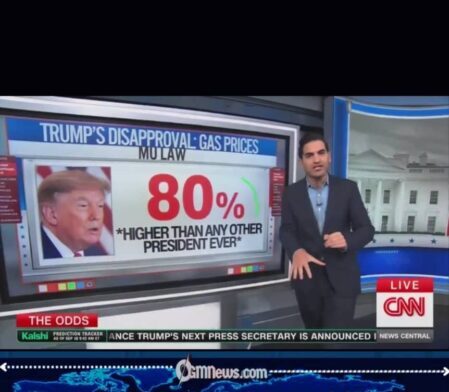
President Donald Trump is facing another uncomfortable number in the polling arena, and this time the trouble appears to be arriving at the petrol pump. A new wave of polling has shown particularly weak public approval of the president’s handling of gas prices, giving fresh ammunition to critics who argue that Americans are judging the economy by what they see on the forecourt rather than by political speeches.
The latest figures provide plenty of room for political satire: Washington can debate strategy, tariffs, Iran and economic policy, but the fuel pump has a remarkably simple voting system — the price displayed at the station either makes people smile or makes them check their bank accounts twice. The supplied OGM News source describes the latest development as a record-breaking moment for presidential disapproval over gas prices. However, available polling supports the broader picture of unusually poor ratings rather than independently confirming that it is the highest such disapproval ever recorded for a president.
Gas Prices Become an Unexpected Political Headache
The Marquette Law School national poll conducted September 2–9 found just 20% approval for Trump’s handling of gas prices, with his approval on inflation and the cost of living even lower at 19%. The same poll put his overall job approval at 37%, illustrating how economic concerns have become an important part of the public assessment of his presidency.
Another September survey from Navigator Research produced an even sharper picture, reporting that 75% disapproved of Trump’s handling of gas prices while only 20% approved. The polling organization described the figures as part of a broader deterioration in Trump’s economic approval, with grocery prices and the cost of living also receiving heavily negative assessments.
November Arrives With More Than Campaign Posters
The political temperature is rising as the November 2026 midterm elections approach, but the polling numbers do not by themselves establish that a particular party will win or that a “blue wave” is inevitable. A September Reuters/Ipsos poll did, however, find Democrats ahead of Republicans by 44% to 37% on the generic congressional ballot, while Trump’s overall approval stood at 35%.
That combination gives the gas-price debate a much larger political stage. With fuel costs affected by wider forces, including the ongoing Iran conflict and disruptions in global energy markets, the administration faces a familiar political problem: voters may hear explanations about international events, but they still experience the economic consequences when they fill their tanks. Recent reporting has linked the prolonged Iran conflict to higher fuel prices and growing economic pressure.
For now, the petrol station may have become an unlikely political commentator, delivering its message one gallon at a time. Whether the current polling numbers translate into electoral results remains for voters to decide in November, but the gas-price issue has clearly become another major point of scrutiny surrounding President Donald Trump. OGM News will continue watching the numbers, the campaign reactions and the increasingly expensive journey from the filling station to the checkout counter.

Casinoabc999? Good Site. The interface is sleek, and there is a lot of stuff to...