














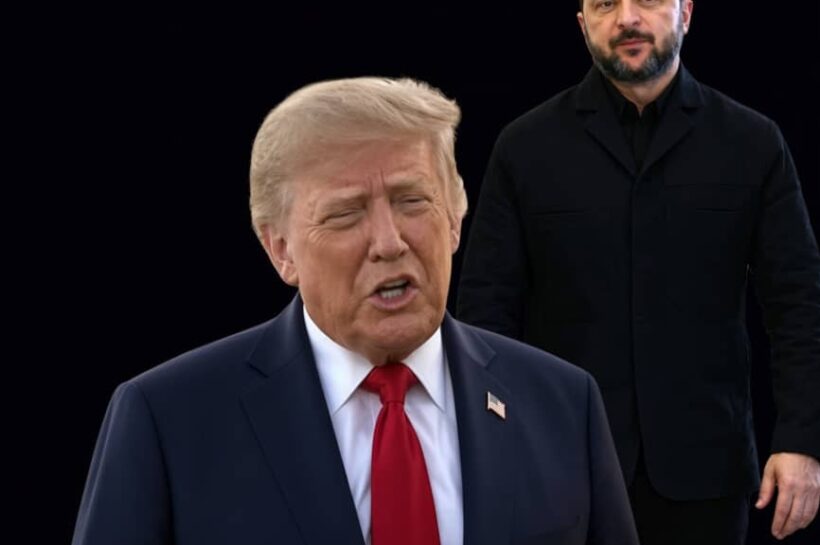


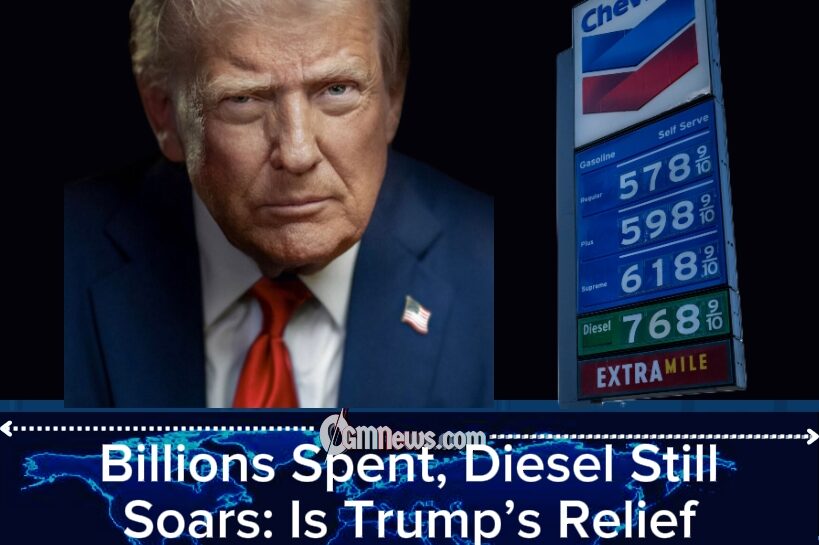








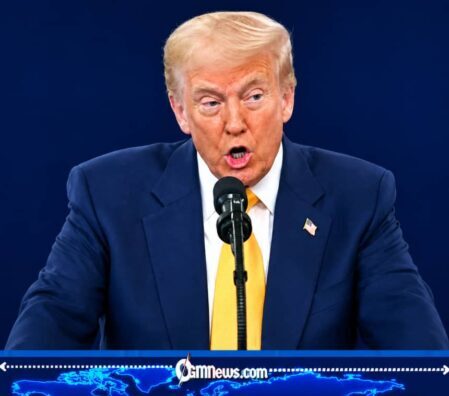
U.S. President Donald Trump has sparked renewed debate over the economic consequences of the conflict in the Middle East after declaring that the United States is making hundreds of billions of dollars while Americans continue to face elevated fuel costs.
Speaking at a rally in Georgia on Saturday, October 24, Trump celebrated the financial gains associated with rising oil prices and anticipated criticism from news organisations over his remarks.
“Our country is making hundreds of billions of dollars because of what’s happening in the Middle East,” Trump said. He then imagined the headlines that might follow his comments, saying journalists would accuse him of discussing financial gains while ordinary Americans were “suffering at the pump.”
Trump nevertheless dismissed the anticipated criticism, declaring: “I don’t give a damn, I’m gonna say it. We’re making a freaking fortune.”
The comments follow similar remarks at an Arizona rally on October 14, when Trump said higher oil prices were generating substantial money for the United States and energy-producing states. His latest statement has renewed questions about who benefits from elevated oil prices, who bears the costs and how the administration intends to address pressure on American households.
Trump Celebrates Oil Revenue as Consumers Face Higher Costs
Trump’s argument centres on America’s position as a major oil producer. When global crude prices rise, oil producers can earn more revenue from selling their output, potentially benefiting energy companies, investors, workers and oil-producing regions.
However, the financial benefits are not distributed equally across the economy. Higher crude prices can also increase the cost of gasoline, diesel, transportation and other goods for consumers and businesses.
In his earlier October remarks, Trump highlighted the economic gains for oil-producing states such as Texas, Oklahoma and North Dakota. He also insisted that he cared about ordinary Americans and said he ultimately wanted oil prices to return to lower levels.
That distinction is central to the controversy surrounding his latest comments. Financial gains for energy producers do not automatically translate into lower household expenses or equal benefits for every American.
For motorists already paying more to fill their tanks, the immediate issue is not simply whether the oil industry is making money. It is whether the broader economic benefits can offset the rising costs affecting their daily lives.
The Middle East Conflict and the Global Oil Market
The conflict involving Iran has contributed to volatility in global energy markets, with concerns about oil supplies and shipping routes helping push prices higher. The Strait of Hormuz, a strategic passage for international energy shipments, has been a particular focus because disruptions there can affect oil supplies well beyond the Middle East.
A report published on October 25 said Brent crude, the international oil benchmark, had climbed to approximately $116 per barrel, its highest level in nearly six months. The report connected the increase to the wider conflict and its implications for energy markets.
The United States’ position as a major oil producer means some domestic producers can benefit from higher prices. But American consumers are not insulated from global market movements simply because the country produces large quantities of crude oil.
Fuel prices are influenced by several factors, including crude oil costs, refining capacity, distribution expenses, market conditions and regional supply. Consequently, rising production revenue and higher prices at American gas stations can occur at the same time.
The administration therefore faces a difficult economic balancing act: it can point to potential gains for domestic energy producers while consumers continue to feel the effects of more expensive fuel.
Trump’s Attack on the Headlines He Expects
Trump’s remarks also reflected his long-running criticism of news organisations, which he frequently accuses of presenting his administration negatively.
Rather than waiting for coverage of his comments, the president anticipated the criticism himself, imagining a headline focused on the contrast between the country’s financial gains and the difficulties facing motorists.
That response has placed the issue of public messaging alongside the underlying economic debate. Trump wants the gains associated with high oil prices to be recognised, while critics may focus on the burden those prices impose on households.
Yet the central question is economic rather than simply about media coverage: Who exactly is making the fortune, and how much of that money reaches ordinary Americans?
Higher oil prices can benefit producers and investors, but households that spend more on fuel may have less money available for food, housing, transportation and other expenses. Businesses facing higher delivery and operating costs may also pass some of those expenses on to consumers.
The impact therefore varies depending on whether a person works in the energy sector, owns energy-related investments, lives in an oil-producing region or primarily experiences the economy through household expenses.
Can Higher Oil Revenue Offset the Cost of Living?
Trump has previously maintained that energy prices should fall when the conflict ends. In his October 14 speech, he said he would not be satisfied until oil prices returned to lower levels, even as he highlighted the financial gains associated with expensive oil.
The difficulty is that the timing and scale of any price decline depend on developments that are not entirely within the administration’s control. Changes in the security situation, oil production, shipping and global demand can all influence the market.
There is also a difference between money generated by private energy companies and revenue collected by the federal government. Trump’s claim that America is making hundreds of billions of dollars should not be interpreted to mean that the same amount is automatically entering the government’s budget or being distributed directly to American households.
For consumers, the practical measure of economic relief will be whether fuel prices and other living expenses become more manageable. For the administration, the challenge is explaining how the financial gains it highlights relate to the everyday economic realities experienced by voters.
Trump’s declaration that America is “making a freaking fortune” from developments in the Middle East has brought the tension between energy-sector gains and household affordability back into focus. The United States’ position as a major oil producer can create financial advantages when prices rise, but those advantages do not eliminate the higher fuel costs confronting motorists.
The key questions are who receives the greatest share of the gains, how long energy prices will remain elevated and whether the administration can reduce the pressure on consumers without undermining its stated objectives in the Middle East.
Follow OGM News for continuing updates on Donald Trump, the Middle East conflict, global oil prices and the economic developments affecting American households.


78betvip, hopped in for a quick look. Eh, the VIP perks are alright, but not...