






















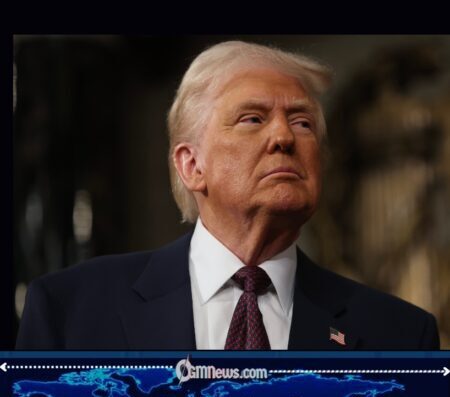
The decision by Donald Trump to authorize a sweeping military campaign against Iran marked a dramatic shift from the message that defined much of his political rise. Having built his movement around opposition to prolonged foreign conflicts and the promise to end what he repeatedly described as America’s “forever wars,” the president now finds himself leading the most extensive U.S. military operation in the Middle East in more than two decades.
The campaign, known as Operation Epic Fury, was approved during a pivotal moment last Friday aboard Air Force One, as the aircraft descended toward Corpus Christi. The order launched a coordinated assault involving U.S. and Israeli forces and signaled a major escalation in regional tensions, raising questions about how a leader who once positioned himself as a reluctant warrior arrived at a decision to pursue regime change in Tehran.
The Decision Aboard Air Force One
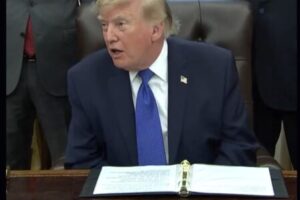
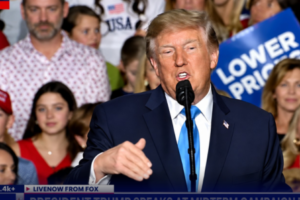
President Trump authorized the start of Operation Epic Fury during a flight to Texas, where he was scheduled to deliver a speech on American energy policy. During the three-hour journey, the president consulted with several political allies, including Republican senators Ted Cruz and John Cornyn, both long-time advocates of a tougher stance toward Iran.
Also aboard the flight was actor Dennis Quaid, who had portrayed Ronald Reagan in a recent biographical film. In a moment captured on video by Cruz, Quaid jokingly compared Trump to Reagan “on steroids,” framing the encounter as a symbolic handoff between two figures admired by many conservative voters.
Despite the theatrical atmosphere surrounding the flight, the decision being made was consequential. At 3:38 p.m., Trump issued the final order authorizing the launch of Operation Epic Fury, setting in motion a coordinated military campaign involving hundreds of aircraft and missiles targeting Iranian leadership compounds and military infrastructure.
From Anti-War Campaigner to Wartime Commander
Trump’s decision represented a notable departure from the political identity he cultivated during his campaigns. The president had long criticized the wars initiated during the administration of George W. Bush, particularly the invasions of Iraq and Afghanistan, arguing they had drained American resources without delivering lasting stability.
Throughout 2025, Trump publicly emphasized diplomacy and frequently highlighted his ambition to reduce global conflict. At various points he even suggested that his administration’s foreign policy achievements could merit consideration for the Nobel Peace Prize.
Yet Trump’s opposition to war had always been selective. While he consistently rejected the idea of deploying large numbers of ground troops abroad, he has shown a willingness to rely on the overwhelming air and technological power of the U.S. military. In 2020, during his first term, he ordered the assassination of Iranian military commander Qassem Suleimani, a strike that nearly triggered open conflict between Washington and Tehran.
Early Military Success and Growing Confidence
A major turning point in Trump’s approach to foreign policy occurred earlier this year during a covert U.S. operation in Venezuela. American special forces successfully abducted Venezuelan leader Nicolás Maduro in a dramatic nighttime raid that ended without American casualties.
Although the mission carried significant risks—including a helicopter pilot who was wounded but managed to keep the aircraft airborne—the operation ultimately succeeded. For Trump and his advisers, the mission appeared to demonstrate the effectiveness of highly targeted military action supported by advanced intelligence capabilities.
The success also provided a powerful narrative for the administration at a time when it faced domestic political pressures. The operation’s dramatic nature drew widespread media attention and showcased the president’s willingness to authorize bold military initiatives when he believed American interests were at stake.
Regional Pressure and Strategic Calculations
Events in the Middle East also played a significant role in the path toward war. Israeli Prime Minister Benjamin Netanyahu met Trump at Mar‑a‑Lago, urging stronger action against Iran’s missile capabilities and regional influence.
At the same time, Saudi Arabia’s crown prince Mohammed bin Salman reportedly engaged in multiple private conversations with the president. While publicly advocating diplomacy, the Saudi leader is said to have privately encouraged a more forceful response to Iran.
These discussions coincided with rising protests inside Iran fueled by economic hardship. Intelligence assessments from U.S. and Israeli agencies suggested the Iranian government could be more vulnerable than previously believed, strengthening arguments among hawkish policymakers that a decisive strike might destabilize the regime.
Diplomatic Efforts and Their Collapse
Even as military planning intensified, the administration pursued a diplomatic track. Negotiations involving U.S. envoy Steve Witkoff and presidential adviser Jared Kushner were held with Iranian representatives in Geneva.
Iran reportedly offered significant concessions during the talks, including the possibility of surrendering its stockpile of highly enriched uranium. However, the United States demanded far broader commitments, including a permanent end to uranium enrichment and strict limits on Iran’s missile program.
The two sides remained far apart. As military forces continued to build up across the region—including the deployment of the aircraft carrier USS Gerald R. Ford—the chances of a negotiated settlement diminished rapidly.
Launching Operation Epic Fury
In the early hours of the operation, a massive joint assault began against Iranian targets. More than 100 U.S. aircraft participated alongside Israeli forces, while naval vessels launched cruise missiles from positions in the region.
Among the primary targets was the compound of Iran’s supreme leader Ali Khamenei in Tehran. According to U.S. officials, dozens of missiles struck the site, killing Khamenei and several senior military figures in what commanders described as a decapitation strike against the Iranian leadership.
The initial wave of attacks hit more than 1,000 targets within the first 24 hours, according to the chairman of the Joint Chiefs of Staff, Dan Caine. The scale of the operation made it one of the largest coordinated military campaigns in recent American history.
A Defining Moment for Trump’s Presidency
In the aftermath of the strikes, President Trump framed the operation as an opportunity for the Iranian population to reshape their country’s political future. He suggested that the weakening of the existing leadership might open the door for a new government to emerge.
At the same time, administration officials have since moderated earlier statements suggesting the explicit goal of regime change. The long-term consequences of the campaign remain uncertain, particularly given Iran’s capacity for retaliation and the broader geopolitical implications.
For Trump, however, the decision marked a clear transformation in his presidency. A leader who once defined himself as the opponent of endless wars now finds himself directing one of the most ambitious military operations undertaken by the United States in the Middle East in decades.
Ae888covenuscasino, okay, I'm curious. Gonna check out this site and try to find some amazing...