

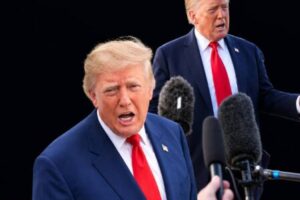
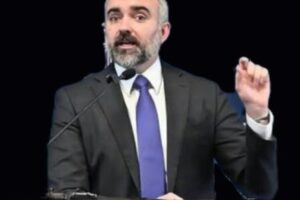

















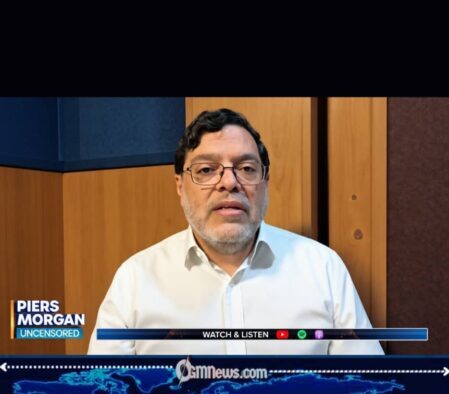
Steve Harness has ignited a fresh debate about political speech after questioning whether criticism of Israeli government policies is too often portrayed as evidence of antisemitism. His remarks, which included a humorous comparison involving criticism of President Trump, quickly attracted attention across social media and political discussion platforms.
The controversy touches on one of the most sensitive issues in modern public discourse: where the line should be drawn between legitimate criticism of a government and prejudice directed toward a religious or ethnic group.
Political Argumentative Speech
Steve Harness argued that criticizing the policies of a government should not automatically be interpreted as hostility toward all people associated with that nation, religion, or identity. His comments reflected concerns shared by some free-speech advocates who believe political debate should allow room for robust criticism of governments and leaders.
At the same time, others argue that discussions involving Israel and Jewish communities require particular care because antisemitism remains a real and persistent problem globally. They contend that while criticism of policy is legitimate, rhetoric can sometimes cross into harmful generalizations.
The exchange highlights how politically charged issues often become battlegrounds over language, intent, and public perception.
Antisemitism
The debate raised by Steve Harness comes amid broader international discussions about antisemitism, free expression, and criticism of governments. Scholars and advocacy groups generally distinguish between criticizing the actions of the Israeli government and expressing hostility toward Jewish people as a whole.
Many organizations maintain that political criticism, like criticism directed at any other government, is protected and legitimate. However, they also note that rhetoric can become antisemitic when it relies on stereotypes, collective blame, or hostility toward Jews because of their identity.
As a result, public figures frequently find themselves navigating a complicated space where political commentary, historical sensitivities, and free-speech concerns intersect.
For now, Steve Harness has succeeded in drawing attention to an issue that continues to divide opinion. Whether viewed as a defense of open debate or a controversial challenge to established narratives, his remarks have reignited discussion about how political criticism should be understood in an increasingly polarized world.

Logging in is a breeze and the site stability is amazing even during peak hours....