


























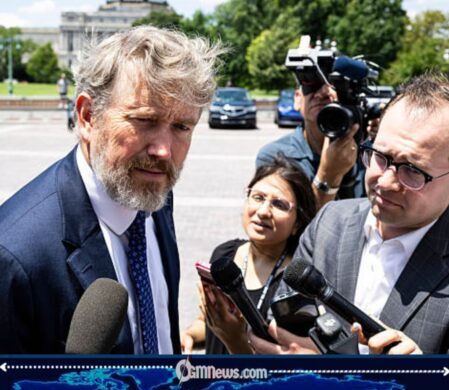
The Rep. Thomas Massie has sparked widespread online debate following a tense televised interview in which he was questioned about alleged personal claims involving Lauren Boebert. The interview, which quickly went viral, escalated into a sharp exchange that has since become a focal point of political media discussions across the United States.
The confrontation began when a Fox reporter raised questions referencing external allegations tied to Rep. Thomas Massie. In response, Rep. Thomas Massie firmly denied the claims, describing them as false, and challenged the direction of the questioning. The exchange intensified when the lawmaker pushed back against what he viewed as a personal and unfounded narrative, shifting the tone of the interview dramatically.
REP. THOMAS MASSIE AND THE RISING TENSION BETWEEN POLITICS AND MEDIA INTERVIEWS
The Rep. Thomas Massie incident highlights the increasingly blurred boundaries between political accountability journalism and personality-driven media coverage. Interviews involving public officials have become more confrontational in recent years, with reporters frequently pressing for responses to controversial or unverified claims.
In this case, Rep. Thomas Massie’s refusal to engage deeply with the allegations was interpreted in different ways by viewers. Supporters argue that he maintained composure and avoided amplifying speculation, while critics suggest that the exchange reflects a broader reluctance among politicians to address uncomfortable questions directly.
Media analysts note that such moments often go viral not for the substance of policy discussion, but for the emotional intensity of brief exchanges. This has contributed to a cycle where short clips gain more traction than full-context interviews.
FOX NEWS INTERVIEW FORMAT AND THE VIRAL POLITICS ERA
The involvement of a reporter from Fox News in the exchange has further fueled discussions about modern political interviewing styles. The Rep. Thomas Massie moment has been widely shared across digital platforms, where fragmented clips often shape public perception more than complete narratives.
Experts say that the rise of social media has transformed interviews into potential viral moments, increasing pressure on both journalists and politicians. In this environment, Rep. Thomas Massie’s sharp response became a focal point for broader debates about media ethics, political transparency, and the role of sensational questions in public discourse.
While opinions remain divided, the incident underscores a growing reality in modern politics: every televised exchange carries the potential to become a national talking point within minutes of airing.


[…] […]