



















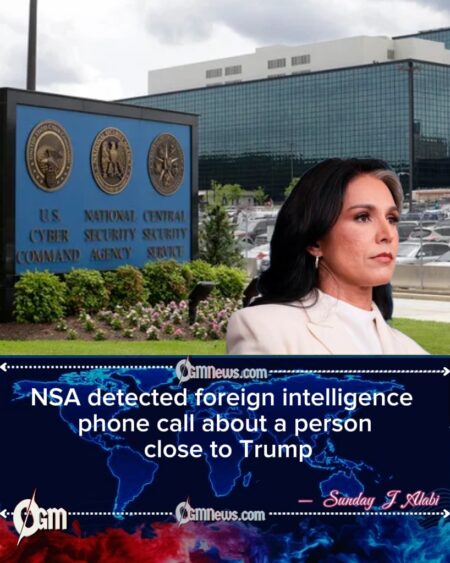
Last spring, the National Security Agency (NSA) detected an unusual and highly sensitive phone call between two individuals linked to foreign intelligence services, in which a person close to President Donald Trump was discussed, according to a whistleblower complaint reviewed by senior officials and described by the whistleblower’s attorney. The intelligence, which triggered internal concern within the U.S. intelligence community, has since become the subject of a growing controversy in Washington, raising questions about intelligence-handling procedures, oversight independence, and the flow of classified information to the White House.
At the centre of the dispute is Director of National Intelligence (DNI) Tulsi Gabbard, who is accused by the whistleblower of blocking the routine distribution of the NSA report and personally delivering a copy to the White House chief of staff. While Gabbard’s office strongly denies any wrongdoing, the episode has drawn scrutiny from lawmakers and watchdog officials, particularly given the prolonged suppression of the intelligence report.
NSA Detection of a Sensitive Foreign Intelligence Call
According to the whistleblower’s attorney, Andrew Bakaj, the NSA intercepted a phone call between two members of foreign intelligence services who discussed an individual described as being close to President Trump, who is currently serving his second term as U.S. president. The interception reportedly occurred as part of routine intelligence operations, with Bakaj stressing that the NSA does not monitor communications without a legitimate national security rationale.
Bakaj initially misspoke publicly about the nature of the call but later clarified that the discussion was between two foreign intelligence figures, not between a foreign agent and a Trump associate directly. Individuals familiar with the matter say the person mentioned in the conversation is not believed to be a U.S. government official or a special government employee.
The content of the call itself remains classified, but its sensitivity was sufficient to warrant notification of senior intelligence leadership, including the office of the DNI.
Allegations Against DNI Tulsi Gabbard
The whistleblower alleges that after the intelligence reached the DNI’s office, Gabbard departed from established protocol. Instead of permitting NSA officials to disseminate the report through standard intelligence channels, she allegedly took a paper copy of the intelligence directly to White House chief of staff Susie Wiles.
Bakaj said that one day after meeting with Wiles, Gabbard instructed the NSA not to publish the intelligence report internally. Instead, she directed that all highly classified details related to the phone call be transmitted exclusively to her office, effectively halting broader circulation within the intelligence community.
These actions, according to the whistleblower, represented an improper intervention in the handling of sensitive intelligence, prompting concerns about whether political considerations influenced national security processes.
Whistleblower Complaint and Inspector General Review
On 17 April, the whistleblower contacted the office of the intelligence community inspector general to report concerns about Gabbard’s actions. A formal complaint was filed on 21 May, outlining allegations that highly classified intelligence had been blocked from routine dispatch.
Acting Inspector General Tamara A. Johnson reviewed the complaint during a 14-day preliminary assessment. In a letter dated 6 June, Johnson concluded that the inspector general’s office could not determine whether the allegations appeared credible, effectively dismissing the complaint at that stage.
The letter informed the whistleblower that they could approach Congress with their concerns, but only after receiving guidance from the DNI’s office due to the highly sensitive nature of the intelligence involved.
Extended Secrecy and Congressional Frustration
For approximately eight months, the NSA intelligence report has remained tightly restricted, despite repeated efforts by the whistleblower to have the information shared with congressional intelligence committees. Lawmakers have expressed frustration over the lack of access, arguing that prolonged secrecy undermines congressional oversight responsibilities.
Some members of Congress have questioned whether the intelligence was withheld to shield politically sensitive information, while others have cautioned against drawing conclusions without full access to the classified material. The impasse has intensified calls for greater transparency regarding how intelligence touching the White House is managed.
The case has become a focal point in broader debates about whistleblower protections and the balance between national security secrecy and democratic accountability.
ODNI Denial and Defense of Gabbard’s Actions
The Office of the Director of National Intelligence has firmly rejected the whistleblower’s claims. In a statement issued to the Guardian, an ODNI press secretary described the allegations as false and politically motivated.
According to the statement, every action taken by DNI Gabbard was within her legal and statutory authority. The ODNI further argued that attempts to manipulate or selectively disclose highly classified information undermine the work of intelligence professionals and national security as a whole.
The statement also noted that both a Biden-era inspector general and a Trump-appointed inspector general had previously found allegations against Gabbard to be baseless, reinforcing the administration’s position that no misconduct occurred.
Concerns Over Watchdog Independence
Beyond the handling of the NSA intelligence itself, lawmakers have raised concerns about the independence of the intelligence community’s watchdog mechanisms. These concerns intensified after Gabbard assigned one of her top advisers, Dennis Kirk, to work within the inspector general’s office on 9 May, just weeks after the whistleblower first contacted the hotline.
Critics argue that such an assignment could create at least the appearance of a conflict of interest, particularly while a sensitive complaint involving the DNI was under review. Supporters of Gabbard counter that the assignment was administrative in nature and did not interfere with the inspector general’s assessment.
As scrutiny continues, the episode highlights enduring tensions between intelligence oversight, executive authority, and the role of whistleblowers in exposing potential irregularities at the highest levels of government.

78betvip, hopped in for a quick look. Eh, the VIP perks are alright, but not...