

























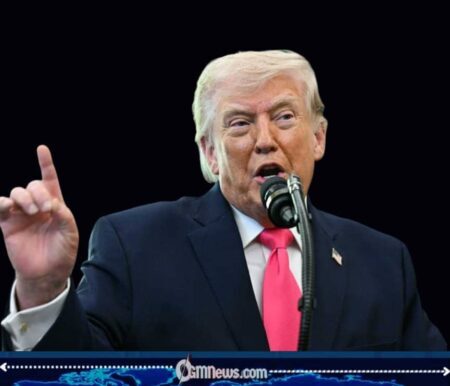
President Donald Trump has raised fresh questions about the future of the transatlantic alliance, stating that the United States may need to reconsider its commitments if allies fail to provide reciprocal support. “We send billions to protect them… but they weren’t there for us,” he said, adding, “Why would we be there for them if they’re not there for us?”
The remarks, delivered amid ongoing geopolitical tensions involving Iran, have sparked widespread debate across diplomatic and security circles. Analysts say the comments reflect growing strain within the alliance and highlight broader disagreements over burden-sharing and military cooperation.
A Renewed Critique of NATO Spending and Support
President Donald Trump has consistently criticized NATO members for what he views as insufficient financial contributions to collective defense. His latest remarks build on longstanding concerns that the United States shoulders a disproportionate share of the alliance’s military costs.
For years, U.S. administrations have urged European allies to meet defense spending targets, particularly the benchmark of allocating 2% of GDP to defense. While some countries have increased their budgets, disparities remain, fueling debates about fairness within the alliance.
Trump’s framing of the issue emphasizes reciprocity, suggesting that financial contributions and military support should be closely aligned with mutual obligations.
The Iran Conflict and Alliance Tensions
The immediate context for the president’s comments lies in the ongoing conflict involving Iran. Several NATO members, including France, Germany, and the United Kingdom, have reportedly declined to participate militarily in the U.S.-aligned effort.
These countries have cited a range of reasons, including legal considerations, lack of prior consultation, and a preference for diplomatic solutions. Their position underscores a key distinction: not all conflicts involving a NATO member automatically trigger collective military action.
This divergence has contributed to tensions within the alliance, with Washington expressing frustration over what it perceives as limited support during a critical moment.
Article 5 and the Question of Mutual Defense
At the heart of the debate is Article 5 of the North Atlantic Treaty Organization, which establishes that an attack on one member is considered an attack on all. Historically, this principle has been a cornerstone of transatlantic security.
However, experts note that Article 5 applies specifically to defensive scenarios, and its invocation depends on the circumstances surrounding a conflict. The current situation involving Iran does not necessarily meet the criteria for automatic collective defense.
Trump’s remarks have nonetheless raised concerns among analysts that questioning the principle even rhetorically could weaken confidence in the alliance and its deterrence capabilities.
European Response and Diplomatic Pushback
European leaders have responded cautiously but firmly, emphasizing their continued commitment to NATO while defending their decisions regarding the Iran situation. Officials in France and Germany have reiterated the importance of diplomacy and multilateral coordination.
They argue that NATO’s strength lies not only in military cooperation but also in political cohesion and shared strategic objectives. Some leaders have also highlighted the need for greater consultation before major military actions are undertaken.
The differing approaches reflect broader strategic debates within Europe about how to balance security commitments with efforts to avoid escalation.
Implications for U.S. Foreign Policy
President Donald Trump’s comments align with a broader “America First” approach to foreign policy, which prioritizes national interests and reassesses long-standing international commitments.
This approach could have significant implications for global security architecture. A shift in U.S. engagement with NATO may prompt European countries to strengthen their own defense capabilities or explore alternative security arrangements.
At the same time, analysts caution that reduced coordination among allies could complicate responses to global crises, particularly in regions where collective action has historically been essential.
Looking Ahead: A Defining Moment for the Alliance
The latest remarks from President Donald Trump have brought renewed attention to the challenges facing NATO in a rapidly changing geopolitical environment. While the alliance remains a central pillar of international security, questions about burden-sharing, strategic priorities, and mutual obligations continue to test its cohesion.
As tensions involving Iran evolve, the responses of both the United States and its allies will play a crucial role in shaping the future of transatlantic relations. Whether these differences lead to reform or further division remains an open question.

[…] […]