



























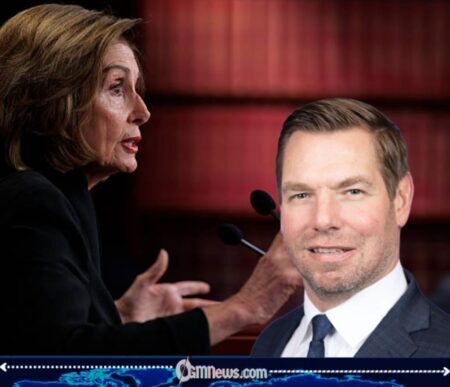
Nancy Pelosi, former Speaker of the U.S. House of Representatives, has stated that members of the Democratic Party had no prior knowledge of the sexual misconduct allegations involving Congressman Eric Swalwell before they became public. Her remarks come in the wake of Swalwell’s resignation, which she described as “the right thing to do” under the circumstances.
Pelosi emphasized that the situation unfolded rapidly and that party leadership was not aware of the allegations until they were reported. Her statement seeks to clarify the party’s position while also addressing concerns about accountability and internal oversight.
Pelosi’s Statement on Party Awareness
In her response to the controversy, Nancy Pelosi firmly rejected suggestions that Democratic leaders had prior knowledge of the allegations against Eric Swalwell. She maintained that the information came to light publicly and was not known internally beforehand.
This assertion is significant as it addresses questions about whether party leadership had failed to act earlier. By denying prior awareness, Pelosi positioned the situation as one that required immediate response rather than delayed accountability.
Support for Swalwell’s Resignation
Nancy Pelosi described Eric Swalwell’s decision to resign as appropriate, noting that it helps to avoid a prolonged and potentially divisive public process. She suggested that stepping down was a responsible move given the seriousness of the allegations.
According to Pelosi, the resignation not only addresses the immediate political implications but also reflects an effort to manage the situation in a way that minimizes further disruption within Congress.
Her comments indicate a preference for swift resolution in cases involving public controversy.
Effort to Shield Family and Limit Public Exposure
A key aspect of Pelosi’s statement was her emphasis on protecting the personal lives of those involved. She noted that Eric Swalwell’s resignation would help shield his family from the intense public scrutiny that typically accompanies such cases.
By highlighting this consideration, Pelosi framed the resignation as not only a political decision but also a personal one. This perspective underscores the broader human impact of public controversies involving elected officials.
Political and Public Reactions
The situation has prompted varied reactions from across the political spectrum. Some lawmakers and commentators have supported Pelosi’s stance, agreeing that the resignation was a necessary step to address the issue promptly.
Others, however, have raised questions about the processes in place for handling allegations of misconduct within political institutions. The case has sparked renewed discussions about transparency, accountability, and the responsibilities of party leadership.
Implications for Congressional Accountability
The controversy surrounding Eric Swalwell has reignited broader debates about how allegations against public officials are managed within Congress. Observers note that such incidents often test institutional frameworks designed to uphold ethical standards.
Pelosi’s comments contribute to this ongoing discussion, particularly regarding the balance between due process, public accountability, and the protection of individuals affected by such situations.
Institutional and Political Considerations
As the situation continues to develop, attention is likely to focus on whether additionala measures will be introduced to strengthen oversight mechanisms within Congress. Lawmakers may revisit existing protocols to ensure they are equipped to handle similar cases in the future.
For now, Nancy Pelosi’s remarks provide insight into the Democratic Party’s position, while Eric Swalwell’s resignation marks a significant moment in the ongoing conversation about ethics and accountability in public office.


[…] […]