


























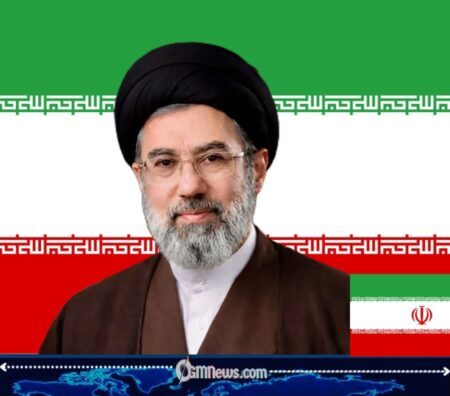
Mojtaba Khamenei, the son of Iran’s late Supreme Leader Ayatollah Ali Khamenei and widely reported successor, is “wounded, isolated, and not responding to messages.” The situation, which remains unverified by Iranian authorities, has intensified global speculation about the stability and functionality of Tehran’s highest level of authority amid ongoing regional tensions.
While official confirmation is still lacking, the alleged condition and absence of public communication from Mojtaba Khamenei have added to uncertainty surrounding Iran’s internal power dynamics during a period of heightened geopolitical pressure.
Mojtaba Khamenei’s Emergence as Supreme Leader
Mojtaba Khamenei’s rise to prominence followed reports that Iran’s long-serving Supreme Leader, Ayatollah Ali Khamenei, was killed during intensified regional conflict earlier this year. In the aftermath, Iranian political and clerical structures reportedly moved to fill the leadership vacuum.
According to multiple reports, Mojtaba Khamenei—long viewed as a powerful behind-the-scenes figure within Iran’s political establishment—was selected through internal mechanisms involving senior clerics and security-aligned institutions. His appointment marked an unprecedented succession within the Islamic Republic, given the historical reluctance to establish hereditary leadership.
Observers note that his background, particularly his close ties to the Islamic Revolutionary Guard Corps (IRGC), positioned him as a central figure in continuity efforts within Iran’s governance system.
Reports of Injury and Restricted Public Visibility
The Washington Post account and related reports suggest that Mojtaba Khamenei may have sustained injuries during recent escalations in the conflict involving Iran, Israel, and the United States. The nature and severity of the alleged injuries remain unclear, and Iranian officials have not publicly confirmed any such incident.
Since his reported emergence as Supreme Leader, Mojtaba Khamenei has not made consistent public appearances, fueling speculation regarding his condition. Some reports describe him as “wounded” and largely absent from visible state functions.
Analysts caution, however, that wartime conditions and restricted media access in Iran make independent verification of such claims extremely difficult.
Claims of Isolation and Communication Breakdown
In addition to injury reports, sources cited in Western media allege that Mojtaba Khamenei has become increasingly isolated from key political and administrative channels. The Washington Post report claims he has not been responsive to messages from certain domestic and international interlocutors.
This alleged communication gap has raised concerns among analysts about decision-making continuity at the highest level of the Iranian state. In a system heavily reliant on centralized authority, any disruption in leadership communication could have significant administrative and security implications.
However, Iranian state institutions have not acknowledged any such breakdown, and official messaging continues to project institutional stability.
Succession Uncertainty and Institutional Response
Iran’s succession process for the position of Supreme Leader is traditionally managed by elite clerical bodies, particularly the Assembly of Experts. The reported transition to Mojtaba Khamenei has therefore drawn scrutiny, especially given the extraordinary circumstances surrounding the leadership change.
Political observers suggest that wartime conditions and reported losses within Iran’s top leadership have complicated the consolidation of authority. Some analysts argue that even if Mojtaba Khamenei holds the title, real operational control may be shared or influenced by military and clerical factions.
Despite speculation, Iranian institutions have not publicly indicated any internal dispute over the legitimacy of the current leadership arrangement.
Regional and International Reactions
The reported developments have drawn attention from global powers closely monitoring Iran’s stability amid broader Middle Eastern tensions. Regional governments and international observers are assessing the potential implications of leadership uncertainty for ongoing conflicts and diplomatic efforts.
Security analysts note that any instability in Iran’s top leadership could affect strategic calculations across the region, particularly in relation to Israel, Gulf states, and U.S. military posture.
So far, however, official responses from major international actors remain cautious, with most governments awaiting clearer verification before making formal assessments.
Implications for Iran’s Internal Stability
Experts emphasize that even unconfirmed reports of leadership injury or isolation can have political consequences in a tightly controlled system like Iran’s. Questions surrounding Mojtaba Khamenei’s visibility and operational capacity may influence perceptions of regime cohesion internally and externally.
At the same time, analysts caution against drawing definitive conclusions in the absence of verified evidence, noting that information in conflict environments is often fragmented and politically sensitive.
For now, the situation remains fluid, with Iran’s leadership structure continuing to operate under conditions of uncertainty and intense international scrutiny.

[…] […]