




























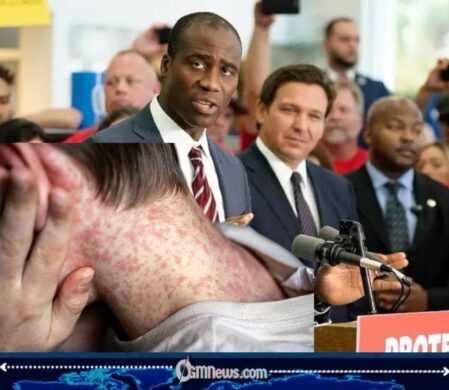
Measles has once again become the centre of public attention after Florida Surgeon General Joseph Ladapo suggested that opposition to abortion may have contributed to rising measles cases because many infections have been linked to a private Catholic university where some students may have declined vaccination. The remarks have reignited fierce discussions about public health, religious beliefs and vaccine confidence, with critics questioning the logic while supporters argue that ethical concerns surrounding vaccine development deserve open discussion. It appears the virus has managed to unite medicine, politics and philosophy in one uncomfortable waiting room.
Measles Apparently Missed the Memo About Staying Out of Politics
The original remarks came during a press conference addressing Florida’s growing measles outbreak. Ladapo noted that many reported infections were connected to Ave Maria University, a Catholic institution, and suggested there could be a relationship between opposition to abortion and reluctance to receive the measles vaccine because of its historical association with fetal cell lines first developed from tissue obtained in the 1960s. He acknowledged he was uncertain whether such a connection actually existed, but his comments immediately sparked widespread debate.
Scientists and medical experts were quick to clarify an important distinction. Modern measles vaccines are not made from ongoing fetal tissue, but the vaccine virus was historically developed using laboratory cell lines originally derived from tissue obtained decades ago. Those laboratory cell lines have continued growing independently for decades, and no new fetal tissue is required to manufacture the vaccine. Even the Vatican has previously stated that Catholics may receive such vaccines in good conscience when necessary to protect public health.
Politics, Religion and Measle Collide in Explosive Debate
The controversy arrives as measles cases across the United States have climbed to levels not seen in decades, with public health officials warning that outbreaks are concentrated largely among unvaccinated communities. Health experts continue to emphasize that the measles, mumps and rubella (MMR) vaccine remains the safest and most effective method of preventing infection, particularly because measles spreads extremely easily through the air.
For critics, the timing of the comments risks distracting from efforts to increase vaccination during an expanding outbreak. Supporters argue that discussing ethical questions surrounding vaccine development should not be dismissed. Meanwhile, the measle virus seems blissfully unconcerned with political affiliations, religious debates or press conferences, continuing to spread wherever immunity falls below recommended levels. If nothing else, the outbreak has demonstrated that viruses rarely pause to check anyone’s voting record before knocking on the door.
Measle as discussed continue, the larger challenge remains preventing further infections while ensuring the public receives accurate medical information. OGM News will continue monitoring developments surrounding the outbreak, public health policy and any official responses as this story evolves.



mjpKyJqtopJmUkjsHEeNp