



























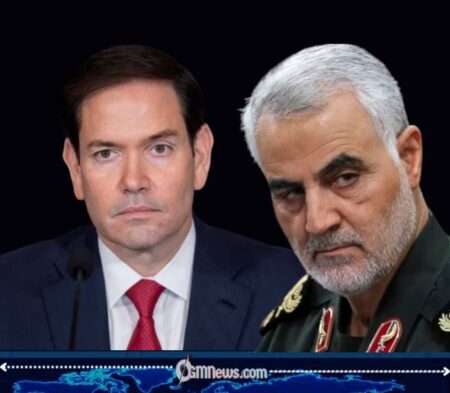
Secretary of State Marco Rubio has announced the arrest and impending deportation of Hamideh Soleimani Afshar, niece of slain Iranian military commander Qasem Soleimani, alongside her daughter, in a move that underscores Washington’s intensifying national security posture. Marco Rubio confirmed that both individuals had their lawful permanent residency revoked prior to their detention by immigration authorities.
According to Marco Rubio, the decision was taken after careful consideration of intelligence and security assessments linking the individuals to activities deemed contrary to U.S. national interests. Marco Rubio emphasized that the United States would not hesitate to act when residency privileges are perceived to conflict with national security priorities.
Rubio Defends Policy Shift Targeting Foreign Nationals
In further remarks, Marco Rubio defended the administration’s broader policy direction, stating that the United States must remain vigilant in identifying individuals with potential ties to adversarial governments. Marco Rubio reiterated that lawful residency is a privilege, not an unconditional right, particularly in cases involving sensitive geopolitical tensions.
Marco Rubio also highlighted that recent actions form part of a wider review of immigration statuses involving individuals connected to foreign regimes considered hostile. His comments reflect a more assertive approach, where immigration enforcement is increasingly integrated into national defense strategy.
Arrest and Detention by Immigration Authorities
Following the directive supported by Marco Rubio, U.S. Immigration and Customs Enforcement (ICE) agents arrested Hamideh Soleimani Afshar and her daughter at their residence in the United States, reportedly in California. The arrests occurred shortly after their green cards were officially revoked, leaving them subject to removal proceedings.
Authorities confirmed that both individuals are currently being held in federal custody pending further legal action. The process will involve immigration court hearings where the basis for deportation will be formally reviewed, ensuring compliance with established legal procedures.
Government Allegations and National Security Grounds
U.S. officials have stated that Hamideh Soleimani Afshar is alleged to have supported narratives aligned with the Iranian government. These allegations include expressions of sympathy toward Tehran’s policies and rhetoric interpreted as hostile to U.S. interests.
The administration, with backing from Marco Rubio, has argued that such actions warrant decisive measures. While details of the evidence have not been fully disclosed publicly, authorities maintain that the decision aligns with legal provisions allowing revocation of residency on national security grounds.
Broader Crackdown on Iranian-Linked Individuals
The case is widely seen as part of a broader policy initiative reinforced by Marco Rubio to scrutinize individuals with alleged ties to Iran. Reports indicate that several Iranian nationals have faced visa cancellations or residency reviews in recent months.
This wider crackdown reflects a strategic effort by the U.S. government to address perceived internal vulnerabilities amid ongoing geopolitical tensions. Analysts suggest that the policy may extend further, potentially affecting more individuals with similar backgrounds or affiliations.
Legal Debate and Human Rights Concerns
Legal experts note that while green card holders have substantial protections under U.S. law, those protections are not absolute. Cases involving national security can lead to revocation of residency and expedited deportation proceedings, as seen in this instance.
However, critics argue that such actions must be balanced with due process and transparency. The involvement of Marco Rubio in the decision has intensified debate over executive authority and the potential implications for civil liberties.
Implications for U.S.–Iran Relations
The arrest and planned deportation are expected to further strain relations between the United States and Iran. The targeting of a relative of Qasem Soleimani carries symbolic weight, given Soleimani’s prominence in Iran and his controversial legacy in U.S. foreign policy.
President Donald Trump, currently serving a second term, has maintained a firm stance on Iran, with policies aimed at countering its regional influence. The latest development aligns with that broader strategy, signaling continued escalation in both diplomatic and domestic arenas.
The arrest and impending deportation of Hamideh Soleimani Afshar and her daughter mark a significant intersection of immigration enforcement and national security policy.
With Marco Rubio playing a central and highly visible role, the case highlights the evolving approach of the U.S. government in addressing perceived threats. As legal proceedings unfold, the broader implications for policy, law, and international relations will remain closely watched.

[…] […]