
























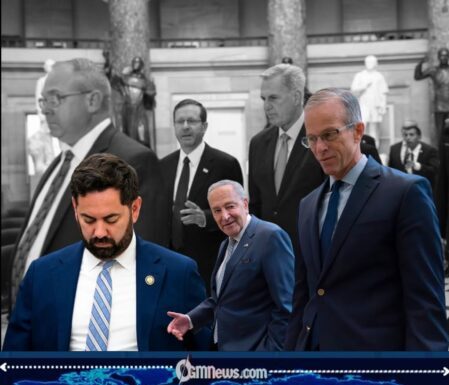
The Lawler-Conley clash moved onto the televised stage Monday night as Republican Rep. Mike Lawler and Democratic challenger Cait Conley confronted each other over Israel aid, household costs, tariffs, energy, immigration and the role of the Trump administration in the economy. The Sept. 28 debate was the first televised general-election debate between the two candidates in New York’s 17th Congressional District, a contest attracting national attention as both parties fight over the House.
Trump’s Tariffs, Israel Aid and Rising Costs Explode Into NY-17 Debate
The Lawler-Conley clash became particularly notable when the candidates discussed U.S. support for Israel. Despite their broader differences, both candidates expressed support for Israel and condemned antisemitism. Lawler has been a prominent congressional supporter of U.S.-Israel ties, while Conley, a former national-security official and Army veteran, had previously said she supported a strong U.S.-Israel relationship while emphasizing oversight and accountability for American assistance.
The debate therefore produced an unusual moment of agreement in a campaign where foreign policy has been used as a major dividing line. Lawler has criticized Democratic debates over conditions on military assistance to Israel, while Conley indicated during the debate that she would have opposed the House measure that Lawler himself voted against. She also expressed reservations about Israeli Prime Minister Benjamin Netanyahu’s leadership, illustrating that support for Israel and criticism of its government are not necessarily the same position.
One Debate, Two Visions: Lawler and Conley Battle Over Israel and America’s Economic Pain
The Lawler-Conley clash was equally intense over the economy, particularly the cost of living. Conley blamed President Donald Trump’s tariffs for contributing to higher construction costs and worsening housing pressures, while Lawler argued that New York’s own taxes and utility costs were major contributors to the financial strain facing residents. He pointed to federal tax reductions enacted under the Republican-controlled Congress and the Trump administration, as well as a bipartisan housing measure enacted in July, as parts of his economic argument.
Energy policy provided another opening for disagreement. Lawler promoted an “all-of-the-above” approach that includes natural gas and renewed nuclear development, while Conley emphasized cleaner energy and criticized the Trump administration’s decision to halt a major offshore wind project near Long Island. Both candidates nevertheless presented themselves as concerned about household expenses, leaving voters to compare their proposed routes to lower costs. In classic campaign fashion, the destination sounded remarkably similar; the argument was over which road would actually get there.
The debate also ventured into artificial-intelligence data centers, immigration enforcement, college costs and Manhattan congestion pricing. Both candidates supported eliminating the congestion charge and capping interest rates on college loans, while sharply disagreeing on other issues. The breadth of the discussion demonstrated why the race extends beyond Israel aid and the economy: voters are being offered competing explanations for problems ranging from housing and energy to technology and immigration.
For OGM News, the Lawler-Conley clash offers an important snapshot of how a closely watched congressional race is being fought: foreign policy, household finances, immigration and technology are colliding on the same campaign stage. With another televised debate scheduled for Oct. 14, the next encounter could provide further evidence of where the candidates draw their sharpest distinctions — and whether the areas of agreement survive another round of political questioning.

[…] […]