




















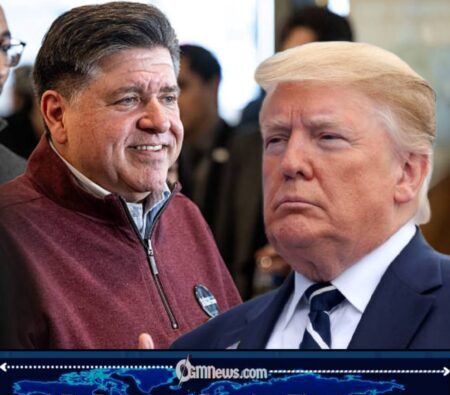
Illinois Governor J.B. Pritzker has ignited a new political debate in the United States after calling for the potential criminal prosecution of officials serving under President Donald Trump, should Democrats regain control of the White House in 2028. His remarks, delivered in an interview with The New York Times, emphasize what he described as a need to “restore the rule of law.”
The governor argued that accountability mechanisms must be applied where laws have been broken, stating that both senior administration officials and federal agents should face scrutiny if evidence supports wrongdoing. His comments have drawn sharp reactions across the political spectrum, highlighting deepening divisions ahead of the next presidential election cycle.
Pritzker’s Position on Legal Accountability
Governor Pritzker’s statements center on the principle that no individual or officeholder should be above the law. He stressed that accountability could take multiple forms, including both criminal and civil proceedings, depending on the nature of alleged violations.
According to Pritzker, the goal is not political retaliation but the enforcement of legal standards. He indicated that restoring public trust in institutions requires transparent investigations and, where appropriate, prosecution of those found to have violated federal laws or constitutional protections.
Proposal of “Project 2029”
In outlining a broader political vision, Pritzker suggested that Democrats consider a structured policy agenda similar in scope to the Heritage Foundation-backed “Project 2025.” He referred to this proposed initiative as “Project 2029.”
Unlike its conservative counterpart, Pritzker described his concept as one focused on strengthening democratic institutions, reinforcing checks and balances, and ensuring adherence to legal norms. The proposal, while still conceptual, signals a potential strategic direction for the Democratic Party as it prepares for future electoral contests.
Reference to Federal Operations and Investigations
The governor’s office has previously called for investigations into a federal operation known as “Operation Midway Blitz,” which reportedly involved the deployment of federal agents in Chicago. Concerns raised include allegations of excessive force and violations of constitutional rights during the operation.
Individuals previously mentioned in connection with calls for investigation include political figures such as Stephen Miller, Tom Homan, and Kristi Noem. Officials have not publicly confirmed any formal charges, and no court rulings have established wrongdoing related to these claims.
Media and Political Reactions
The remarks have generated significant media attention, particularly among conservative outlets such as Fox News, which has questioned the scope and intent of Pritzker’s proposal.
Reports indicate that inquiries have been made to the governor’s office seeking clarification on specific individuals he believes should face prosecution.
Political analysts note that the response reflects broader partisan tensions, with critics arguing that such rhetoric risks politicizing the justice system, while supporters contend that it underscores the importance of accountability in governance.
Broader Implications for the Democratic Platform
Pritzker’s comments may influence internal Democratic Party discussions as leaders begin shaping policy priorities for the 2028 election cycle. His emphasis on accountability could resonate with voters concerned about ethics, transparency, and the rule of law.
However, party strategists also face the challenge of balancing calls for investigation with the need to avoid perceptions of political retribution. The debate is likely to continue as candidates and policymakers refine their positions on governance and oversight.
A Debate Over Law, Politics, and Accountability
Governor Pritzker’s proposal has added a new dimension to the national political conversation, raising questions about how future administrations should address alleged misconduct by previous officeholders. While no legal actions have been initiated based on his remarks, the discussion highlights ongoing concerns about institutional integrity in American governance.
As the United States moves toward another election cycle, the tension between accountability and political neutrality is expected to remain a central issue—shaping both public discourse and party strategy in the years ahead.
[…] […]