

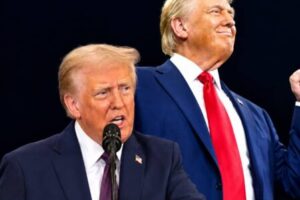
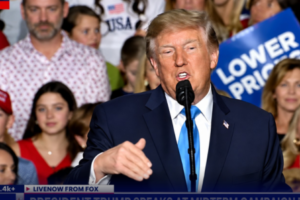














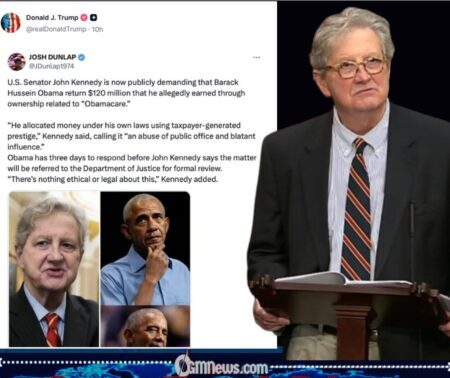
Donald J. Trump triggered another political controversy after sharing a viral screenshot claiming John Kennedy demanded that Barack Obama return $120 million allegedly earned through ownership tied to the Affordable Care Act, commonly called Obamacare. The dramatic accusation spread rapidly across social media before collapsing under scrutiny when Kennedy reportedly denied ever making the statement. The incident has reignited national debate over misinformation, conspiracy-driven politics, and the growing influence of unverified internet content in mainstream political discourse. Critics argue the situation reflects a dangerous trend where viral screenshots now travel faster than facts, while supporters of the president continue defending his aggressive online activity as part of political combat.
Trump Went Fishing for Obama and Accidentally Hooked Fake News Instead
The controversy emerged during one of Trump’s familiar overnight posting sprees on Truth Social, where dozens of reposts targeted political rivals and recycled disputed claims surrounding Obama, elections, and government institutions. Among them was the Kennedy quote accusing Obama of secretly profiting from Obamacare through taxpayer-funded prestige and threatening legal consequences if the money was not returned. However, Kennedy later dismissed the statement entirely, reportedly saying he had no knowledge of the accusation or where it originated.
Political observers noted that the Obamacare accusation fits into a broader pattern of conspiracy-driven content increasingly amplified through social media ecosystems. Fact-checkers linked versions of the claim to online satire-style content farms and misleading clickbait pages designed to provoke outrage and generate engagement. Similar fabricated stories about Obama allegedly receiving royalties from Obamacare circulated online months earlier and were also debunked. Despite repeated corrections, such claims continue resurfacing in different forms, often gaining traction before factual verification catches up.
The controversy also arrives amid renewed scrutiny of Trump’s online behavior during his second term. Recent reports show the president has continued sharing disputed claims involving elections, foreign policy, and political opponents, with critics warning that the blending of presidential authority and internet rumor culture is creating a chaotic information environment. Trump’s defenders argue that social media remains a battlefield where narratives move quickly and imperfectly, but opponents say the repeated sharing of false information damages public trust and intensifies political division across the country.
Obamacare Claim Sparks New Political Firestorm Online
Beyond the fake quote itself, the controversy revived broader public confusion surrounding Obamacare, officially known as the Affordable Care Act. Political analysts pointed out that Obama never personally owned or profited from the healthcare law, despite years of misleading online narratives suggesting otherwise. The nickname “Obamacare” itself originally emerged largely from political critics before eventually becoming publicly embraced by Obama during his presidency. Experts say the repeated recycling of false financial claims tied to the healthcare law demonstrates how emotionally charged political branding can distort public understanding long after the original policy debate has evolved.
The latest misinformation flare-up also highlights how viral political content increasingly bypasses traditional verification systems. Researchers studying online disinformation have repeatedly warned that emotionally charged accusations involving famous political figures often spread more effectively than careful factual reporting. In the current digital climate, a sensational screenshot can travel across millions of timelines before reporters, lawmakers, or fact-checkers even have time to respond. Some analysts warn that America’s political culture is gradually shifting toward a reality where outrage itself becomes evidence for many voters.
At the center of the controversy remains a troubling question for both political parties: how much influence should unverified internet claims have when amplified by the nation’s highest officeholders? For now, the fake Kennedy quote has already completed the modern political cycle — posted, shared, denied, fact-checked, mocked, and permanently absorbed into America’s endless online shouting match. OGM News will continue monitoring developments surrounding the growing collision between presidential politics, social media influence, and the expanding marketplace of digital conspiracy narratives
[…] […]