




























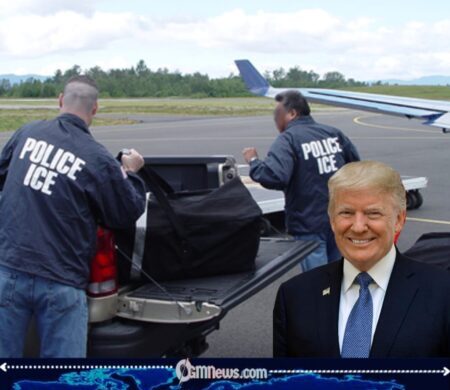
U.S. President Donald Trump has warned that Immigration and Customs Enforcement (ICE) agents could be deployed to airports if congressional Democrats refuse to approve new enforcement measures, as a prolonged government shutdown continues to disrupt aviation security across the country.
The warning underscores growing pressure on federal systems, particularly airport operations, where staffing shortages and operational challenges have intensified. The standoff between the White House and lawmakers remains unresolved, with both sides holding firm on key policy demands.
Donald Trump Faces Escalating Airport Security Challenges
The ongoing partial government shutdown has placed immense strain on the Transportation Security Administration (TSA), which falls under the Department of Homeland Security.
Thousands of TSA officers have continued to work without pay, leading to rising absenteeism and declining morale.
As a result, major airports across the United States are experiencing unusually long security lines, delays, and operational bottlenecks. Industry observers warn that the situation could worsen if the shutdown persists.
In some regions, officials have raised concerns about the possibility of scaling back operations at smaller airports if staffing levels continue to drop.
Donald Trump Proposes ICE as a Temporary Solution
In response to these challenges, Donald Trump has proposed deploying ICE agents to assist with airport security operations. He argues that such a move would help maintain order and ensure continued enforcement during the shutdown.
The proposal represents a significant shift, as ICE agents are traditionally responsible for immigration enforcement rather than airport screening duties handled by TSA personnel. This distinction has sparked debate over the practicality and appropriateness of the plan.
While supporters view the proposal as a pragmatic response to a staffing crisis, critics have raised concerns about training, jurisdiction, and the broader implications of expanding ICE’s role.
Donald Trump at the Center of Political Standoff
The shutdown is rooted in a broader political disagreement between Trump’s administration and congressional Democrats over funding priorities, particularly immigration enforcement policies. Negotiations have stalled, with both sides accusing each other of prolonging the crisis.
Donald Trump has maintained that additional enforcement funding is essential for national security, while opposition lawmakers have called for revisions to proposed measures before granting approval.
The impasse reflects deeper divisions within U.S. politics, particularly on issues of immigration and federal spending.
Donald Trump’s Warning Raises Concerns Among Travelers
Travelers across the United States are already experiencing the direct impact of the shutdown. Extended wait times, flight delays, and heightened uncertainty have become increasingly common at major airports.
Airlines and aviation stakeholders have expressed concern about the long-term effects of the disruption, especially as travel demand continues to rise. Passenger confidence may be affected if the situation remains unresolved.
Additionally, reports of financial hardship among unpaid federal workers, including TSA staff, have drawn public attention to the human cost of the shutdown.
Donald Trump’s Next Steps Remain Uncertain
As the shutdown continues, it remains unclear whether Donald Trump will move forward with the proposed deployment of ICE agents. Legal and operational questions surrounding such a decision have yet to be fully addressed.
Calls for a bipartisan resolution are growing, with stakeholders urging both sides to reach an agreement before disruptions escalate further. The situation highlights the broader consequences of political deadlock on essential national services.
For now, Trump’s warning serves as a clear indication of the administration’s willingness to consider unconventional measures as the crisis deepens.


Ae888covenuscasino, okay, I'm curious. Gonna check out this site and try to find some amazing...