




























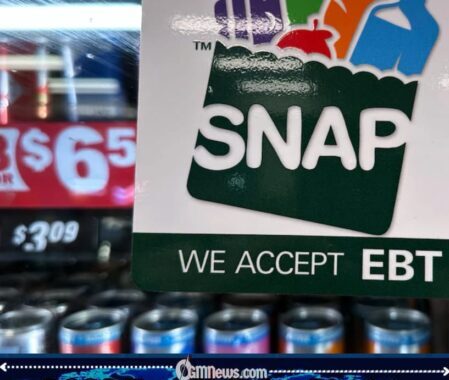
The Democratic Congressional Campaign Committee (DCCC) is taking its campaign against House Republicans who backed cuts to the Supplemental Nutrition Assistance Program (SNAP) from television screens to the streets, with mobile billboards expected to target vulnerable GOP lawmakers in competitive districts. In a move that turns congressional voting records into something motorists can read between traffic lights, the Democrats are accusing the Republicans of voting to put less food on constituents’ tables. The DCCC’s latest offensive comes as both parties prepare for the 2026 midterm elections and as the effects of the Republican-backed 2025 reconciliation law continue to reverberate through the food-assistance system.
The Billboard Has a Message and a Target List
According to the material supplied to OGM News, the DCCC’s mobile billboard operation will focus on Republican lawmakers in swing districts, including Juan Ciscomani of Arizona, Gabe Evans of Colorado, Mike Lawler of New York, Ryan Mackenzie of Pennsylvania and Monica De La Cruz of Texas. The strategy is hardly subtle: instead of allowing lawmakers to leave their SNAP votes buried inside a massive piece of legislation, Democrats intend to put the issue literally in front of voters. Reports on the campaign say the billboards will accuse the targeted Republicans of taking food away from their own constituents.
The political calculation is obvious. A congressional vote normally disappears into the legislative machinery, but a billboard parked beside a supermarket, commuter route or busy intersection has a rather less forgiving memory. Democrats are betting that voters worried about grocery bills will remember who supported the cuts when they eventually enter the voting booth. The DCCC has already expanded its 2026 House battlefield to 58 Republican-held districts, demonstrating that competitive seats are becoming the centre of its strategy for trying to win the chamber.
SNAP Becomes a Midterm Election Menu Item
The argument rests on changes made under the Republican-backed law signed by President Donald J. Trump in July 2025. The legislation introduced new SNAP work requirements and reduced federal spending on food assistance. The Center on Budget and Policy Priorities says USDA data show SNAP participation fell by more than 4.5 million people between the law’s enactment and April 2026, an 11 percent decline, although the reasons for individual changes in participation can vary.
Republicans have defended the legislation on grounds including reducing government spending, strengthening work requirements and addressing what they describe as waste or abuse in federal programmes. Democrats, meanwhile, have seized on the reduction in food assistance as a symbol of what they say is a broader affordability problem. The DCCC has repeatedly used the phrase “taking food off the table” in its political messaging, while recent reporting indicates that more than 770,000 children had lost SNAP benefits following implementation of the new rules in states examined by ProPublica.
For the targeted Republicans, the political joke may be that the billboard does not need to explain the entire 900-page legislative saga. It only needs to ask voters one deceptively simple question: who voted for the meal-ticket changes? In an election season where grocery prices and household finances remain potent political issues, that could turn a technical budget provision into a very personal campaign weapon.
OGM News will continue to monitor the travelling billboard campaign, the response from the targeted Republicans and the wider political battle over SNAP as the 2026 midterm elections approach. If the DCCC succeeds, these mobile signs could become more than roadside advertising—they could become rolling reminders of one of Congress’s most consequential food-assistance votes.


[…] […]