




























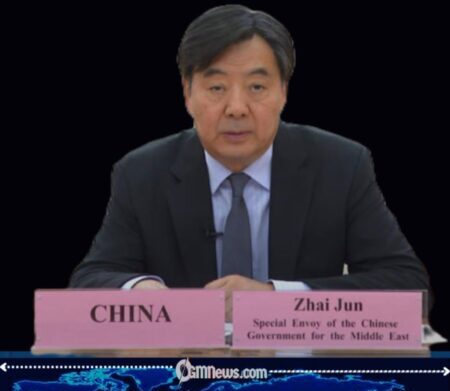
Chinese special envoy Zhai Jun has arrived in Saudi Arabia to lead diplomatic efforts aimed at halting the ongoing war in Iran. The envoy’s visit signals Beijing’s increased involvement in seeking a peaceful resolution to the conflict, which has destabilized the region and affected global markets. Zhai Jun is meeting with regional leaders to encourage dialogue and an immediate cessation of hostilities.
Officials in Beijing emphasized that Zhai Jun’s mission is centered on diplomacy, highlighting China’s commitment to international stability and the protection of civilian lives. The envoy’s visit is part of a broader initiative to coordinate with Gulf Cooperation Council countries and encourage negotiations between all parties involved in the conflict.
Zhai Jun Begins Diplomatic Tour in Riyadh
Upon arrival, Zhai Jun held meetings with Saudi Foreign Minister Prince Faisal bin Farhan and key leaders of the Gulf Cooperation Council. Discussions focused on reducing regional tensions and exploring pathways for an immediate ceasefire in the Iran conflict.
Saudi officials welcomed Zhai Jun’s involvement, noting that ongoing hostilities threaten both regional stability and critical global energy supply routes. The envoy stressed that diplomacy and constructive dialogue are essential to preventing further escalation.
Zhai Jun’s approach emphasizes neutrality and careful mediation, seeking to ensure that all parties’ concerns are acknowledged while encouraging a return to peaceful negotiations.
Call for Immediate Ceasefire
During his meetings, Zhai Jun urged all involved parties to immediately halt military operations. He highlighted the severe humanitarian consequences of continued fighting and stressed the need for urgent negotiations.
Chinese Foreign Minister Wang Yi also reiterated the importance of a ceasefire, emphasizing that military escalation would only deepen instability and prolong suffering in the region. Zhai Jun’s mission is in line with Beijing’s broader goal of promoting dialogue as the primary mechanism for resolving international conflicts.
The envoy’s call for peace has been echoed by regional and international observers, who are closely monitoring the situation and the outcome of these diplomatic efforts.
Regional and Global Concerns
The ongoing Iran conflict has triggered significant geopolitical and economic concerns. Oil prices spiked and stock markets experienced volatility due to fears of disruption to Middle Eastern energy supply routes.
Several Gulf nations have warned that further escalation could destabilize neighboring regions. Zhai intervention is being closely watched as a potential turning point for calming the situation and avoiding a broader regional crisis.
Analysts note that China’s growing diplomatic engagement reflects its interest in ensuring stability in the Gulf, given its reliance on energy imports from the region.
Zhai Jun’s Role as Mediator
Zhai Jun represents China’s effort to position itself as a neutral and constructive mediator in international conflicts. Officials stress that his mission is not to take sides but to facilitate dialogue between all parties involved.
During his visit, Zhai Jun is expected to meet with additional regional leaders to encourage adherence to ceasefire agreements and coordinate steps toward long-term negotiations. His work highlights the role of diplomacy in mitigating conflicts before they escalate further.
Observers emphasize that Zhai approach relies on careful negotiation and credibility, aiming to foster trust among parties that may have longstanding tensions and suspicions.
Humanitarian and Diplomatic Implications
The Iran conflict has placed civilian populations at serious risk, prompting urgent international calls for intervention and humanitarian assistance. Zhai Jun’s focus on dialogue and de-escalation aligns with global efforts to protect civilians and restore regional stability.
The envoy’s engagement also underscores the role of middle-power diplomacy, as China seeks to assert influence in global affairs while maintaining a neutral stance in the Middle East. His work may set a precedent for future Chinese mediation efforts in other conflict zones.


Ae888covenuscasino, okay, I'm curious. Gonna check out this site and try to find some amazing...