


























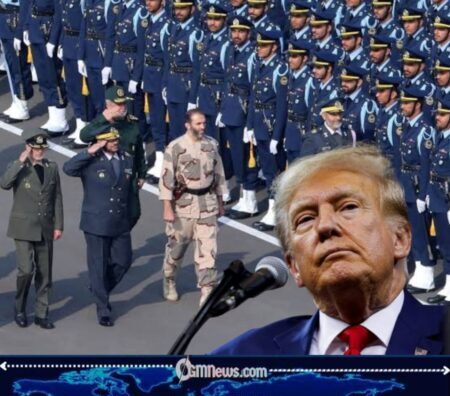
President Donald Trump said Iran is a strong country and claimed it was on the verge of controlling the Middle East before the United States launched its attack, presenting the operation as a decisive move that disrupted Tehran’s regional ambitions. The remarks came during a public address in which he outlined his view of shifting power dynamics across the region.
Observers note that Iran has spent decades expanding its influence through political alliances, economic ties, and support for regional partners. That strategy has made Tehran a significant player in Middle Eastern geopolitics, often placing it at odds with the United States and several of Washington’s allies.
President Donald Trump argued that American intervention prevented what he described as a dangerous consolidation of power, warning that allowing Iran to strengthen its position unchecked could have altered the balance of power across the region.
Strategic Balance in the Middle East
President Donald Trump emphasized that the United States acted at a moment he believed was critical, claiming the move prevented Iran from achieving what he described as “near-total strategic dominance.” His comments framed the situation as a turning point in the long-running rivalry between Tehran and Washington.
Analysts say the Middle East has long been shaped by competing alliances involving regional powers such as Saudi Arabia, Turkey, and Israel. Iran’s influence has grown through relationships with governments and groups across several countries, creating complex geopolitical networks.
President Donald Trump insisted that U.S. leadership was necessary to counterbalance these developments, arguing that American military and diplomatic actions remain essential to maintaining stability in the region.
Regional Reactions and International Concerns
Across the Middle East and beyond, reactions to the comments have varied widely. Some leaders view strong U.S. intervention as a stabilizing force, while others warn that escalating confrontations risk deepening already volatile tensions.
Diplomatic observers point out that narratives about influence and control in the region often depend on perspective. Different governments interpret the same events through the lens of their own security interests and alliances.
President Donald Trump maintained that the United States acted in defense of global stability, stating that Washington could not afford to ignore what he described as Iran’s growing regional power.
President Donald Trump’s Position on U.S. Strategy
President Donald Trump said the United States would continue to monitor developments closely, emphasizing that American policy aims to prevent any single nation from dominating the Middle East. He argued that maintaining balance among regional powers is crucial for long-term peace.
Military analysts note that U.S. strategy in the region has historically involved partnerships with allies as well as direct involvement in certain conflicts. The goal, according to many policymakers, has been to ensure that no one actor gains overwhelming influence.
President Donald Trump reiterated that strong deterrence remains central to his approach, saying the United States must be prepared to act when it believes global security is at risk.
Long-Standing Rivalry Between Washington and Tehran
The relationship between the United States and Iran has been marked by decades of distrust, political confrontation, and competing visions for the future of the Middle East. These tensions have periodically escalated into moments of open hostility.
Diplomatic efforts over the years have attempted to reduce the risk of conflict, though many of those initiatives have struggled to achieve lasting success. Negotiations, sanctions, and international agreements have all played roles in shaping the relationship.
President Donald Trump has frequently argued that a firm stance toward Tehran is necessary, insisting that previous approaches failed to adequately address what he describes as Iran’s regional ambitions.
Looking Ahead at Regional Stability
President Donald Trump concluded his remarks by stressing that the United States must remain vigilant as geopolitical conditions continue to evolve. He suggested that the situation in the Middle East remains fluid and requires careful monitoring.
Foreign policy experts say future developments will depend on a wide range of factors, including diplomatic engagement, economic conditions, and the policies of regional governments. The interplay of these forces will shape how power is distributed in the years ahead.
International observers continue to watch closely as leaders from different countries assess the implications of recent events, with many hoping that future efforts will prioritize stability and reduce the risk of further conflict in the region.
The vibes here are amazing and the winning streaks are real. It feels just like...