

























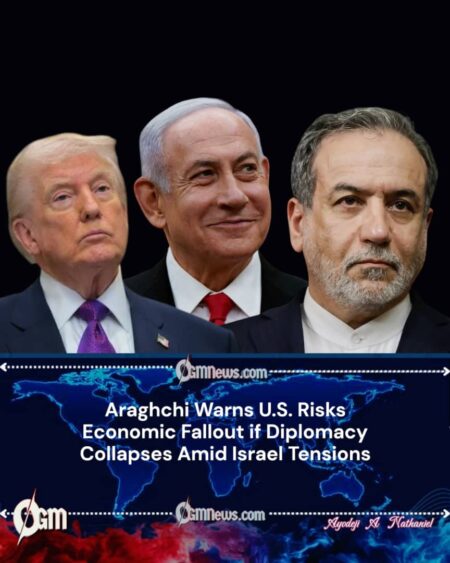
Iran’s Foreign Minister Seyed Abbas Araghchi has issued a pointed warning to the United States, stating that continued alignment with Israeli military actions could undermine diplomacy and potentially damage the U.S. economy. His remarks come at a time of heightened tensions in the Middle East, where fragile negotiations coexist with ongoing military operations.
By suggesting that Washington risks “cratering” its own economy if it allows diplomacy to fail, Seyed Abbas Araghchi framed the situation as a strategic choice. The statement underscores growing concern in Tehran that diplomatic opportunities could be lost amid escalating conflict dynamics involving Israel and the United States.
Diplomacy at a Crossroads
Recent developments indicate that diplomatic channels between Iran and the United States remain open but highly fragile. Seyed Abbas Araghchi has previously signaled conditional willingness to engage in negotiations, provided that military actions against Iran are halted.
These negotiations have been supported by regional intermediaries and involve competing proposals from both sides. However, progress has been uneven, with both parties expressing skepticism about the other’s intentions.
Observers note that the current moment represents a critical juncture, where decisions made by key actors could determine whether diplomacy advances or collapses.
Tensions with Israel and Strategic Divergence
A central element of Seyed Abbas Araghchi’s remarks is the role of Israel, led by Prime Minister Benjamin Netanyahu. Iranian officials argue that ongoing Israeli military operations risk undermining diplomatic efforts and escalating the conflict.
Tehran has repeatedly expressed concern that U.S. support for Israel complicates negotiations. The perception of a unified U.S.–Israel approach to military strategy has contributed to distrust in diplomatic engagements.
This divergence highlights the complexity of the situation, where diplomatic initiatives must coexist with ongoing security concerns and regional rivalries.
Economic Implications and Global Markets
Seyed Abbas Araghchi’s warning about economic consequences reflects broader concerns about the potential impact of conflict on global markets. The Middle East remains a critical region for energy production and transportation, making stability essential for economic continuity.
The Strait of Hormuz, a key route for global oil shipments, is particularly significant. Any disruption in this area could lead to sharp increases in energy prices and broader economic instability.
Analysts suggest that such risks provide a strong incentive for all parties to pursue diplomatic solutions, even amid ongoing tensions.
U.S. Strategy and Policy Considerations
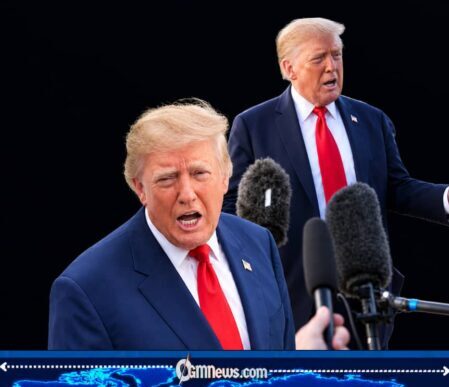
President Donald Trump faces the challenge of balancing multiple priorities, including support for Israel, regional stability, and domestic economic considerations. The administration’s approach has combined strong rhetoric with intermittent signals of openness to negotiations.
This dual strategy has created uncertainty about the long-term direction of U.S. policy. While efforts to de-escalate tensions are evident, continued military engagement in the region complicates diplomatic progress.
The choices made by President Donald Trump in the coming weeks will likely play a decisive role in shaping the trajectory of the conflict.
Iran’s Messaging and Strategic Signaling
The tone of Seyed Abbas Araghchi’s statement reflects a broader strategy of combining deterrence with openness to dialogue. By warning of economic consequences while affirming readiness for escalation, Iran seeks to influence decision-making in Washington.
Such messaging is consistent with diplomatic practices in high-stakes conflicts, where public statements serve both as signals to adversaries and reassurances to domestic audiences.
Experts note that this approach allows Iran to maintain pressure while keeping diplomatic options available.
A Delicate Balance Between Conflict and Diplomacy
The remarks by Seyed Abbas Araghchi highlight the precarious balance between military action and diplomatic engagement in the Middle East. As tensions persist, the risk of escalation remains significant, with potential consequences for regional stability and the global economy.
For President Donald Trump and other international leaders, the challenge lies in navigating these complexities while preserving opportunities for dialogue. The outcome of this delicate balancing act will have far-reaching implications for both regional and global affairs.

The weekly tournaments here keep me coming back because the prize pools are surprisingly generous....