




























The Airstrikes campaign intensified once again after President Donald J. Trump’s administration announced the death of another American service member before launching a fresh wave of military strikes against targets in Iran. The renewed attacks have heightened fears that a conflict once described as containable is steadily evolving into a broader regional confrontation. While Washington insists the strikes are aimed at degrading Iran’s military capabilities and protecting American personnel, every new exchange appears to move both sides another step away from diplomacy—and another step closer to prolonged instability.
Airstrikes Push U.S. and Iran Closer to the Brink of Full-Scale War
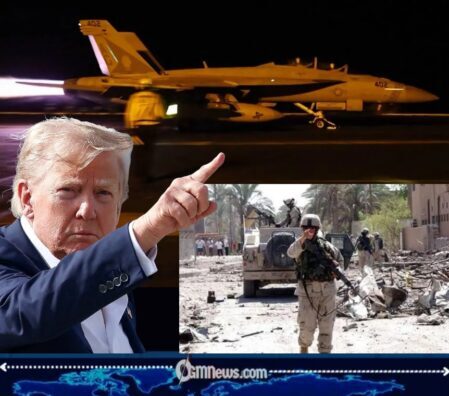
According to information obtained by OGM News from our trusted source, the latest military operation followed the announcement that another U.S. service member had died during the controlled detonation of a downed Iranian drone in Iraq. The Trump administration said the new airstrikes targeted military facilities linked to Iran’s ability to launch drone and missile attacks, describing the operation as a necessary response to repeated attacks on American forces stationed across the region. Military officials also maintained that the strikes were intended to reduce threats against commercial shipping and allied nations near the Strait of Hormuz. (wplg)
Meanwhile, Iran responded with additional missile and drone launches toward regional targets, forcing neighboring countries to activate air-defense systems as concerns spread beyond the immediate battlefield. In classic geopolitical fashion, both sides appear convinced that more explosions will eventually produce more peace—a strategy that history has repeatedly reviewed with less-than-glowing ratings. Behind the satire, however, lies a serious reality: every retaliatory strike increases the possibility of unintended escalation involving more countries throughout the Middle East. (AP News)
Airstrikes: Every New Strike Raises the Price of Peace in the Middle East
The latest developments continue a pattern that has seen both Washington and Tehran steadily expand their military responses following attacks on U.S. personnel. Analysts note that the collapse of previous diplomatic understandings has left military retaliation replacing negotiations as the dominant form of communication. Beyond the battlefield, disruptions around the Strait of Hormuz continue to threaten global energy markets, shipping routes and regional economic stability, adding international consequences to an already volatile security crisis. (AP News)
Diplomatic channels have not completely disappeared, but they are increasingly overshadowed by military developments occurring almost daily. International observers continue urging restraint while monitoring the possibility that further casualties or attacks could widen the conflict beyond its current participants. As both governments signal determination rather than compromise, uncertainty remains the region’s most reliable forecast. OGM News will continue monitoring developments and provide verified updates as this rapidly evolving story unfolds.



mjpKyJqtopJmUkjsHEeNp