
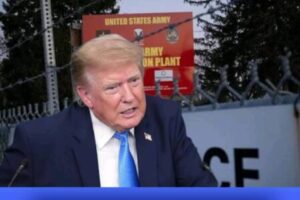


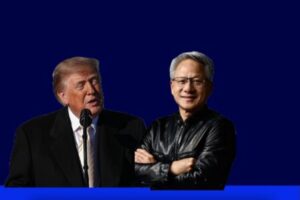



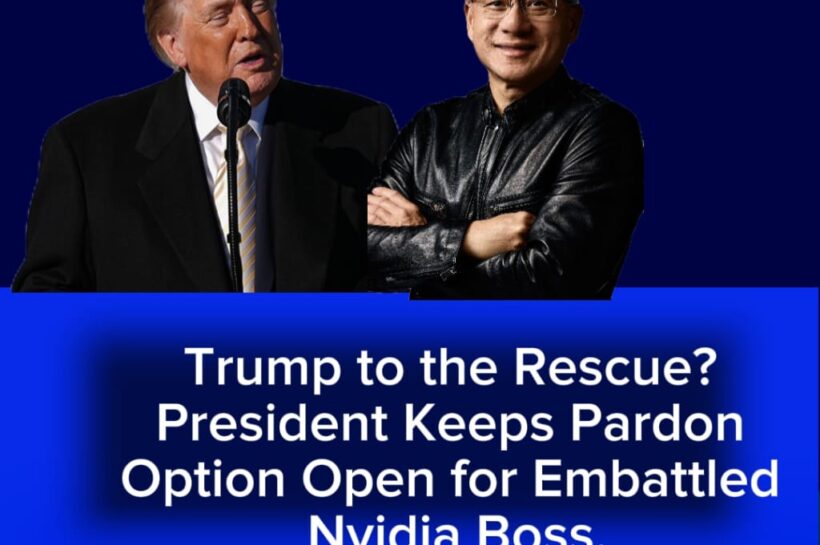
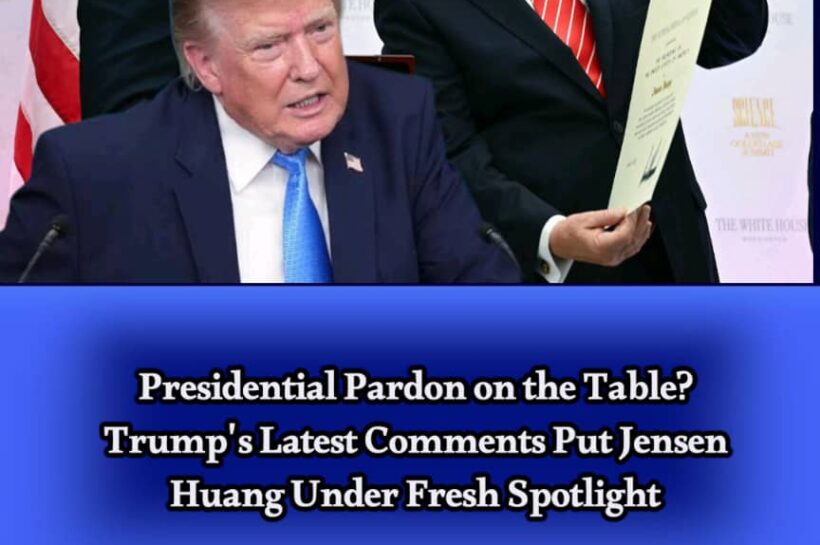
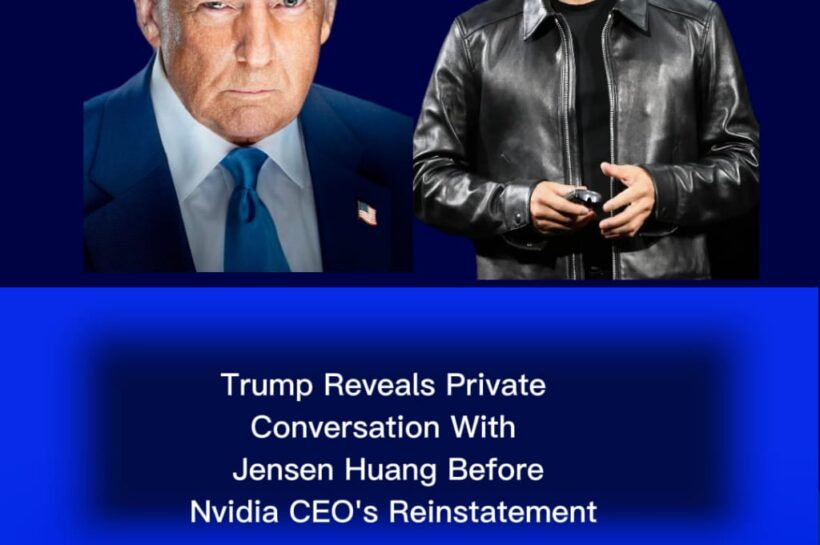


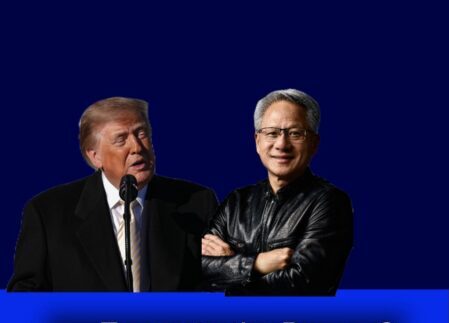
US President Donald J. Trump has suggested that a presidential pardon remains an option for Nvidia chief executive Jensen Huang if circumstances eventually require it, even as allegations surrounding the company’s advanced artificial intelligence chips and their possible diversion to China continue to attract congressional attention. However, Trump insists that such an intervention is unlikely to become necessary, apparently confident that the embattled technology executive has nothing serious to answer for. The controversy has created an uncomfortable political situation in Washington, where national security concerns, corporate interests and presidential influence are increasingly competing for attention.
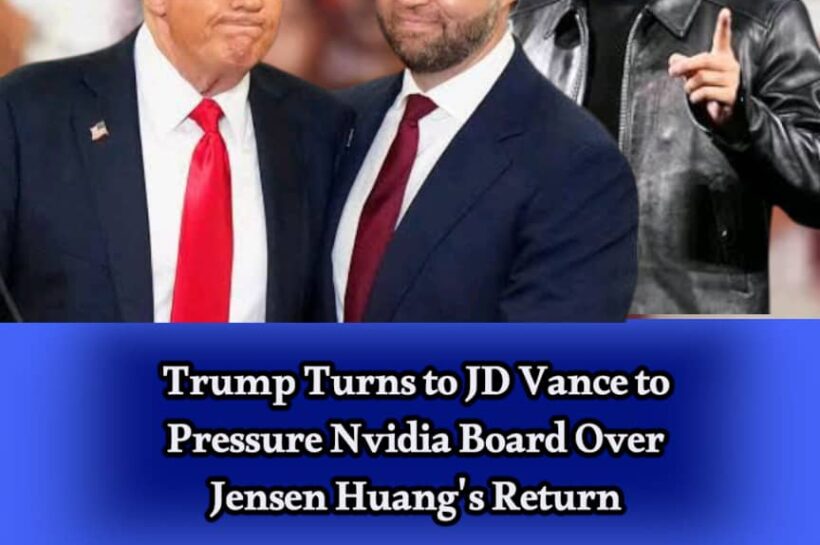
The development comes after Senate Minority Leader Chuck Schumer accused Huang of violating American export-control laws by allegedly facilitating the shipment of extremely advanced chips to China. Schumer compared the alleged conduct to selling rocket engines to the Soviet Union during the Space Race. Meanwhile, Trump has already taken credit for persuading Nvidia’s board to reinstate Huang, raising further questions about the administration’s relationship with the technology giant and its handling of sensitive national security investigations.
TRUMP, THE PARDON AND AN EXECUTIVE WHO HAS FRIENDS IN HIGH PLACES
In an interview with the New York Post, Trump reportedly described a presidential pardon as an option but maintained that he did not expect it to become necessary. His comments come after he publicly supported Huang’s return to Nvidia’s leadership, insisting that America needs the expertise of influential technology executives to maintain its competitive advantage.
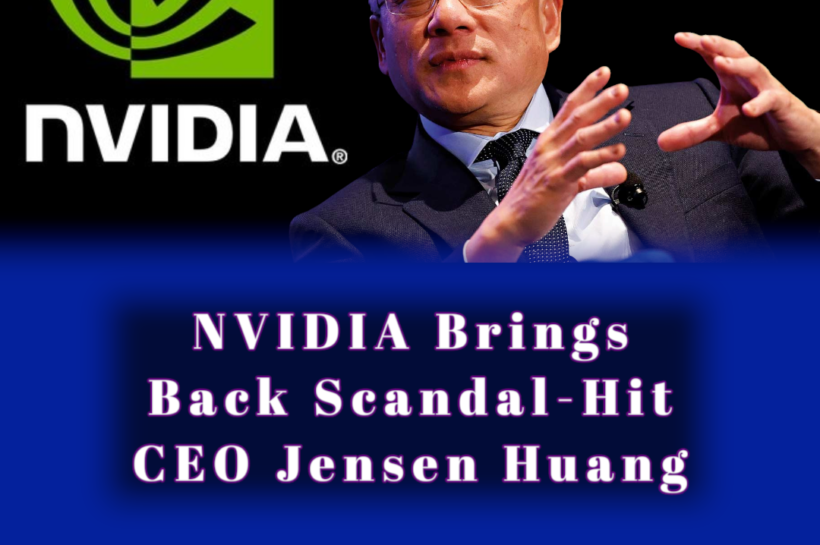
Apparently, the White House has moved beyond simply offering words of encouragement. Nvidia announced on November 23 that its board had unanimously reinstated Huang as president and chief executive officer after receiving input from senior American government officials. The company also said it would continue cooperating with government investigations while establishing additional oversight of national security and export-control compliance.
Trump’s position creates an interesting political spectacle: a president who insists that national security must be protected is simultaneously defending an executive whose professional environment has become the subject of national security questions. For now, Trump appears convinced that Huang deserves support rather than suspicion. But congressional investigators may have a few questions that presidential confidence cannot answer on their behalf.
CHUCK SCHUMER’S WARNING AND THE CHINA CONNECTION
Schumer has intensified the controversy by accusing Huang of allowing extremely advanced American technology to reach China in violation of export-control restrictions. His comparison with the Cold War-era arms race was deliberately dramatic, but the underlying concern is serious: advanced artificial intelligence chips can have significant commercial and military applications, making their international distribution a sensitive national security issue.
The controversy also involves Alice Huang, a technology executive of no relation to Jensen Huang, whose former company, Megaspeed, has faced allegations involving the diversion of advanced Nvidia chips to China. The allegations surrounding her possible connections to Chinese intelligence remain under investigation, and they should not be confused with established findings of criminal wrongdoing by Jensen Huang. The US government has added Megaspeed to its Entity List, while Nvidia says it will cooperate with continuing investigations.
Huang is expected to face congressional questioning, including a public Senate Banking Committee hearing scheduled for December 3, 2026. Trump has also expressed the view that Huang should tell the truth rather than automatically invoke his Fifth Amendment protection against self-incrimination, although the final decision on legal strategy belongs to Huang and his lawyers.
For a president who frequently talks about protecting American interests, the situation presents an unusual balancing act. Washington must protect its technological advantage, enforce export restrictions and maintain corporate competitiveness. Whether those objectives can coexist comfortably with Trump’s personal intervention in Huang’s corporate comeback remains an important question.
The Jensen Huang controversy is becoming much bigger than the return of a powerful technology executive to his former position. It now involves presidential influence, allegations of export-control violations, America’s technological rivalry with China and questions about the independence of national security investigations. Trump’s suggestion that a pardon remains available adds another political dimension to an already complicated story. But before anyone starts celebrating a presidential rescue, Congress still has questions to ask and investigations to pursue. Stay with OGM News for further developments as this extraordinary political and corporate drama unfolds.
I was looking for a reliable spot to unwind and this platform exceeded my expectations....