




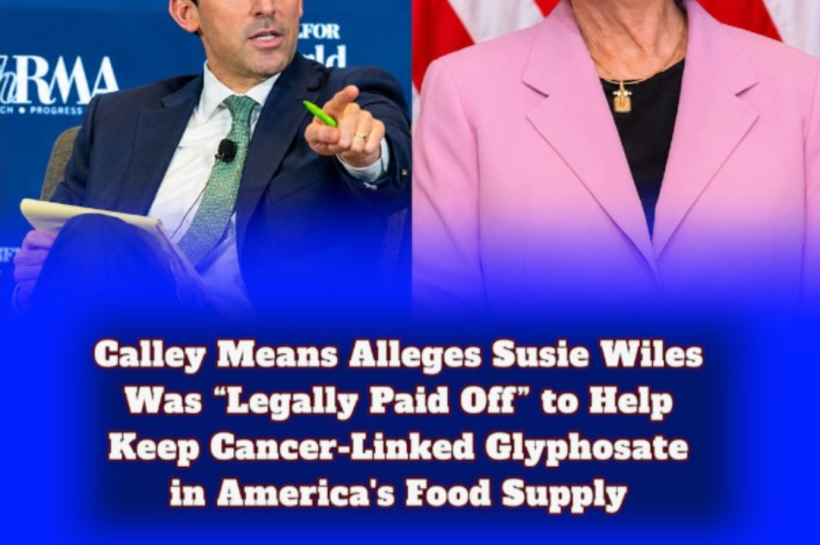





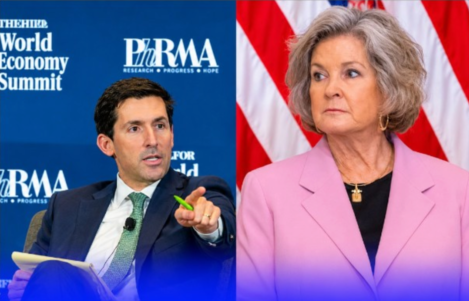
The Susie Wiles Controversy | OGM News — Means delivers explosive allegations about glyphosate, pesticide-industry influence, and the Trump administration’s public-health agenda, raising uncomfortable questions about who really controls Washington’s decisions. Former Trump administration health adviser Calley Means has ignited a political firestorm after appearing on Joe Rogan’s podcast and accusing influential White House officials, including Susie Wiles, of allowing corporate interests to overshadow America’s public-health priorities. At the center of the controversy is glyphosate, the widely used herbicide found in Roundup, and the administration’s controversial support for policies benefiting its manufacturers. Means alleges that political insiders helped advance those policies while sidelining health officials who raised objections. His accusations arrive as Americans confront troubling cancer statistics in agricultural communities, leaving Washington facing a familiar question: Is the government protecting the public, or protecting the companies that profit from products the public is worried about?
From Campaign Connections to Chemical Protection: The Susie Wiles Controversy
The Susie Wiles Controversy | OGM News — During his appearance on The Joe Rogan Experience, Means described what he characterized as a deeply troubling relationship between White House decision-makers and powerful lobbying interests. According to his account, officials associated with Wiles pushed forward an executive order treating the domestic supply of glyphosate-based herbicides as a national-security priority. Means said he objected to the proposal, only to be informed that the decision was final and that Health Secretary Robert F. Kennedy Jr. should not challenge it. He also alleged that administration officials supported a legal position favorable to pesticide manufacturers in litigation over cancer-related warning labels. These are serious allegations about the policymaking process, although they do not independently establish that Wiles received an improper personal payment or committed a crime.
The controversy also raises questions about Susie Wiles‘ previous connections to the lobbying world and the influence of firms such as Ballard Partners. Means suggested that political relationships helped shape decisions affecting pesticide manufacturers, including Bayer, which acquired Monsanto in 2018. But there is an important distinction between lobbying influence and proven corruption. No evidence reviewed for this report establishes that Wiles personally accepted an illegal payment in exchange for glyphosate policy. Still, the political optics are extraordinary: an administration promising to Make America Healthy Again finds itself defending a policy that critics believe could make chemical manufacturers considerably more comfortable. Apparently, in Washington, even a weed killer can acquire the political protection usually reserved for national treasures.
Did Susie Wiles Help Protect Weed-Killer Companies While Americans Faced Cancer Risks?
The Susie Wiles Controversy | OGM News — The health concerns underlying this controversy deserve serious examination. A March 2026 analysis by Food & Water Watch found that 60 percent of the highest-glyphosate-use counties with available data reported non-Hodgkin lymphoma rates above the national average. In Iowa, that figure reached 82 percent, with half of the high-use counties classified as lymphoma hot spots. Iowa also has one of the nation’s highest overall cancer incidence rates. However, these geographic associations do not prove that glyphosate caused the cancers, and claims that Midwestern states have the highest cancer rates in world history are not substantiated by the evidence reviewed. The scientific debate over glyphosate’s carcinogenic risks remains consequential, particularly for agricultural workers and communities experiencing substantial pesticide exposure.
Glyphosate’s importance to American agriculture is undeniable. Herbicide-tolerant genetically engineered varieties account for more than 90 percent of American corn and soybean acreage, although that figure should not be confused with proof that the same percentage of harvested crops is directly sprayed with glyphosate. The chemical’s widespread use makes questions about exposure, safety, regulation, and potential alternatives matters of national importance. And here comes the uncomfortable irony: Washington has spent years telling Americans to eat healthier, while some of its most consequential agricultural decisions remain entangled in disputes over chemical safety and corporate liability. It is almost as though the government has two departments: one reminding citizens to read food labels and another helping manufacturers argue about what those labels should say.
Cancer Concerns, Corporate Profits, and White House Secrets: What Did Susie Wiles Really Know?
The Susie Wiles Controversy | OGM News — The legal dimension of the controversy is particularly significant. President Donald J. Trump’s administration issued an executive order supporting the supply of glyphosate-based herbicides on national-security grounds, while the Justice Department took a position favorable to manufacturers in a major Supreme Court liability dispute. Means alleges that key decisions advanced without meaningful consultation with senior health officials and that the president was unaware of certain legal maneuvers. The central issue is whether federal pesticide-labeling requirements should preempt some state-law claims brought by people alleging injuries from Roundup. Such a legal outcome could restrict particular avenues for compensation, but it should not be confused with a blanket exemption from every form of legal liability.
Following his podcast appearance, Means also publicly accused Susie Wiles and James Blair of contacting him repeatedly, requesting that they stop calling and texting. In the statement supplied to OGM News, he challenged anyone disputing his account to identify factual errors in writing and said he would correct substantiated mistakes. He also invited legal scrutiny of his allegations about Ballard Partners and Continental, suggesting that discovery could expose how influence operated inside the administration. The White House, meanwhile, has defended its record on health policy, pointing to dietary-guideline changes, efforts to eliminate certain artificial food ingredients, and support for regenerative agriculture. Wiles’ departure from the chief-of-staff position adds another political dimension, but her departure is not proof of the accusations against her. The larger question remains whether the administration’s health promises can withstand scrutiny of the decisions made behind closed doors.
The Susie Wiles Controversy: Who Is Washington Really Protecting?
The controversy surrounding Calley Means, Susie Wiles, and glyphosate goes beyond a single pesticide or political personality. It raises fundamental questions about government transparency, lobbying influence, scientific accountability, and the legal rights of Americans who believe they have been harmed by commercial products. Means has made serious allegations, but establishing corruption or criminal responsibility requires evidence, investigation, and due process—not merely a compelling podcast appearance. For President Trump’s administration, the challenge is explaining why policies that appear favorable to chemical manufacturers advanced amid a movement promising healthier Americans. And for families across America’s agricultural heartland, the stakes are far greater than another Washington political feud. OGM News will continue following developments, examining the evidence, and reporting on whether those entrusted with protecting public health are answering to the American people—or to the interests with the most expensive lobbyists.
I have been exploring different online lounges for a long time and this platform stands...