


















The United States has carried out another military strike against Iran, targeting Qeshm Island near the strategically important Strait of Hormuz, according to U.S. officials cited by The Wall Street Journal and subsequently reported by Reuters.
The November 2 operation reportedly forms part of a series of limited, largely undisclosed American attacks against Iranian targets in recent weeks. U.S. officials have described the operations as defensive measures intended to prevent Iran from threatening American assets and commercial shipping through the Strait of Hormuz.
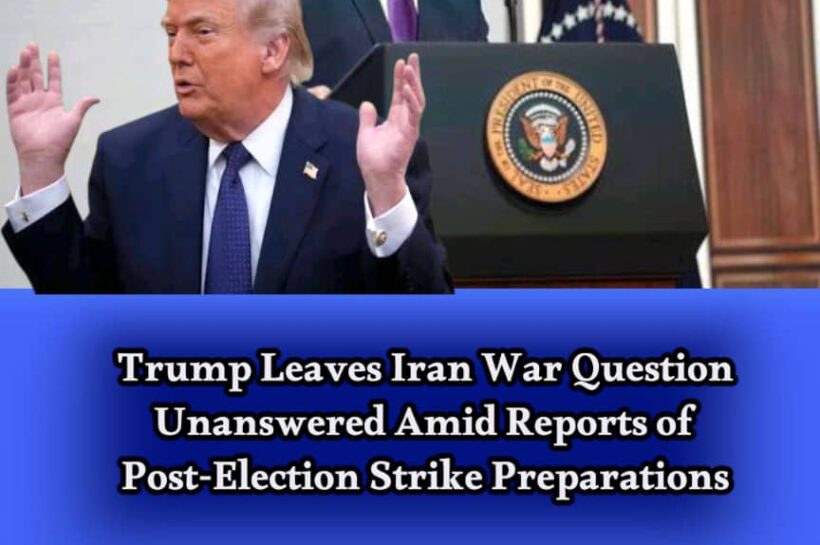
The latest development comes as President Donald Trump publicly maintains that he is not rushing to decide whether to resume broader military action against Tehran. In a telephone interview with Axios on Monday, Trump suggested that the United States had already inflicted significant financial damage on Iran and believed the Iranian population was becoming increasingly frustrated with the situation.
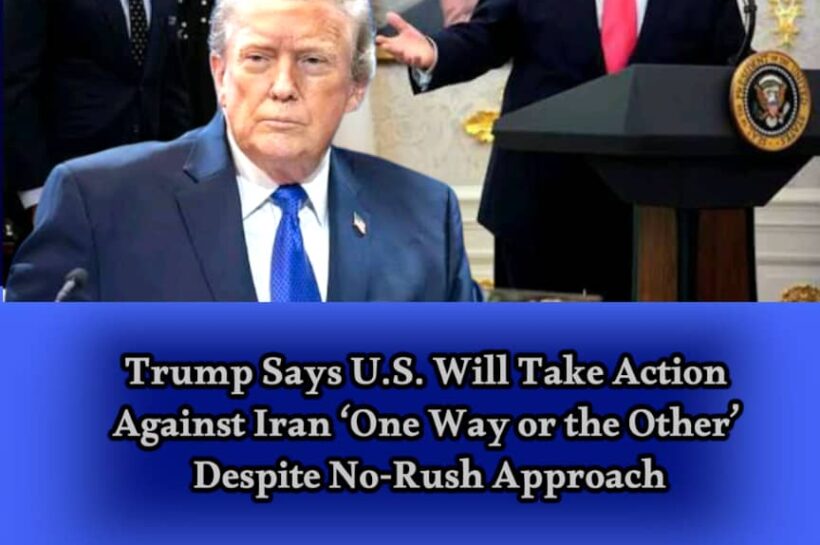
“One way or the other, we will do something, but there is no rush,” Trump told Axios.
He added that the United States had “crippled them financially,” claiming that Iran had no money, no gasoline and that its people were becoming tired of the situation.
The reported Qeshm Island strike, however, demonstrates that limited military operations have continued even while Washington discusses the possibility of diplomacy.
Qeshm Island Targeted in Latest American Operation
Qeshm Island is strategically positioned near the Strait of Hormuz, a critical international shipping corridor through which substantial volumes of global oil and gas supplies normally pass.
According to Reuters, a U.S. official confirmed that American forces carried out strikes on the island. Another official described the operation as a defensive measure against Iranian forces using surface-to-air missiles against American assets.
CNN also reported that U.S. officials characterized the operation as limited and defensive, with one official saying the attack followed Iranian fire directed at a U.S. aircraft.
Iranian state media outlet IRNA had earlier reported several explosions on the island.
The Wall Street Journal reported that the operation was part of a broader series of smaller American attacks conducted in recent weeks. According to the report, Washington has deliberately avoided publicly announcing some of these operations to prevent them from being interpreted as the beginning of a renewed large-scale military campaign.
The Pentagon referred questions about the reported operation to U.S. Central Command, which had not immediately issued a public response.
Trump Says Iran Has Been Financially Crippled
While the military operation was taking place, Trump was telling Axios that he was in no hurry to make a decision about renewed military action.
The president argued that American pressure had severely weakened Iran’s financial position and suggested that the country’s population was increasingly dissatisfied with the consequences of the conflict.
His comments indicate that the administration continues to view economic pressure as an important part of its strategy against Tehran.
However, Trump’s assessment of Iran’s financial condition and public sentiment represents his own characterization. The interview did not independently establish the extent of the country’s economic difficulties or the views of the Iranian population.
The president’s statement that Washington would do something “one way or the other” also leaves open the possibility of additional military or non-military measures.
Limited Strikes Continue as Diplomacy Remains Possible
The latest attack highlights the complicated position facing Washington.
On one hand, American officials have described the recent operations as defensive actions intended to reduce Iran’s ability to threaten U.S. assets and commercial vessels. On the other hand, the administration has continued to signal that a diplomatic agreement with Tehran remains possible.
Trump and Vice President JD Vance have recently expressed optimism about the prospects for negotiations.
Axios reported that Qatari mediators had developed a proposed sequence of confidence-building steps intended to help restart direct negotiations between Washington and Tehran.
Nevertheless, significant disagreements remain, including the future of the Strait of Hormuz, restrictions on Iran’s nuclear programme and the American pressure campaign.
The continuation of military operations could complicate diplomatic efforts, particularly if Tehran interprets the attacks as evidence that Washington is not prepared to reduce military pressure.
What Happens Next?
The Qeshm Island strike does not, by itself, establish that the United States has resumed a full-scale military campaign against Iran.
U.S. officials have described the operation as limited and defensive, while Trump has publicly indicated that he is not rushing into another major military decision.
However, his statement that Washington will take action “one way or the other” leaves the next stage of the confrontation uncertain.
The immediate questions are whether the United States will continue its limited operations, whether Iran will respond, and whether diplomatic negotiations can produce an agreement capable of reducing tensions around the Strait of Hormuz.
For now, Washington appears to be maintaining military pressure while keeping the possibility of negotiations open.
Follow OGM News for continuing coverage of the United States, Iran and the latest developments in the Middle East.

Great selection of live dealer games. The streaming quality is crystal clear and the dealers...