










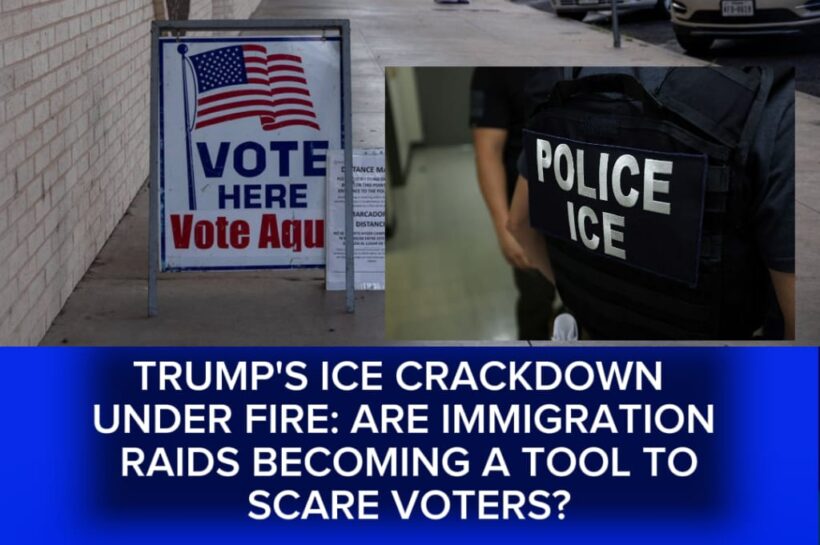













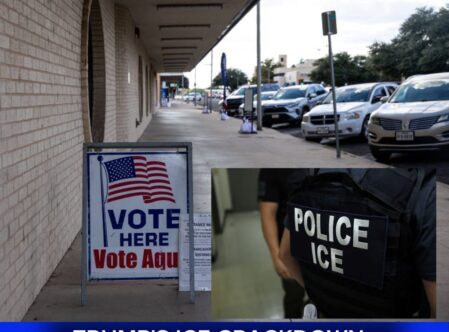
California, October 31, 2026 — With America’s midterm elections just days away, immigration enforcement has suddenly become one of the most controversial political issues in California’s Central Valley. Federal immigration agents have intensified operations across Latino-majority communities, triggering fear among residents, disrupting businesses and raising serious accusations that the Trump administration’s immigration crackdown could influence voter participation in a closely contested congressional race.
The operations, reportedly directed by the White House, have attracted particular attention in California’s 22nd Congressional District, where Democratic challenger Randy Villegas is challenging six-term Republican incumbent David Valadao. With control of the US House potentially hanging on competitive districts, the timing of the enforcement campaign has created an uncomfortable political situation for Republicans. Apparently, Washington has discovered that immigration enforcement can generate more than deportation paperwork; it can also generate election controversies. However, accusations of deliberate voter intimidation have not been independently established.
ICE RAIDS CREATE FEAR AS LATINO COMMUNITIES QUESTION THE TIMING
According to the information available, federal immigration agents have been moving through California’s agricultural communities in relatively small groups, carrying out arrests around homes, shopping areas, gas stations, workplaces and even locations close to schools. The United Farm Workers union says hundreds of farmworkers have been detained in recent weeks.
The figures from Bakersfield are particularly striking. Preliminary Department of Homeland Security data reportedly show that immigration arrests increased from approximately one per day for much of the year to nearly ten daily in mid-October. In neighbouring Wasco, at least seven people were reportedly arrested within a few days. For residents already worried about immigration enforcement, the sudden increase has created an atmosphere of uncertainty. Some businesses have reportedly introduced free delivery services for customers afraid to leave their homes. At this rate, even an ordinary shopping trip appears to require more courage than a political campaign rally.
The controversy is particularly sensitive because California’s 22nd Congressional District has a substantial Latino population, estimated at approximately 73 per cent in the supplied report. Local farmworker Maribel Ramirez said some young Hispanic Americans who have the legal right to vote are frightened that participating in elections could expose information about relatives without legal immigration status.
That concern raises an important democratic question: what happens when eligible citizens become too frightened to exercise their constitutional right to vote? A person should not have to choose between participating in democracy and worrying about the safety of family members.
TRUMP’S IMMIGRATION POLICY BECOMES A POLITICAL LIABILITY FOR REPUBLICANS
Democratic candidate Randy Villegas has turned the arrests into a major campaign issue, describing the operations as an apparent attempt to intimidate communities before the election. He has also criticised Valadao for supporting legislation that increased ICE’s budget, arguing that his opponent has failed to adequately defend immigrant communities.
Republican incumbent David Valadao, meanwhile, has acknowledged the fear and uncertainty experienced by families, urging the Trump administration to prioritise removing individuals who pose threats to public safety. Although he has defended the importance of immigration enforcement, he has also suggested that ICE has gone too far in certain cases. His position illustrates the difficult political balancing act facing Republicans: supporting the current president’s immigration agenda while attempting to reassure voters who are increasingly uncomfortable with its consequences.
The political stakes are significant. California’s 22nd District is among the congressional contests attracting national attention ahead of the November 3 midterm elections. Recent publicly reported polling has shown Villegas ahead of Valadao, although different election forecasts have assessed the competitiveness of the district differently. The latest available USC-related polling figures listed in election databases showed Villegas leading 54 per cent to 44 per cent.
Meanwhile, the United Farm Workers has raised concerns that many detained agricultural workers had no criminal records, with some reportedly possessing legal work authorisation. One particularly troubling case involves a Mexican brother and sister who were allegedly arrested while unloading their shopping after a day off from agricultural work. Their lawyers argue in a federal court petition that agents were searching for another individual and only discovered whom they had detained after placing them in handcuffs.
The Department of Homeland Security declined to comment on the wider California operations, citing concerns about officer safety, and did not respond directly to the voter intimidation allegations.
As the election approaches, the Trump administration faces growing questions about whether its enforcement strategy is achieving its stated public-safety objectives or creating unnecessary anxiety among entire communities. Republicans may insist that immigration enforcement and electoral politics are separate matters, but voters experiencing these operations may not find that distinction so easy to maintain.
Ultimately, the California controversy is about more than immigration arrests. It concerns public confidence, constitutional voting rights, the treatment of agricultural workers and the political consequences of federal enforcement decisions. Whether the allegations of voter intimidation can be substantiated remains an important question, but the fear reported by residents is already becoming a major campaign issue. With November 3 approaching, the battle for California’s 22nd District could deliver consequences far beyond the Central Valley. Stay with OGM News for further updates as this developing political controversy unfolds.

Getting the mobile version installed was actually painless for once and now I can track...