
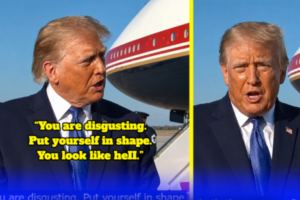
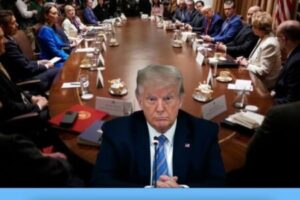

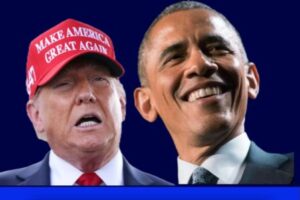


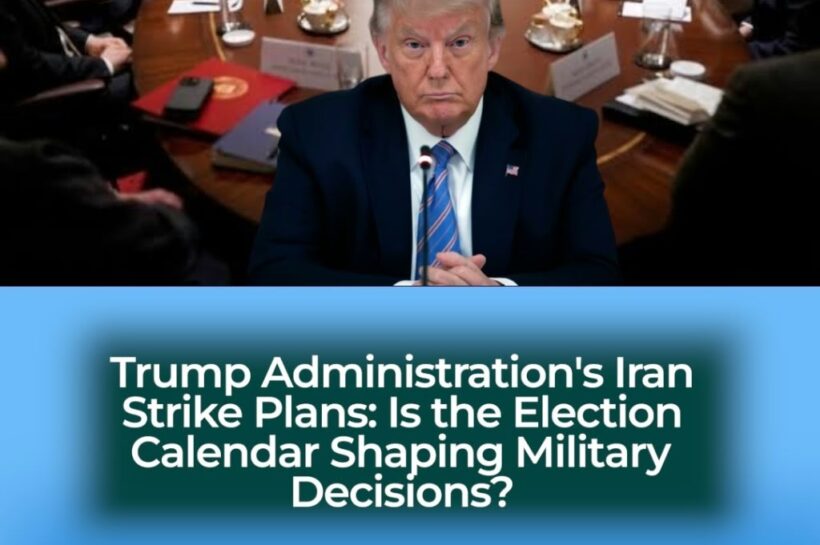
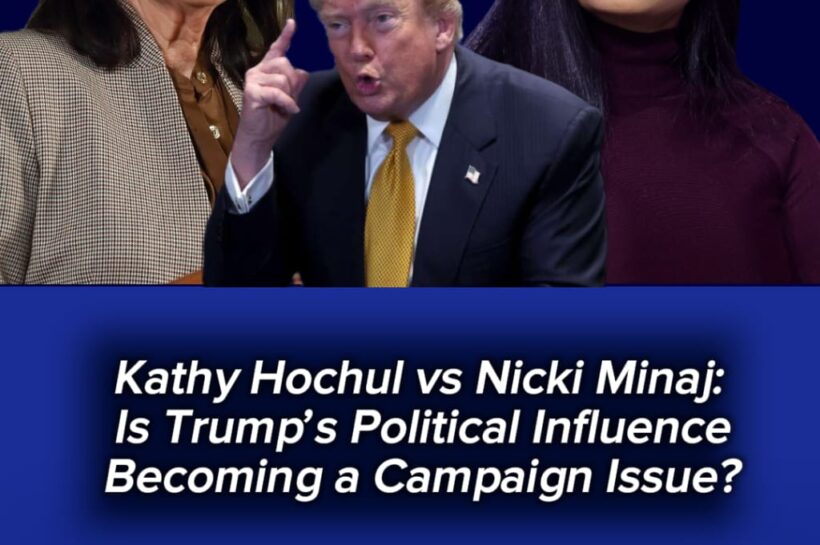
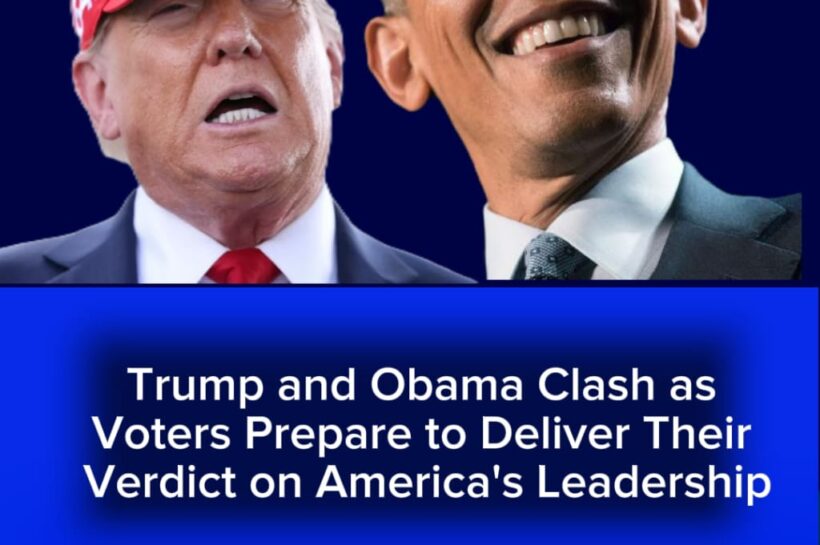



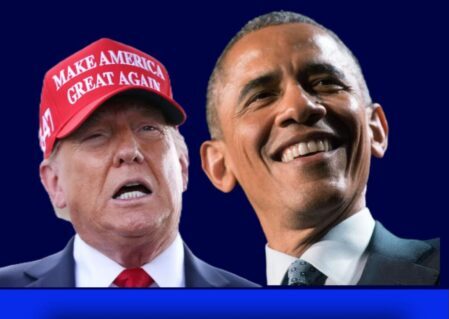
With the US midterm elections approaching, President Donald J. Trump and former President Barack Obama are trading political attacks in a campaign battle that has turned into a contest over leadership, public trust and the future direction of America. Neither man is seeking a place on the ballot, yet both have emerged as influential figures in a race that could determine which party controls Congress. In a political spectacle featuring fiery speeches, angry protesters and arguments over the economy and immigration, the candidates are competing for votes while their most prominent allies compete for attention.
Obama Challenges Trump’s Leadership as Republicans Face Electoral Pressure
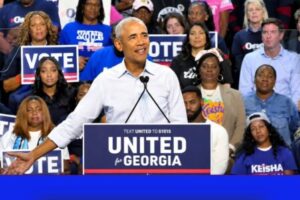
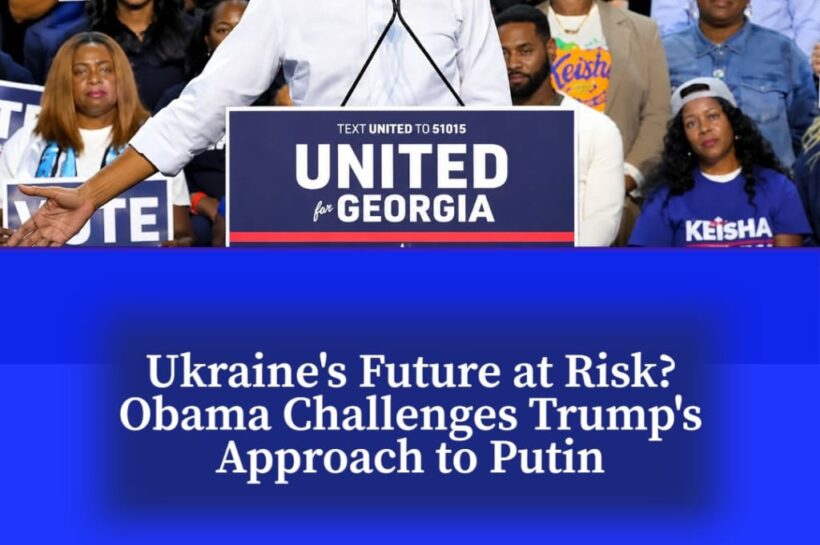
Obama stepped up his campaign appearances in the final stretch, delivering sharp criticism of Trump’s leadership while campaigning in Morrow, Georgia, for Democratic Senator Jon Ossoff. Ossoff faces Republican challenger Mike Collins in a contest that could help determine the balance of power in the Senate. Obama argued that America’s values were at stake, accusing political leaders of encouraging a culture in which dishonesty, bullying and money were allowed to dominate public life.
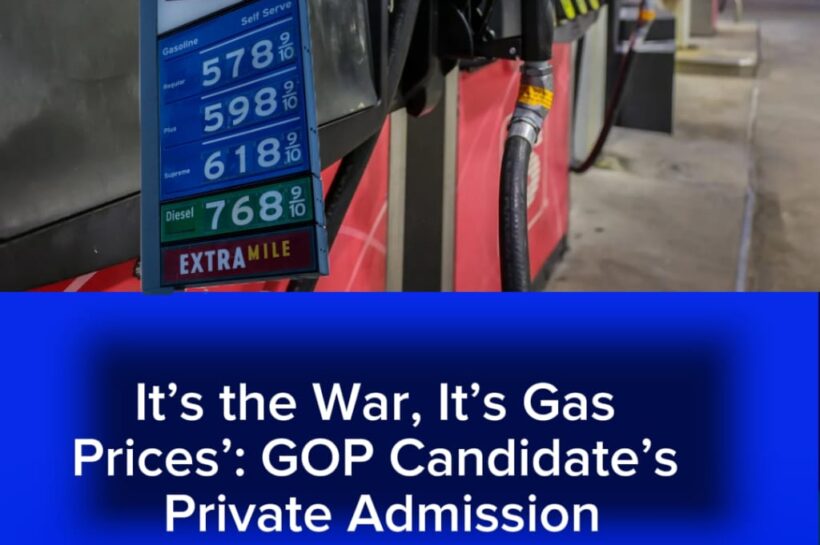
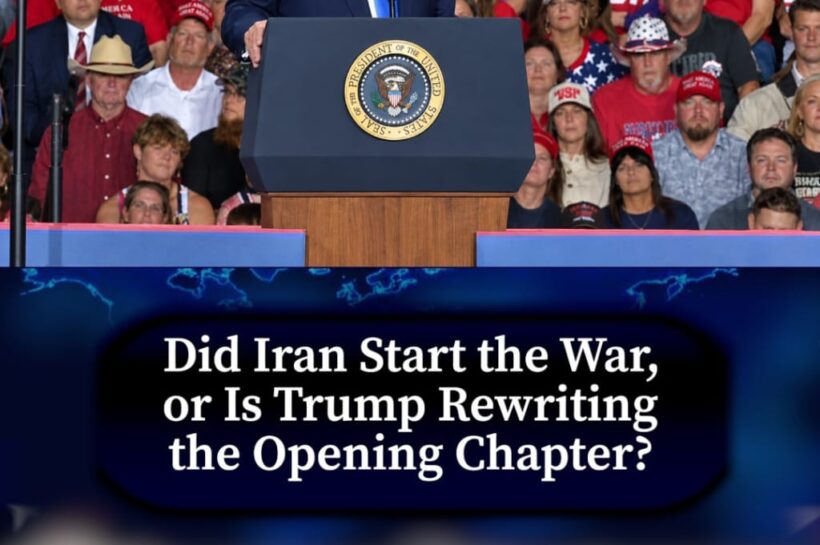
The former president also criticised Trump’s tariffs and the war involving Iran, linking the administration’s policies to wider concerns about America’s economic and moral direction. His remarks offered Democrats an opportunity to frame the election as more than a dispute over party control. In Obama’s telling, voters are being asked to decide what kind of political culture they want. For Republicans, however, the challenge is to convince voters that Trump’s leadership and economic agenda deserve continued support. The campaign has increasingly resembled a referendum on the president, even though his own name is not on the ballot.
Trump Fires Back as Protests and Controversies Follow His Campaign
Trump, meanwhile, has maintained an aggressive campaign schedule, rallying Republican supporters in Ohio and attacking Democratic candidates, including former Senator Sherrod Brown, who is challenging Republican Senator Jon Husted. Trump criticised Brown over immigration and repeated his attacks on policies he claims have harmed American communities. His comments revived controversy surrounding his false 2024 claims that Haitian immigrants in Springfield, Ohio, were eating cats and dogs—allegations local officials repeatedly rejected.
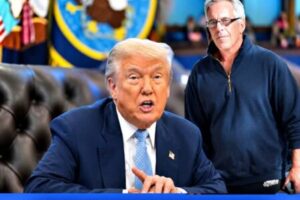
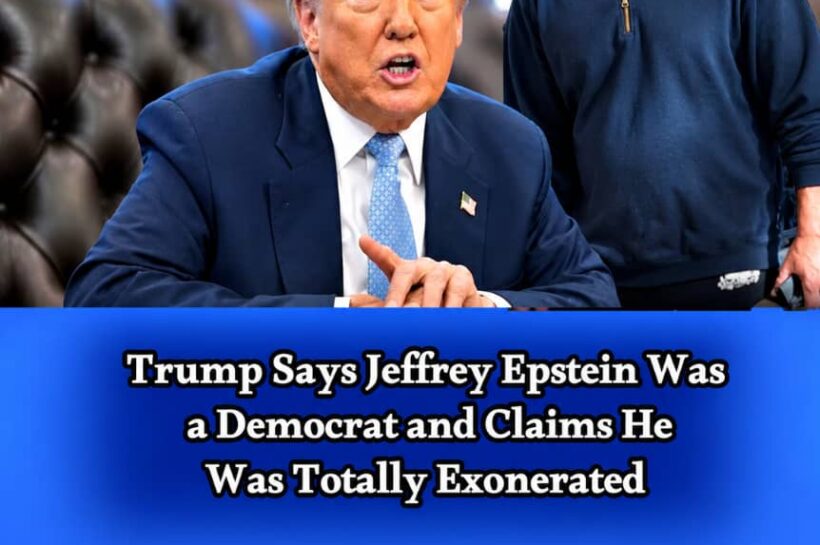
The president also faced protesters along his motorcade route and interruptions during his rally, including questions concerning convicted sex offender Jeffrey Epstein. Trump responded by saying he had expelled Epstein from Mar-a-Lago, while maintaining that the two men had fallen out. Although Trump has said he barred Epstein from his private club, references to Trump appear in materials released from the Epstein files alongside references to numerous other prominent figures; the Justice Department has cautioned that some material contains unverified or uncorroborated allegations. Trump also defended his White House renovations after Obama mocked the building’s interior design, turning an argument over national leadership into an unexpected exchange about decoration.
The Senate Battle Adds Another Layer of Political Drama
Beyond the personal exchanges, the Senate contests in states such as Ohio, Alaska and Michigan could prove decisive. Republicans currently hold a 53–47 Senate majority, meaning Democrats would need to make gains in traditionally Republican-leaning states to take control. In Alaska, controversy emerged over a report alleging that people associated with Democratic Senate nominee Mary Peltola’s campaign had worked to recruit additional candidates who could draw votes away from Republican Senator Dan Sullivan. The allegation has not, by itself, established wrongdoing, but Trump called for Peltola to leave the race and face criminal prosecution.
Michigan is also attracting national attention, with Republican Mike Rogers and Democrat Abdul El-Sayed seeking to energise voters through prominent political allies and campaign events. Meanwhile, early voting has already drawn millions of Americans to the polls, making turnout a critical factor in the final result. The House race is widely viewed as favourable territory for Democrats, while the Senate contest remains more competitive. That combination leaves both parties with reasons to celebrate—and reasons to worry—as election day approaches.
Ultimately, the Trump–Obama exchange illustrates how American midterm elections can become a national battle over personalities, policies and political identity. Trump is working to protect Republican control of Congress, while Obama is helping Democrats turn dissatisfaction with the administration into electoral momentum. With immigration, the economy, Iran, public trust and campaign controversies all shaping the debate, the final verdict belongs to voters. Stay with OGM News for further updates as the midterm race unfolds and the struggle for control of Congress reaches its decisive stage.
Getting the mobile version installed was actually painless for once and now I can track...