
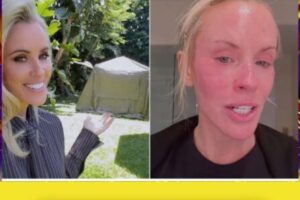




























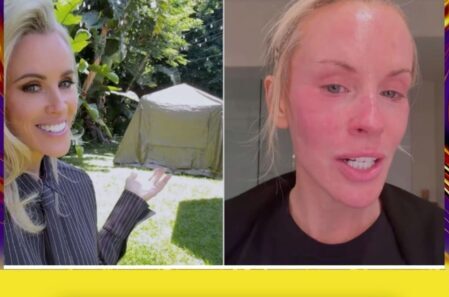
MOLD exposure fears have reportedly pushed actress and television personality Jenny McCarthy into an extraordinary living arrangement, with the 53-year-old revealing that she has been sleeping in a tent in her own backyard while undergoing treatment for what she describes as mycotoxin poisoning. After nearly two years of unexplained health complications, repeated surgeries and frustrating medical investigations, McCarthy says the experience has left her so frightened of further exposure that she no longer feels comfortable sleeping indoors. Her revelation has raised questions about the severity of her ordeal, the psychological toll of prolonged illness and what happens when even one’s own home stops feeling like a safe place.
A Two-Year Health Nightmare That Ended With an Unexpected Living Arrangement
During the October 28 episode of The Jenny McCarthy Wahlberg Show, McCarthy finally provided a detailed account of the medical difficulties she says have dominated the last two years of her life. According to her explanation, the ordeal began with a persistent toothache in October 2024, which eventually developed into a complicated series of dental infections, oral surgeries, tooth extractions and problems with dental implants. She also described recurring growths around her eyes, facial swelling, skin complications and other symptoms that left her visiting different medical professionals in search of an explanation.
McCarthy said she had become increasingly frustrated by the repeated procedures and the apparent inability to resolve the underlying problem. She eventually recalled how a functional medicine doctor suggested investigating possible mold exposure and mycotoxin poisoning after other treatment efforts had failed to provide satisfactory answers.
The actress said testing subsequently revealed what her doctor described as serious contamination, which she believes was connected to her Los Angeles home. She recalled receiving an alarming warning from the doctor about the potential dangers associated with her condition, including the possibility of neurological complications. However, the experience also prompted her to take drastic measures to avoid further exposure.
McCarthy explained that she became so desperate to recover that she temporarily abandoned conventional indoor accommodation and moved into a tent in her backyard. She even described installing additional weather protection because of concerns about rain, garden sprinklers and what she jokingly called chemtrails. What might ordinarily sound like an unusual camping arrangement has, according to her account, become part of her attempt to feel safe while recovering.
The MOLD Controversy, Environmental Health and What Medical Evidence Actually Says
McCarthy’s experience also brings attention to a genuine public health issue: indoor dampness and fungal contamination. According to the United States Centers for Disease Control and Prevention, exposure to damp and mouldy environments can cause health problems, particularly among people who have allergies, asthma or certain underlying medical vulnerabilities. Reported effects include coughing, wheezing, nasal congestion, throat irritation, skin rashes and eye irritation. Excessive moisture encourages fungal growth, making water leaks, damaged building materials and persistent dampness important environmental concerns. However, the presence of mould does not automatically mean every occupant will develop an illness, and routine home air sampling is not considered a reliable way to determine whether someone will become sick.
There is also an important distinction between established health effects of indoor mould exposure and broader claims sometimes associated with so-called toxic mould syndromes. Mycotoxins are substances produced by certain fungi, but their presence does not automatically establish that every unexplained symptom is caused by systemic poisoning. Medical guidance from Cleveland Clinic notes that there is insufficient scientific evidence supporting a generalised toxic mould syndrome diagnosis or the need for a special detoxification programme for ordinary mould exposure.
Meanwhile, the United States Environmental Protection Agency recommends addressing the underlying moisture problem, removing affected materials appropriately and using qualified professionals when remediation is extensive. These distinctions are important because McCarthy’s personal diagnosis, her doctor’s reported warnings and her treatment programme have not been independently verified through publicly available medical records. Her account should therefore be understood as her personal experience rather than a universal medical explanation for similar symptoms.
McCarthy has indicated that her home has undergone extensive remediation, but that has not immediately restored her confidence in returning to indoor living. She said she was already in the seventh month of her recovery programme and remained too paranoid to sleep anywhere other than her tent. The actress also described the experience as emotionally traumatic, suggesting that the fear developed during her illness has become a separate challenge from the physical symptoms themselves. Her situation highlights how prolonged health uncertainty can affect a person’s sense of security, even after steps have reportedly been taken to address the suspected environmental problem.
For now, the actress’s unusual backyard accommodation remains one of the most striking details of her health revelation. While the internet may find the image of a Hollywood personality choosing a tent over her own home surprising, the more important issue is the lengthy medical and emotional struggle behind that decision. McCarthy’s experience also serves as a reminder that suspected environmental health problems require proper investigation rather than fear-driven assumptions or unverified treatment claims. Buzz Legit will continue following her recovery and any further developments surrounding the reported remediation of her home.



Getting the mobile version installed was actually painless for once and now I can track...