



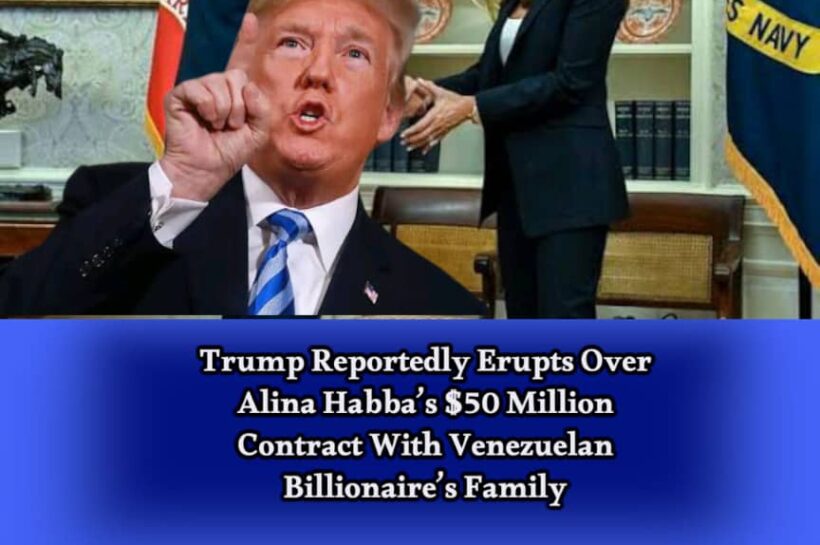




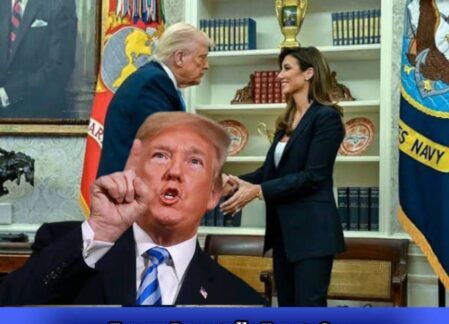
President Donald Trump reportedly became furious after learning that his former personal lawyer, Alina Habba, had secured a contract worth more than $50 million from a company established by the daughter of Venezuelan billionaire Julio Herrera Velutini, a businessman who was seeking a presidential pardon at the time.
According to reporting by The New York Times, Trump was particularly angered by the size of Habba’s financial agreement and subsequently told aides and allies that she should donate part of the money to his future presidential library or another Trump-related organization.
The report adds another controversial dimension to the relationship between wealthy individuals seeking presidential clemency and people with connections to Trump’s political and legal circle. It also raises questions about the timing of Habba’s contract, the billionaire’s pardon, and Trump’s reported expectations concerning the money she would receive.
The $50 Million Contract
According to The New York Times, Habba agreed to become general counsel at Concord Partners, a Florida company established in October 2025 by Isabela Herrera, the daughter of Julio Herrera Velutini.
The agreement reportedly offered Habba $10 million annually for four years, alongside bonuses that brought the guaranteed value to more than $50 million. The company reportedly had little public profile, and its business activities were unclear even to some people familiar with the Herrera family’s wider business interests.
The timing is particularly significant. Habba finalized the agreement while serving as U.S. attorney in New Jersey, and she formally began working for Concord Partners on January 1, 2026. She was also serving as a senior adviser to Attorney General Pam Bondi at the Justice Department.
Weeks after Habba began her work with the company, Trump granted Herrera Velutini a presidential pardon.
The sequence has prompted questions about the circumstances surrounding the arrangement. However, the timing alone does not establish that Habba negotiated or secured the pardon in exchange for the contract. Habba has categorically denied any involvement in the pardon process.
The Billionaire’s Pursuit of a Presidential Pardon
Julio Herrera Velutini, a Venezuelan-Italian banker, had faced federal charges connected to an alleged scheme involving an attempt to influence Puerto Rico’s then-governor, Wanda Vázquez, to remove a financial regulator investigating his bank.
In August 2025, Herrera pleaded guilty to a misdemeanor campaign-finance violation under a negotiated agreement that substantially reduced the charges he originally faced. He continued pursuing clemency because he wanted the remaining criminal conviction removed from his record.
His daughter, Isabela Herrera, reportedly donated $3.5 million to a political action committee connected to Trump. The family also employed Christopher Kise, a former member of Trump’s personal legal team, to assist with Herrera’s legal efforts.
The family subsequently hired Habba under the multimillion-dollar Concord Partners agreement. Trump eventually granted Herrera a full and unconditional pardon, along with pardons for other individuals involved in the Puerto Rico case.
The circumstances have generated scrutiny because of the combination of political contributions, influential legal representation, Habba’s lucrative contract and the eventual presidential pardon. Nevertheless, the available reporting does not establish that these arrangements constituted an exchange for clemency.
Habba Rejects Any Connection to the Pardon
Habba has strongly rejected suggestions that her employment arrangement had anything to do with obtaining a presidential pardon for Herrera.
In a public statement, she said any suggestion that her employment was connected to securing clemency was false. She also maintained that her employment had been disclosed to and vetted by the Justice Department.
The Justice Department said Habba did not speak to anyone about a pardon, while a White House official stated that she had nothing to do with the decision and described the administration’s pardon process as involving the White House Counsel’s Office and the Justice Department.
Those denials are important to the story. Although the reported timeline has raised questions, the claims should not be presented as proof that Habba arranged a pardon or that the contract was payment for political influence.
Trump’s Reported Demand for a Donation
Perhaps the most striking part of the latest reporting concerns Trump’s reported reaction after learning about the size of Habba’s contract.
According to people briefed on the conversations cited by The New York Times, Trump told aides and allies that Habba should contribute part of her earnings to his future presidential library or another organization connected to him.
The report also says Trump told at least one ally that the Herrera family should not pay the remaining amount of Habba’s contract. It remains unclear whether Trump directly asked Habba to make a donation or merely expressed his expectations to others.
That detail introduces another question: why would a former president expect a former lawyer to direct part of a private employment contract toward a presidential library or another related entity?
Presidential libraries are generally established to preserve records and materials associated with a president’s administration. But the suggestion that money from a contract connected to a family seeking presidential clemency could be directed toward a Trump-related organization is likely to attract further scrutiny.
A Bigger Question About Money and Political Influence
The Habba controversy arrives amid broader debate about the role of wealthy donors, political connections and private intermediaries in presidential pardon requests.
The central issues are not simply the size of Habba’s compensation or Trump’s reported anger. They concern the transparency of the arrangements, the timing of the pardon, potential conflicts of interest and whether the public can be confident that clemency decisions are made through an impartial process.
There is currently no established finding in the cited reporting that Habba secured Herrera’s pardon in exchange for her contract. Her denial and the administration’s statements must be considered alongside the timeline and financial arrangements documented by the Times.
Still, the reported conversations about directing part of the contract toward a Trump-related entity raise questions that deserve clear answers.
As the story develops, attention will likely remain on Habba’s contract, Herrera’s pardon, the administration’s explanation of the clemency process and Trump’s reported expectations concerning the money.
Follow OGM News for more developments on American politics, presidential accountability and the intersection of money and political influence.
Getting the mobile version installed was actually painless for once and now I can track...