











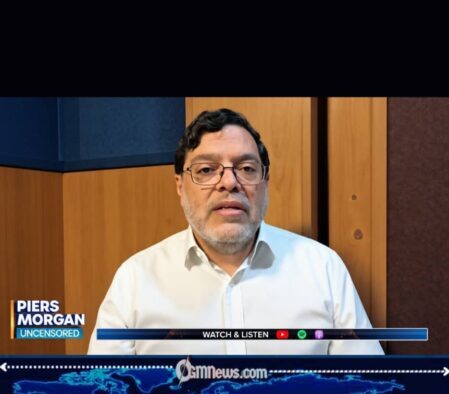
Dr. Marandi has delivered a sharp criticism of the United States, arguing that its international image as a defender of peace and justice is increasingly being questioned because of its military interventions, its decades-long confrontation with Iran, and the historical role of Western countries in supplying chemical weapons-related materials to Saddam Hussein’s Iraq. His remarks raise a question that Washington cannot simply dismiss with a press conference: who gets to decide which country is the hero and which one is the villain in international politics?
While American officials have traditionally defended US foreign policy as necessary for security and stability, Marandi’s comments reflect a broader debate over the credibility of powerful nations when their stated principles appear to clash with their actions.
Marandi Questions America’s Claim to Moral Leadership
Marandi’s criticism goes beyond the familiar political exchange between Washington and Tehran. By arguing that people across the world do not sympathize with the United States, Israel or Saudi Arabia, he challenges the assumption that Western political positions automatically attract international support. His sweeping assessment is a political argument rather than a verified measure of global public opinion, but it highlights a genuine diplomatic challenge: perceptions of double standards can undermine a country’s ability to win trust, even when it possesses considerable military and economic power.
The professor also pointed to the decades-long hostility between Washington and Tehran, describing it as an effort to crush Iran that has continued for 47 years. The relationship has been marked by the 1979 Iranian Revolution, the seizure of the US Embassy in Tehran, American sanctions, disputes over Iran’s nuclear programme and repeated regional security confrontations. For Iran, these events form part of a long history of pressure from Washington; for the United States, its policies have often been defended on grounds of national security and regional stability. Between these competing explanations lies a diplomatic conflict that has repeatedly threatened to spill beyond both countries’ borders.
Chemical Warfare: The History of Washington Cannot Simply Talk Away
One of Marandi’s most personal accusations concerns the chemical attacks he says he survived during the Iran-Iraq War of 1980–1988. He alleges that Western countries supplied chemicals to Saddam Hussein’s government, which used chemical weapons against Iranian forces and civilians. Historical investigations have documented Iraq’s extensive chemical-weapons programme and its use of such weapons during the conflict. Research has also examined Western companies’ involvement in supplying chemical precursors and related materials to Iraq. However, the precise responsibility of individual governments and companies must be distinguished from the broader accusation against the entire West.
For Marandi, the issue is not merely historical; it is about credibility. His argument is that countries cannot convincingly present themselves as defenders of humanity while their past actions or commercial dealings contribute to the suffering they condemn elsewhere. In the language of international politics, this is the problem of double standards: one country’s security concerns may be treated as legitimate while another country’s suffering receives less attention. The uncomfortable question is whether powerful nations apply the same moral principles to their allies as they apply to their opponents.
Trump’s America Faces an Image Test
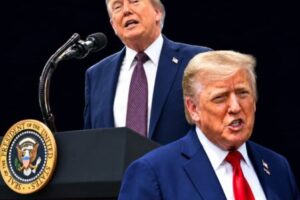
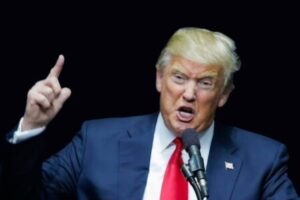
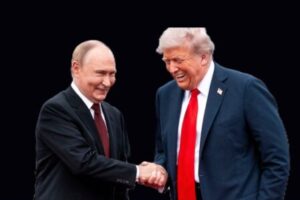
Under current President Donald J. Trump, the debate over America’s international reputation remains closely connected to its approach to Iran, economic sanctions, military deterrence and nuclear negotiations. The confrontation did not begin with Trump’s second term; it has roots stretching back to the 1979 Iranian Revolution and the subsequent breakdown in diplomatic relations. Washington has justified pressure on Tehran through concerns about nuclear proliferation, regional security and Iran’s support for armed groups, while Iranian officials describe American policy as coercive interference in their affairs.
The satirical twist is that possessing the world’s most powerful military does not automatically make a country the world’s most convincing storyteller. Washington may have its arguments, Tehran has its grievances, and audiences across the world are free to judge both. Marandi’s remarks are designed to challenge the American narrative, but his own sweeping claims also deserve scrutiny rather than automatic acceptance. International sympathy cannot be measured simply by the loudest political speech, and criticism of US policy does not necessarily mean support for Iran’s government or its regional allies.
Ultimately, Dr. Marandi’s comments reopen a serious debate about war, historical responsibility and the credibility of global powers. His account of surviving chemical attacks gives his criticism a deeply personal dimension, while the wider historical record shows why the legacy of the Iran-Iraq War remains politically significant. Whether Washington can persuade sceptical audiences that its foreign policy reflects consistent principles will depend on its actions as much as its words. Stay with OGM News for further updates and analysis as this debate over power, responsibility and international trust continues.
Switched from my old platform last month and the difference is night and day. The...