


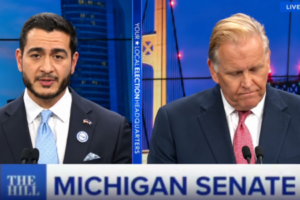








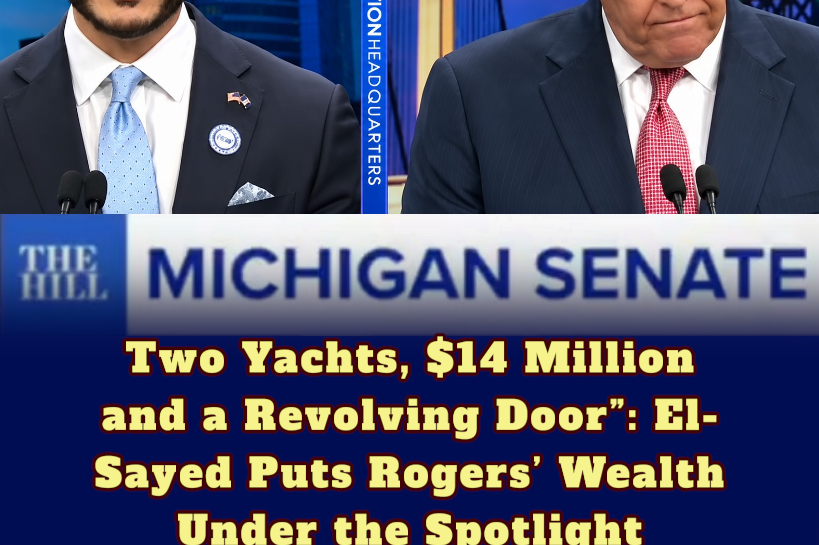
















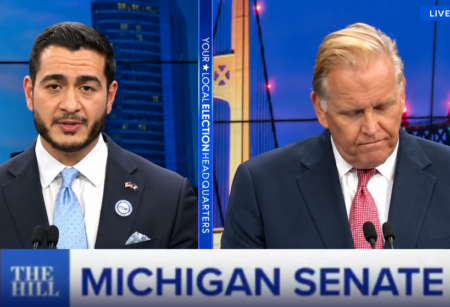
$14 Million as a Government Official | OGM News — Michigan’s Senate race has delivered a moment tailor-made for political television: Democratic candidate Abdul El-Sayed confronting Republican candidate Mike Rogers over alleged corporate connections, financial interests and the question of who benefits when politicians move between public service and private business. During a tense debate exchange, El-Sayed challenged Rogers over two yachts reportedly associated with $14 million in earnings, pressing him to explain how much money he personally made. The confrontation escalated when El-Sayed accused Rogers of prioritizing political power and a revolving door to greater personal wealth.
The exchange raises a familiar but important question in American politics: when candidates seek public office, how transparent should they be about their financial interests and corporate relationships? For voters weighing their choices in Michigan, the issue is not simply who owns what, but whether candidates can demonstrate that their decisions will serve the public rather than powerful private interests.
$14 Million as a Government Official: When Public Office Becomes a Private Payday
$14 Million as a Government Official | OGM News — The controversy is rooted in Rogers’s career after leaving Congress in 2015. According to reporting by PolitiFact, estimates suggest his net worth increased substantially over the following decade, although estimates of personal wealth are not the same as verified earnings from a particular deal. El-Sayed’s claim that Rogers received a $14 million payout as a pharmaceutical lobbyist has been disputed by Rogers, so it should be treated as a campaign allegation rather than an established fact.
The exchange also touched on Rogers’s corporate advisory work, including his reported connection to Telefónica, a telecommunications company El-Sayed criticized over alleged links to surveillance in Venezuela. The questions were pointed, but the broader issue deserves more than a shouting match: voters should be able to scrutinize candidates’ financial disclosures, outside business interests and potential conflicts of interest without having to separate documented facts from campaign rhetoric.
Two Yachts, $14 Million as a Government Official? Battle for Michigan’s Senate Seat
$14 Million as a Government Official | OGM News — The debate, held in Grand Rapids on October 8, 2026, quickly became a bruising contest over personal finances, corporate influence and policy disagreements. Rogers challenged El-Sayed over his own finances and corporate political action committee support, while El-Sayed repeatedly returned to questions about Rogers’s wealth and past business relationships. The moderator struggled to keep the candidates on track as the confrontation spilled beyond the usual boundaries of a televised debate.
For President Donald J. Trump and Republicans hoping to retain influence in Washington, Michigan is an important political battleground ahead of the November 3 midterm elections. The Senate contest is about much more than two yachts or one disputed financial claim: it is also a fight over healthcare, tariffs, the cost of living and the role of corporate money in American politics. Voters will ultimately decide whether the candidates’ arguments reflect the leadership they want—or merely another round of political theatre.
$14 Million as a Government Official | OGM News — Abdul El-Sayed’s confrontation with Mike Rogers has put corporate accountability and personal wealth firmly in the spotlight of Michigan’s Senate race. The $14 million allegation remains disputed, but the questions surrounding political careers, private-sector earnings and transparency deserve serious scrutiny. Will Rogers provide further clarity about his financial dealings, and will El-Sayed’s attacks persuade voters? OGM News will continue following the race and bringing readers the facts behind the political fireworks.



[…] […]