

















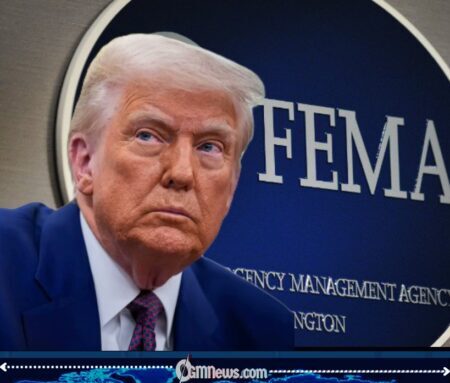
A federal judge has ruled that the Trump administration acted unlawfully in directing the Federal Emergency Management Agency (FEMA) toward a workforce reduction of roughly half, delivering a significant legal setback to the administration’s efforts to reshape the disaster-response agency. U.S. District Judge Susan Illston of the Northern District of California said the Department of Homeland Security (DHS) improperly interfered with FEMA’s authority over its personnel and unlawfully moved to stop the renewal of contracts for thousands of disaster-response workers.
When Disaster Response Met the Workforce-Cutting Machine
The ruling centres on FEMA’s Cadre of On-Call Response/Recovery Employees, known as CORE workers, who make up a substantial portion of the agency’s workforce and play important roles in responding to disasters and supporting communities during recovery. Earlier court records described CORE employees as workers historically serving renewable two-to-four-year terms.
Illston concluded that DHS could not simply take control of FEMA’s staffing decisions and substantially reduce the agency’s responsibilities in a manner inconsistent with federal law. The post-Hurricane Katrina law governing FEMA specifically restricts DHS from substantially or significantly reducing the agency’s authorities, responsibilities or functions. The judge said there was no adequate evidence of reasoned decision-making behind the reversal on contract renewals.
The Half-FEMA Plan Meets a Full Courtroom Problem
The administration has argued that FEMA has considerable flexibility to determine its appropriate staffing levels, while President Donald J. Trump has previously questioned whether FEMA should continue to exist in its current form and suggested that states should take greater responsibility for emergency preparedness. Earlier in the litigation, Illston declined to immediately stop the cuts, but the latest ruling found that FEMA appeared to be proceeding toward a staffing level of about 11,383 employees—roughly half its previous level—without a demonstrated basis for selecting that number.
And then came the Signal-message subplot, turning an already serious legal dispute into something resembling a government-office mystery. Illston separately criticized DHS and FEMA officials for using Signal on personal phones to discuss the staffing reductions and subsequently deleting messages. The judge said the missing communications were potentially relevant evidence and indicated that their disappearance could be presumed unfavorable to the defendants.
For now, the ruling does not impose penalties or specify the final remedy. Illston said those questions would be addressed in a separate ruling, meaning the administration’s Federal Emergency Management Agency restructuring battle is far from finished. The case has already moved through several stages of discovery and earlier preliminary-injunction proceedings, showing how deeply the dispute has become tied to questions about presidential authority, agency independence and Congress’s role in determining the structure of federal agencies.
The latest ruling therefore leaves the Trump administration facing an uncomfortable question: how far can a president go in shrinking an agency whose responsibilities Congress has specifically protected? With the court yet to determine the final remedies—and with FEMA’s future structure still under dispute—this legal storm is unlikely to disappear quietly. Watch OGM News for future updates as the Federal Emergency Management Agency workforce battle continues.

https://addlinks.pro/wf9ER