



























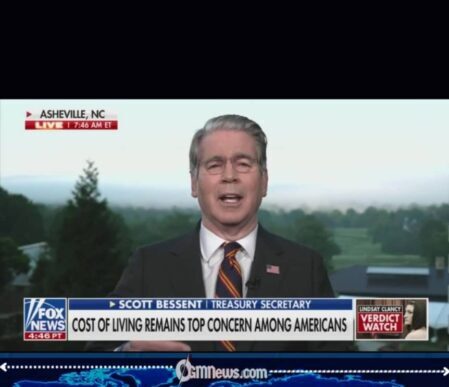
As Americans continue wrestling with the cost of everyday life, Treasury Secretary Scott Bessent has offered an explanation that may leave consumers checking both their grocery receipts and the geopolitical map. During a television interview on Wednesday, Bessent acknowledged that “prices are too high” after being confronted with polling showing that 47% of Americans regard the cost of living as a major concern. His response: America is currently experiencing an “energy shock” linked partly to the war in Ukraine and attacks on Russian energy infrastructure.
When the Grocery Bill Meets Geopolitics
Bessent argued that Ukrainian strikes against Russian oil and refining facilities are contributing to upward pressure on energy prices globally. Ukraine has indeed targeted Russian energy infrastructure as part of its effort to weaken Moscow’s ability to finance and sustain the war, while recent attacks have disrupted Russian refining capacity.
For Americans staring at supermarket prices, however, the explanation may sound like economics taking the scenic route. The Treasury Secretary’s message effectively places part of the household budget problem thousands of miles away, where missiles, drones and oil facilities are apparently having conversations that eventually arrive at the American fuel pump.
Bessent Promises Relief, But the Receipt Is Still High
The Treasury Secretary Bessent has maintained that energy pressures should ease as geopolitical conflicts subside. He has also pointed to domestic energy production as a way for the United States to become less vulnerable to external shocks, arguing that greater production can reduce the impact of international energy disruptions.
But the political pressure remains. Recent reporting shows that Bessent is simultaneously dealing with elevated Treasury yields, inflation concerns and the enormous U.S. federal debt, meaning the Treasury Department has considerably more on its desk than explaining why Americans are paying more.
For now, the great American cost-of-living mystery has acquired another suspect: the global energy market, with the war in Ukraine appearing prominently in the Treasury Secretary’s explanation. Whether that explanation brings cheaper groceries, fuel and household bills remains another question entirely. OGM News will continue watching the receipts, the energy markets and Washington for the next development.

[…] […]