









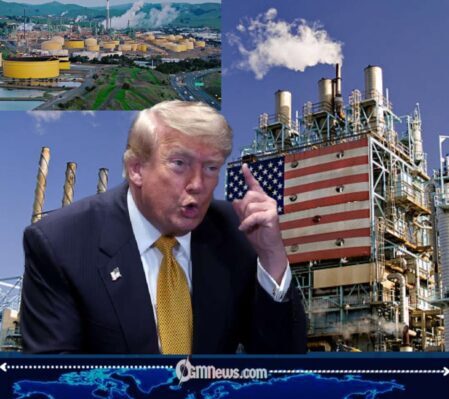
President Donald J. Trump has turned his frustration over soaring gasoline prices toward an unlikely target: the U.S. oil-refining industry. Trump has accused refiners of gouging American consumers, called for a Justice Department investigation and urged oil companies to use their bumper earnings to help bring down gasoline prices as the continuing conflict with Iran keeps energy markets under pressure.
With gasoline prices averaging more than $4 a gallon, Trump’s message to the oil industry is becoming increasingly blunt: if companies are making big money while motorists are paying more, they should share some of those gains with the public. The president’s pressure campaign comes at a politically sensitive moment, with the midterm elections approaching and fuel prices capable of quickly becoming a kitchen-table issue for American voters.
Trump Puts Big Oil Under The Microscope
Trump’s accusation has placed major refiners under unusual political pressure. The president has previously criticised oil giants over their profits and instructed the Justice Department to examine whether companies have been unfairly keeping gasoline prices elevated. His latest intervention suggests that the administration is determined to make cheaper fuel a major component of its economic message.
The situation has created an unusual Washington spectacle: Trump is preparing to welcome many of the same oil executives he has accused of gouging consumers to the White House. The meeting is expected to focus on maintaining fuel supplies, increasing refining capacity and finding ways to manage gasoline prices. In other words, the executives may be arriving at the White House carrying their balance sheets while Trump is waiting with the gasoline bill.
Trump’s frustration is understandable from the perspective of motorists, but the economics are considerably more complicated. Gasoline prices are influenced by crude-oil prices, refining capacity, transportation, inventories, seasonal demand and geopolitical disruptions. The conflict with Iran has added another major variable by threatening oil shipments through the strategically important Strait of Hormuz.
Iran Conflict Turns The Gas Pump Into A Political Battlefield
The latest escalation between the United States and Iran has pushed crude prices higher again. Brent crude climbed above $90 a barrel on Monday after U.S. forces struck Iranian targets near the Strait of Hormuz and Iran retaliated with attacks on U.S. assets. The renewed fighting has revived fears that disruptions in one of the world’s most important oil-transit corridors could keep energy prices elevated.
That geopolitical pressure makes Trump’s demand for cheaper gasoline particularly difficult for refiners. Companies can increase refining output and improve supply, but they cannot completely control the global price of crude oil or the security of international shipping routes. The Strait of Hormuz remains crucial to global energy markets, meaning another major disruption could quickly overwhelm efforts to bring prices down at American filling stations.
Nevertheless, Trump appears determined to make the oil industry part of the solution. His administration has been exploring ways to expand domestic refining capacity and reverse what it views as policies that discouraged refinery investment and contributed to closures. The White House is also seeking cooperation from fuel retailers and refiners as it tries to prevent higher energy costs from feeding into broader inflation.
For oil executives, the meeting with Trump could therefore be an uncomfortable balancing act. They must defend their companies’ profits and explain the realities of global energy markets while responding to a president who is demanding visible relief for consumers. Trump, meanwhile, has the political advantage of being able to point directly at the price displayed on every gasoline station sign.
The stakes extend beyond the filling station. Higher fuel prices can raise transportation costs, increase the price of goods and make it harder for the Federal Reserve to bring inflation under control. Recent market movements show how quickly renewed U.S.-Iran fighting can affect crude prices, financial markets and expectations for interest rates.
For American drivers, however, the debate ultimately comes down to one simple question: when will gasoline become cheaper? Trump says refiners with strong earnings should help make that happen, while the industry faces a global oil market increasingly shaped by war, shipping disruptions and geopolitical uncertainty.
OGM News will continue monitoring Trump’s confrontation with the oil industry, the Justice Department inquiry and the White House meeting with refiners. For now, the political message from Washington is unmistakable: Trump wants cheaper gasoline, Big Oil has been put on notice, and American motorists are watching the pump.
[…] […]