
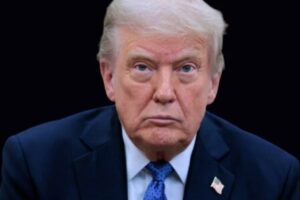



























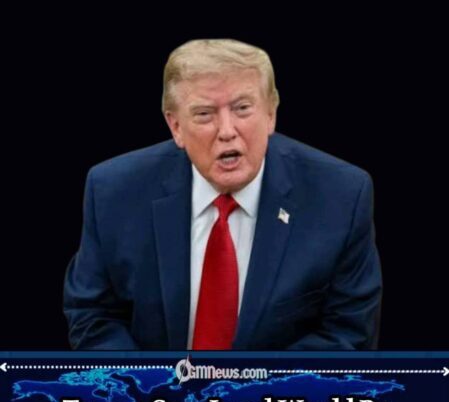
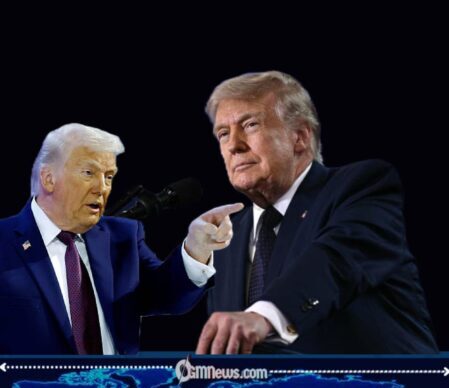
Israel has once again been placed at the center of President Donald J. Trump’s argument for the continuing U.S. military campaign against Iran, with Trump declaring that the country would no longer exist if he had not been president. In an interview with Fox News, Trump said that an Iranian nuclear weapon would have destroyed Israel and potentially devastated the wider region, adding: “If I weren’t president, Israel would be gone. There would be no Israel. And there would probably be no Middle East.”
The statement arrives as the Iran conflict enters another dangerous phase. Trump has repeatedly argued that Tehran cannot be allowed to acquire a nuclear weapon and has used that threat to defend U.S. military action. But his claim about what would have happened under a different president is a counterfactual assertion rather than something that can be independently proven.
TRUMP PUTS ISRAEL AT THE CENTER OF HIS IRAN ARGUMENT
Trump’s argument is straightforward: Iran’s leadership, in his view, cannot be trusted with nuclear weapons, and allowing Tehran to cross that threshold would create an existential danger to Israel and potentially to the United States and Europe. He said a nuclear-armed Iran would have fired the weapon and described the consequences as potentially catastrophic for the region.
The president also pointed to the conflict itself as evidence for his assessment of Iran’s intentions. He cited Iranian attacks against Saudi Arabia, Qatar, the United Arab Emirates, Bahrain and Kuwait after the war began, saying countries that had previously maintained relatively neutral relationships with Tehran were shocked by the attacks. Trump argued that this loss of regional support demonstrated what could happen if Iran became a nuclear power.
There is, however, an important distinction between Trump’s assessment and an established historical fact. Nobody can definitively know what would have happened if Trump had not been president. The statement that Israel would have disappeared, or that the Middle East itself would have ceased to exist, is a prediction about an alternative history rather than a measurable event.
THE BIGGER QUESTION: WHAT HAPPENS AFTER THE BOMBS?
Trump is also using the interview to portray the U.S. campaign as overwhelmingly successful. He claimed Iran’s navy, air force, leadership and air defenses had been destroyed and praised the American blockade and financial pressure against Tehran.
Yet the continuing conflict illustrates why victory claims require caution. Iran has continued to possess the ability to launch missiles and threaten regional targets, while the Strait of Hormuz remains strategically important to global energy markets. Recent reporting also indicates that Iranian retaliation against U.S. forces and regional targets has continued despite the damage inflicted by American strikes.
That creates a difficult contradiction in Trump’s message: Washington can argue that Iran’s military has been severely weakened while still confronting an adversary capable of continuing attacks. The longer the conflict lasts, the more difficult it becomes to define what “winning” actually means.
Trump’s latest remarks are therefore as much about defending his political decision-making as they are about Iran. By portraying himself as the decisive figure who prevented the destruction of Israel and possibly the entire Middle East, he is placing an enormous historical claim on his presidency.
Whether history ultimately supports that assessment cannot be determined by a presidential declaration. What can be observed now is that the Iran war remains active, the nuclear question remains central to Washington’s justification for its actions, and the wider Middle East continues to face the consequences of military escalation.
For OGM News, the takeaway is simple: Trump says his presidency prevented an unimaginable catastrophe, but the real measure of his policy will ultimately depend not on what he says might have happened without him, but on what happens next—with Iran, Israel and the wider region.
[…] […]