




























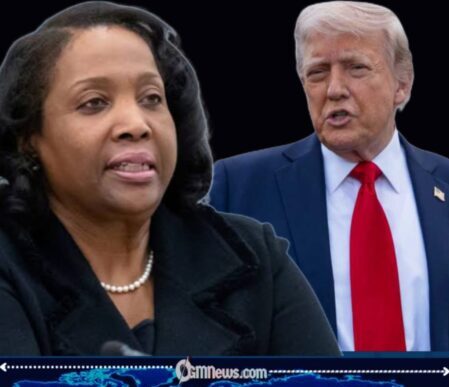
Federal Reserve Governor Lisa Cook has delivered a fresh legal warning to U.S. President Donald Trump, insisting that the administration has no lawful basis to remove her from the central bank despite renewed allegations of mortgage fraud. Cook’s lawyers responded on August 26 after the White House gave her three weeks to answer claims that she made false statements on mortgage applications. The administration has yet to establish those allegations in court, while Cook’s legal team maintains that any discrepancies were inadvertent and do not amount to fraud.
The dispute has now developed into a peculiar Washington contest in which mortgage paperwork, presidential authority and central-bank independence are sharing the same political stage. The Supreme Court’s June 29 ruling allowed Cook to remain in office while the litigation continues, rejecting Trump’s attempt to immediately remove her in a 5–4 decision.
Trump Administration Reopens the Mortgage File
The latest chapter began when the White House warned Cook on August 5 that Trump was considering removing her over alleged false statements on mortgage agreements. Cook’s lawyers have now fired back, describing the allegations as unfounded and arguing that there is no legally cognisable cause for removing her from the Federal Reserve Board.
According to Cook’s legal team, an inadvertent mistake on mortgage paperwork should not suddenly become a presidential-sized emergency. The lawyers have also argued that the accusations appear connected to a broader effort to influence the Federal Reserve, whose governors enjoy statutory protection and cannot simply be dismissed because a president disagrees with their policy positions. In Washington satire terms, the mortgage file appears to have been promoted from paperwork to national security clearance.
The Fed’s Independence Becomes the Bigger Mortgage
The confrontation matters far beyond Cook herself. The Federal Reserve was designed to operate with a degree of independence from day-to-day political pressure, and the law provides that governors serve fixed terms and may be removed only “for cause.” Cook’s current term is scheduled to run until 2038.
Trump’s pressure on the Fed has also coincided with his longstanding demand for lower interest rates, making the Cook dispute part of a much larger argument over who should have influence over U.S. monetary policy. The administration’s earlier confrontation with former Fed Chair Jerome Powell, including a now-dropped investigation concerning the central bank’s headquarters renovation, further intensified concerns about political pressure on the institution.
For now, Cook remains in her position, Trump remains determined to challenge her, and the courts remain the likely referee if the administration proceeds. The great Washington paperwork derby therefore continues: one side has a mortgage file, the other has lawyers, and somewhere in the middle sits the Federal Reserve trying to remember that interest rates are supposed to be about the economy, not presidential approval ratings. OGM News will continue watching this unusually high-stakes battle over legal authority, mortgage allegations and the independence of the U.S. central bank, with further updates expected as the Trump administration decides its next move.


[…] […]