


























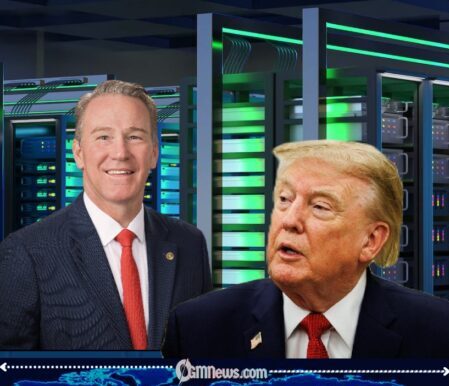
Ohio’s Senate race has entered an unusually noisy phase, with Republicans reportedly warning major artificial-intelligence companies that public anger over sprawling data centers could become a serious electoral liability for Sen. Jon Husted and, potentially, the Republican Senate majority. The reported warning comes as Democratic challenger Sherrod Brown has made opposition to the facilities a central part of his campaign, while Husted continues to argue that properly managed data centers can bring jobs, investment and tax revenue to Ohio.
The Data Centers That Became Political Baggage
According to the reported Republican memo, data centers have become an unexpected political headache in Ohio, with the National Republican Senatorial Committee warning that the facilities could become the defining issue in Husted’s contest against Brown. The memo reportedly argues that if Republicans lose Ohio and data centers receive the blame, politicians elsewhere may become considerably less enthusiastic about welcoming the giant electricity-hungry facilities into their communities.
That concern is not entirely coming out of nowhere. Brown has attacked Husted over his record of supporting data-center development, portraying him as closely associated with the industry. The backlash centers on concerns about electricity consumption, utility costs, land use and whether taxpayers and ordinary ratepayers are being asked to subsidize infrastructure for enormous technology projects. Ohio has become a major destination for such facilities, making the issue increasingly difficult for politicians to ignore.
Trump Praises the Buildings as Ohio Republicans Search for an Exit Ramp
President Donald J. Trump, meanwhile, has continued to champion data centers as engines of economic growth, pointing to construction employment and tax revenue while even suggesting that some facilities are designed attractively. In other words, while politicians are studying the political damage, Trump appears to be looking at the buildings and asking voters to admire the architecture.
Husted has attempted to address the criticism by backing legislation designed to prevent households and small businesses from carrying the electricity and infrastructure costs associated with new data centers. His Ratepayer Protection Act would encourage states to ensure large electricity users pay the costs connected to their demand. That position illustrates the increasingly awkward political balancing act: supporting AI infrastructure while convincing voters that their electricity bills will not become the invoice for America’s technological ambitions.
For the Republicans, the irony is becoming difficult to miss. An industry once celebrated as a symbol of technological progress has become a campaign talking point, while a supposedly futuristic political debate is now being fought over very old-fashioned questions: Who pays, who benefits and who gets blamed when the electricity bill arrives? With Ohio’s Senate contest already under intense national scrutiny, the data-center backlash could become much bigger than a local dispute over giant computer warehouses. OGM News will continue to watch the race and bring readers further updates as the political battle over Ohio’s AI future develops.


Logging in is a breeze and the site stability is amazing even during peak hours....