

























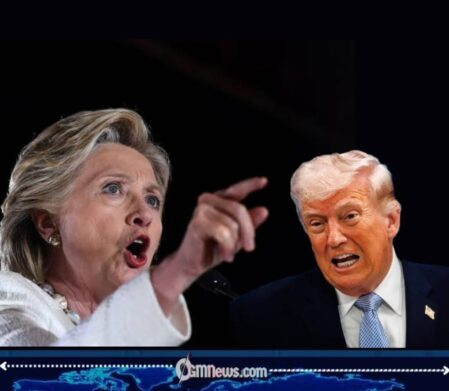
In a sharp rebuke that has ignited fresh political fireworks, Hillary Clinton charged that President Donald J. Trump is rewriting American foreign policy to favor North Korea and Russia over longstanding allies, after the president announced a dramatic scaling back of joint military exercises with South Korea while touting his “very good relationship” with Kim Jong Un. Citing the roughly 39,000 U.S. soldiers stationed there to deter the North, Trump linked the decision to Seoul’s refusal to assist in operations against Iran and the high cost of the drills. Clinton’s response framed the move as evidence that Putin appears to be writing the script, elevating her critique into the central flashpoint of the unfolding story.
Hillary Clinton Frames Trump as Prioritizing Adversaries Over Allies
Hillary Clinton did not mince words in her public reaction, stating that the president is making U.S. policy friendlier to North Korea and Russia than to Canada and Oman. The former secretary of state and 2016 Democratic nominee portrayed the reduction in South Korea drills—announced just as the Ulchi Freedom Shield exercises were set to begin—as part of a broader pattern that elevates personal rapport with Kim Jong Un above alliance commitments. Her comments directly referenced Trump’s claim of a strong relationship with the North Korean leader and the presence of tens of thousands of American troops guarding against that same neighbor.
Observers noted that Clinton’s language stopped short of an explicit “puppet” label yet strongly implied that external influence, particularly from Russia’s Vladimir Putin, was shaping the administration’s approach. By grouping North Korea and Russia together against traditional partners like Canada and Oman, she positioned the controversy as a fundamental question of whose interests American policy now serves. The timing, coming amid reports of North Korean missile tests and ongoing strains with other allies, amplified the force of her intervention and kept Hillary Clinton at the center of the narrative.
Hillary Clinton’s Critique Highlights the Stakes of Troop Presence and Alliance Strain
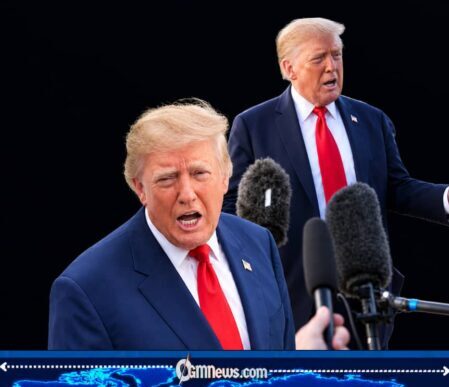
The president’s decision to instruct the Pentagon to substantially reduce the joint exercises rested on three pillars: cost to the United States, the signal the drills send to a North Korea he described as unthreatening and respectful under his leadership, and South Korea’s reported “no thanks” when asked to assist with Iran. Trump repeatedly cited the 39,000 soldiers protecting South Korea from Kim Jong Un as evidence that the arrangement should yield reciprocal support. Hillary Clinton seized on this framing to argue that the policy tilt risks undermining decades of deterrence on the Korean Peninsula while warming relations with regimes long viewed as adversaries.
South Korean officials indicated the exercises would proceed in some form while reviewing the American announcement, and Pyongyang remained silent in public. Yet Clinton’s intervention transformed the technical military adjustment into a larger debate about loyalty, influence, and the direction of U.S. global posture. By insisting that the new friendliness toward North Korea and Russia exceeds that shown to Canada and Oman, she forced the conversation onto the question of whether personal diplomacy with strongmen is rewriting the map of American alliances—and whether Hillary Clinton’s warning will shape the next chapter of the story.
As the reduced drills unfold and diplomatic reactions continue to emerge, readers should watch OGM News for future updates on how Hillary Clinton’s sharp critique continues to define the debate over President Trump’s Korea policy and the broader implications for U.S. alliances.

Logging in is a breeze and the site stability is amazing even during peak hours....