













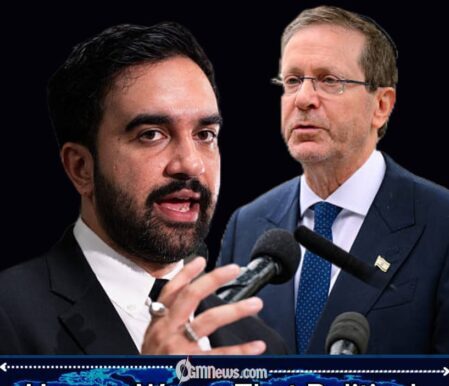
Diplomatic temperature rose several degrees this week after Israeli President Isaac Herzog delivered a sharply worded rebuke of New York City mayoral figure Zohran Mamdani during a recent interview, accusing him of using rhetoric that could endanger public safety and worsen antisemitic tensions. In a development that has somehow made international diplomacy sound like a neighborhood council meeting with microphones, Herzog warned that political language has consequences and argued that city leaders cannot afford to ignore rising hostility directed at Jewish communities.
Diplomacy, Decibels and the Search for the Indoor Voice
Herzog’s comments reportedly centered on the argument that political rhetoric can shape public behavior, especially during periods of heightened tension. He pointed to the recent stabbing of an Orthodox Jewish man in New York as an example of why leaders should exercise caution when addressing issues connected to the Middle East and local community relations.
In the satirical universe of modern politics, however, experts from the fictional Institute of Elevated Public Outrage immediately announced that every sentence uttered by a politician now comes with an invisible warning label reading: “May cause debates, trending hashtags, and at least three emergency television panels.” According to these imaginary analysts, New York has become the only city where zoning disputes, foreign policy, and lunch orders can all become international incidents before dessert arrives.
New York, Where Every Microphone Is Apparently a Foreign Policy Instrument
The broader context behind Herzog’s remarks is real enough: New York has experienced increased concern over antisemitic incidents, while political figures across the United States continue to debate how criticism of governments, protest movements, and public messaging intersect with community safety. Jewish organizations, civil rights groups, and elected officials have all been engaged in ongoing discussions about antisemitism, free expression, and the responsibilities of public leadership.
Meanwhile, fictional municipal workers were reportedly dispatched to Times Square carrying giant “Please Lower the Volume” signs after discovering that every press conference was being interpreted simultaneously in twelve languages and twenty-seven political ideologies. One imaginary city official sighed that the real shortage was not housing, but punctuation, because “everyone keeps speaking in capital letters.”
The exchange has added another layer to an already intense debate over political rhetoric, public safety, and antisemitism in one of the world’s most closely watched cities. OGM News will continue monitoring developments surrounding Herzog’s remarks, Mamdani’s response, and the broader conversation over how political leaders communicate during periods of social tension.

[…] […]