




















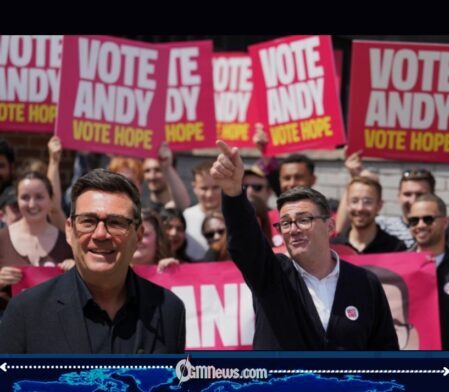
Andy Burnham and the Makerfield by-election have triggered a political tremor across the national landscape, as the former Greater Manchester mayor secured a commanding 55% of the vote, defeating Reform UK’s Robert Kenyon by more than 9,000 votes. The result has not only reshaped local expectations but also intensified speculation about the future direction of Labour leadership, with Burnham’s post-victory rhetoric adding further fuel to an already sensitive political atmosphere.
Victory Mandate fuels quiet whispers of internal Labour power struggle
The Burnham campaign in the Makerfield by-election was marked by an unusually strong turnout for a contest widely viewed as a barometer of national political sentiment. Early counts confirmed a decisive lead, with Burnham securing 55% of votes in a race that quickly narrowed into a two-horse contest between Labour and Reform UK.
By the final tally, Burnham had established a comfortable margin of victory, surpassing his nearest rival by over 9,000 votes. In his victory address, he remarked that “everyone knows that politics isn’t working” and suggested that “tonight could, just could, be the turning point,” a statement that immediately reverberated through political commentary circles and reinforced the significance of the Makerfield by-election outcome.
Burnham’s shock Makerfield by-election win ignites Labour leadership storm
The Burnham result has reignited ongoing discussions about leadership stability within Labour, with political observers interpreting the Makerfield by-election outcome as more than a routine electoral success. While official party lines remain supportive of current leadership structures, the scale of the victory has inevitably prompted speculation about alternative futures.
Reform UK’s second-place finish, while not enough to secure the seat, has also been analysed as part of a broader shift in voter alignment trends seen in recent local contests across the country. Analysts note that while Labour retains strong support in key areas, emerging challengers are steadily reshaping electoral dynamics, forcing established parties into constant recalibration.
Within Labour circles, Andy Burnham’s rising visibility and populist-leaning critique of political dysfunction have positioned him as a figure of interest beyond regional politics. The Makerfield by-election is now being discussed less as an isolated result and more as a symbolic turning point in internal party narratives and national voter sentiment patterns.
The political aftermath of Burnham’s victory is expected to unfold further in the coming weeks, as party leaders, strategists, and rival camps interpret what the Makerfield by-election truly signals for the next phase of political competition and leadership alignment.
As Andy Burnham and the Makerfield by-election continue to dominate political discourse, the broader implications remain uncertain but undeniably significant. Whether this result becomes a catalyst for leadership change or simply a moment of heightened political theatre will depend on how Labour and its rivals respond in the days ahead. OGM News will continue to monitor how Burnham’s momentum shapes the evolving landscape around the Makerfield by-election and the future of party leadership debates.

подъем домов новокузнецк