
























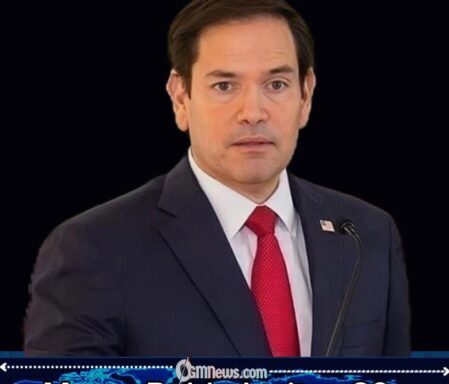
The Far-Left Terrorism Summit has quickly become one of Washington’s most closely watched diplomatic initiatives after Secretary of State Marco Rubio invited ministers from more than 60 countries to discuss what the Trump administration considers a growing threat from transnational far-left extremist violence. The invitation has immediately generated both support and skepticism, raising questions about how governments define terrorism, prioritize security risks, and coordinate international responses under President Donald J. Trump’s evolving counterterrorism agenda.
Far-Left Terrorism Summit Held By Marco Rubio
The Far-Left Terrorism Summit is expected to bring together senior officials from North America, Europe, Asia, and other regions to discuss intelligence sharing, law enforcement cooperation, and responses to politically motivated violence that crosses international borders. According to U.S. officials, the initiative reflects concerns that existing counterterrorism frameworks have not fully adapted to newer forms of ideological violence.
Although administration officials argue the meeting is designed to strengthen international cooperation against violent extremism regardless of ideology, the emphasis on far-left movements has attracted considerable attention. Some diplomats and security experts reportedly question whether the issue represents a comparable international threat in their own countries, while others believe broad discussions on political violence remain valuable even when governments disagree over priorities.
Global Security And Quick Response of All Government Body
The Far-Left Terrorism Summit follows President Donald J. Trump’s broader counterterrorism strategy announced earlier this year, which seeks to update U.S. policies for addressing politically motivated violence, including attacks on government institutions, law enforcement, public infrastructure, and civilians. Administration officials have stated that violent actors across the ideological spectrum—including both left-wing and right-wing extremists—remain subjects of concern, even as recent policy discussions have focused heavily on transnational far-left networks.
Beyond the political debate, the meeting reflects a broader shift in international security discussions. Governments increasingly face threats that operate across borders through online coordination, financing networks, and decentralized organizations rather than traditional hierarchical groups. Whether Rubio’s initiative produces concrete agreements or simply exposes differing views among allies, the gathering is expected to influence future discussions on how democracies define terrorism, balance civil liberties with security measures, and cooperate against evolving forms of political violence. A little diplomatic satire may be unavoidable: getting more than 60 governments to agree on almost anything can sometimes be the toughest negotiation of all. OGM News will continue monitoring developments as the ministerial meeting approaches.
Ae888covenuscasino, okay, I'm curious. Gonna check out this site and try to find some amazing...