















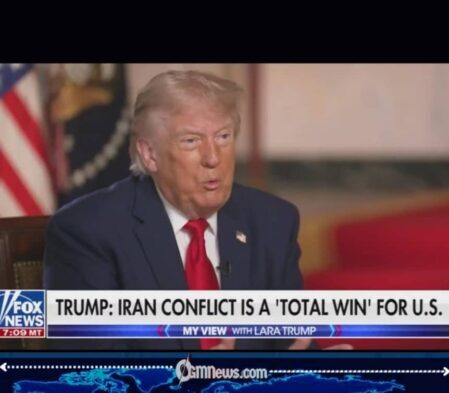
The Strait of Hormuz returned to the center of international debate after President Donald Trump described the confrontation with Iran as a “total win” for the United States before renewing demands for the reopening of the vital maritime corridor. The remarks immediately drew attention because Trump simultaneously argued that America does not depend on the Strait of Hormuz for most of its oil imports, creating what critics describe as a striking contradiction in Washington’s public messaging. As global markets continue monitoring the situation, the debate has expanded beyond military outcomes and into questions about economic strategy, diplomatic objectives, and political optics.
Victory Speech Meets Reality Check as Global Shipping Crisis Refuses to Disappear
The Strait of Hormuz has been one of the most prominent issues throughout the confrontation with Iran. Trump repeatedly argued that the route should be reopened and, at various points, urged allies and trading partners to take greater responsibility for securing it. Yet he also maintained that the United States does not require the passage because American energy production has reduced dependence on foreign oil transported through the corridor. Those statements have become central to the latest controversy surrounding the administration’s handling of the conflict.
Trump’s latest “total win” declaration appears intended to project confidence following months of military and diplomatic tensions. However, critics argue that continued demands regarding the Strait of Hormuz suggest unresolved concerns remain. Analysts note that while the United States may import less oil through the route than some allies, disruptions in the passage can still affect global energy prices, shipping costs, inflation pressures, and broader economic stability. That reality has complicated efforts to present the confrontation as fully resolved.
Global Markets Watch Closely as Trump Changes Tone on Hormuz Access
Beyond the immediate political debate, additional reporting suggests negotiations involving Iran and the future status of the Strait of Hormuz remain far from settled. Discussions surrounding sanctions relief, maritime access, security guarantees, and regional stability continue to shape diplomatic conversations. Several reports indicate that reopening the waterway remains a major objective in ongoing negotiations, reflecting its broader importance to global trade and energy markets.
Economic concerns have also become increasingly difficult to separate from military claims of success. Market analysts have warned that prolonged uncertainty around the Strait of Hormuz could continue affecting global energy prices regardless of America’s direct import exposure. Reports examining recent negotiations suggest that both Washington and Tehran recognize the economic consequences of prolonged disruptions, even as each side publicly frames developments as evidence of strength. The result has been a diplomatic environment where declarations of victory coexist with ongoing bargaining over some of the conflict’s most important unresolved issues.
For now, the Strait of Hormuz remains both a symbol and a test of competing narratives. Trump’s supporters view the “total win” language as proof of American leverage, while critics see the continued focus on reopening the route as evidence that major objectives remain unfinished. As negotiations continue and global markets react to every new statement, OGM News will continue monitoring whether the administration’s victory narrative can withstand the economic and diplomatic realities still unfolding around one of the world’s most strategic waterways.


The vibes here are amazing and the winning streaks are real. It feels just like...