





























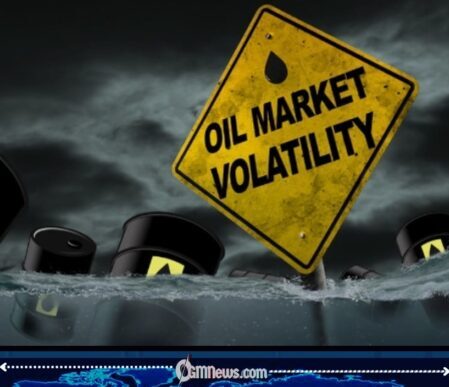
Oil volatility has become the defining pressure point reshaping global economic expectations, as analysts warn that the global energy markets may be undergoing changes that cannot be undone. Oil volatility now sits at the center of financial and geopolitical discussions, driven by escalating tensions linked to instability involving Iran and broader supply uncertainty. What once appeared to be cyclical price movement is increasingly being described as structural transformation with long-term consequences.
At the core of this development is a growing belief among experts that the traditional reliance on oil as the backbone of global energy security may be weakening faster than expected. Governments, investors, and policy institutions are reportedly reassessing their exposure to fossil fuel dependency as market unpredictability intensifies.
OIL VOLATILITY GEOPOLITICAL PRESSURE AND SUPPLY FEARS
The original concern stems from rising instability in regions tied to global oil flows, particularly amid conflict-related disruptions involving Iran. According to research commentary by Karen Young of Columbia University, economies are already expanding their energy strategies beyond traditional Middle Eastern reliance, suggesting a structural shift in global planning.
Young’s assessment highlights that oil volatility is no longer a temporary shock but part of a broader reconfiguration of how nations view energy security. Even political leadership under Donald J. Trump is being forced to navigate an increasingly unpredictable energy landscape where pricing signals are less stable and more reactive to geopolitical events.
Within this framework, energy markets are responding with heightened sensitivity, where even small disruptions trigger disproportionate price reactions. The instability is pushing import-dependent nations to accelerate diversification strategies, while exporters are reconsidering long-term production planning.
THE GLOBAL ENERGY RESET AND EMERGING STRATEGIC SHIFTS
Beyond immediate disruptions, analysts are pointing to a deeper transformation in global energy markets driven by sustained oil volatility and accelerating investment in alternative technologies. This includes increased emphasis on renewable energy infrastructure, battery storage systems, and regional energy independence strategies.
The shift is also being reinforced by the perception that advancements in green technology may not be reversible, as highlighted in recent expert discussions. This evolving dynamic suggests that energy markets are not simply reacting to crises but are gradually restructuring themselves in response to long-term uncertainty.
Financial institutions are reportedly adjusting risk models to account for prolonged instability, while governments are reconsidering subsidy frameworks and strategic reserves. The interplay between geopolitics and energy transition is creating a feedback loop where uncertainty fuels diversification, and diversification further reduces oil’s centrality.
If current trends continue, the global energy system may move toward a more fragmented but resilient structure, where oil volatility remains a persistent feature rather than a temporary disruption. Future updates from OGM News will continue tracking whether this transformation stabilizes into a new equilibrium or accelerates into deeper market fragmentation.



Logging in is a breeze and the site stability is amazing even during peak hours....