
























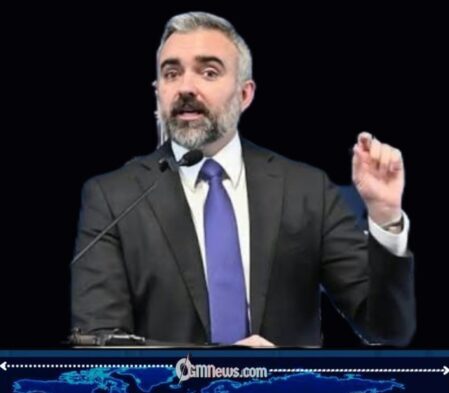
Journalism is once again at the center of a national conversation after an Emmy-winning reporter abruptly left a television station owned by a company linked to political donations supporting President Donald Trump and Republican causes. What could have been a routine farewell instead evolved into a pointed critique of modern media culture, with the veteran journalist suggesting that viewers deserve more than trends, comfort-driven narratives, and what was described as “sanitized news.” The remarks immediately ignited debate over whether local news organizations are still prioritizing public service or gradually transforming into institutions more focused on audience retention and corporate stability.
Award-Winning Journalist Says Viewers Deserve More Than “Sanitized News”
The departure drew widespread attention because of the language used by the reporter while explaining the decision. Rather than offering a standard farewell message filled with gratitude and nostalgia, the journalist emphasized the importance of challenging audiences with meaningful reporting. The comments suggested frustration with a media environment increasingly dominated by viral stories, audience metrics, and carefully managed narratives that avoid controversy whenever possible.
For many observers, the statement struck a nerve because it echoed concerns that have been building throughout the journalism industry for years. Newsrooms across the country continue facing pressure to balance public-interest reporting with business realities, including declining advertising revenues and changing consumer habits. Critics of the current system argue that audiences are often presented with content designed to maximize engagement rather than deepen understanding, while supporters insist that news organizations must adapt to survive in an increasingly competitive information marketplace.
Reporter’s Exit Reignites Questions Over Politics, Ownership, and Media Independence
The resignation also revived longstanding discussions about the relationship between corporate ownership and editorial independence. Although there has been no public evidence suggesting direct interference in newsroom operations, the company’s political donations became part of the conversation almost immediately. For some media analysts, the issue is less about any specific political contribution and more about the perception that ownership interests can influence how news organizations approach sensitive topics.
Those concerns are not limited to one company or one political party. Across the media industry, journalists have repeatedly questioned whether large corporate structures can fully protect editorial independence when business interests, political relationships, and public scrutiny converge. The result is a growing skepticism among some viewers who increasingly want reassurance that reporting decisions are guided by facts and public interest rather than outside considerations. In that sense, the reporter’s departure became symbolic of a much larger debate extending far beyond a single newsroom.
Is Corporate Power Reshaping Local Journalism? Veteran Anchor Thinks So
The broader conversation surrounding the resignation highlights significant changes taking place throughout local journalism. Over the past decade, many local stations have experienced ownership consolidation, with larger corporations acquiring smaller outlets and managing news operations across multiple markets. Supporters argue that consolidation provides financial stability and resources that struggling stations might otherwise lack. Critics, however, contend that it can reduce local autonomy and weaken the unique connection between communities and their news providers.
At the same time, local journalism faces growing competition from digital platforms, social media personalities, and independent content creators. News organizations now operate in an environment where speed often competes with depth, and attention frequently becomes a more valuable commodity than context. Against that backdrop, the reporter’s criticism resonated with audiences who worry that meaningful journalism may be losing ground to content designed primarily to generate clicks, shares, and short-term engagement. The episode serves as a reminder that public trust remains one of the most valuable assets any newsroom possesses.
The resignation may ultimately be remembered as more than the departure of a respected broadcaster. Whether viewed as a personal protest, a professional disagreement, or a warning about broader industry trends, the event has reignited discussion about the future of journalism and the responsibilities of every modern newsroom. As audiences continue demanding transparency and accountability, the questions raised by this departure are unlikely to disappear anytime soon. OGM News will continue monitoring developments and examining how the evolving media landscape affects both journalists and the communities they serve.


Logging in is a breeze and the site stability is amazing even during peak hours....