




















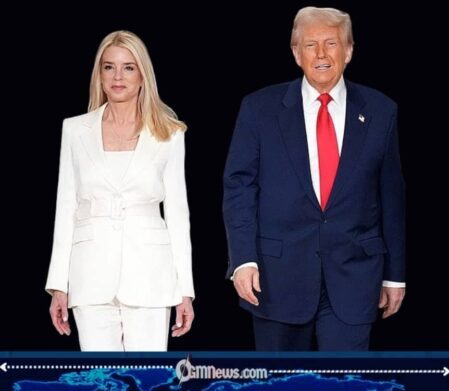
The AI Panel announced by President Donald Trump has suddenly become one of the most closely watched developments inside Washington’s technology and political circles. In a move that immediately sparked both praise and criticism, Trump appointed Pam Bondi to a newly established White House role focused on coordinating communication between the federal government and artificial intelligence companies while also advising on national infrastructure and emerging technology policy. The decision arrives as artificial intelligence increasingly influences national security, economic competition, public infrastructure, and even political messaging itself.
The appointment has generated intense discussion because it places Bondi at the intersection of politics, technology, and corporate influence during a period when governments worldwide are struggling to keep pace with AI development. While supporters view the move as an attempt to streamline cooperation between Washington and private technology firms, critics argue it reflects a broader trend of expanding ties between political power and Silicon Valley influence.
Trump Administration Pushes Stronger AI Oversight Through New Advisory Role
According to the administration’s stated objectives, the AI Panel is expected to improve coordination between federal agencies and private-sector AI developers whose technologies are becoming deeply integrated into transportation systems, defense planning, communications infrastructure, healthcare systems, and financial markets. Bondi’s advisory role tied to national infrastructure suggests the White House is treating artificial intelligence not merely as a technology issue, but as a strategic national priority.
The AI Panel also reflects growing pressure on governments to establish clearer rules and communication channels as AI development accelerates globally. Officials within both political parties have increasingly acknowledged that artificial intelligence may shape future labor markets, cybersecurity operations, military planning, and information control. Supporters of the administration argue that stronger engagement with AI companies could help the United States maintain competitiveness against foreign technological rivals while improving oversight of rapidly evolving systems.
Pam Bondi’s AI Appointment Ignites Debate Over Politics and Big Tech Power
The appointment of Pam Bondi has also intensified debate surrounding political influence and corporate access inside Washington. Bondi, a longtime Trump ally and former Florida attorney general, now enters one of the administration’s most strategically sensitive technology discussions at a moment when concerns about AI regulation, misinformation, surveillance, and monopolistic behavior continue growing worldwide.
Technology policy experts have repeatedly warned that governments risk either regulating AI too slowly or overcorrecting in ways that could stifle innovation. The administration’s latest move appears designed to position the White House closer to major AI developers while also maintaining influence over infrastructure decisions connected to emerging technologies. However, critics argue that closer cooperation between government officials and large AI firms could create transparency concerns or increase corporate leverage over public policy decisions.
The broader political context also matters. Artificial intelligence has rapidly evolved from a niche technology discussion into a geopolitical competition involving economic dominance, military capability, and digital infrastructure control. Governments across Europe, Asia, and North America are already introducing AI frameworks, cybersecurity strategies, and infrastructure modernization plans tied directly to emerging technologies. The White House AI Panel may therefore represent more than a domestic advisory effort; it could signal the administration’s attempt to establish stronger political positioning in the international AI race.
For now, the administration’s supporters view the appointment as evidence that the White House is preparing aggressively for a future dominated by artificial intelligence, while critics fear Washington may be moving too closely toward corporate-tech partnerships without enough public accountability. Either way, the AI Panel has already succeeded in placing Pam Bondi and the Trump administration at the center of one of the defining political and technological debates of the decade. OGM News will continue monitoring how the panel develops, what influence it gains over national infrastructure planning, and whether the administration’s approach to AI regulation sparks wider political confrontation in the months ahead.
[…] […]