
















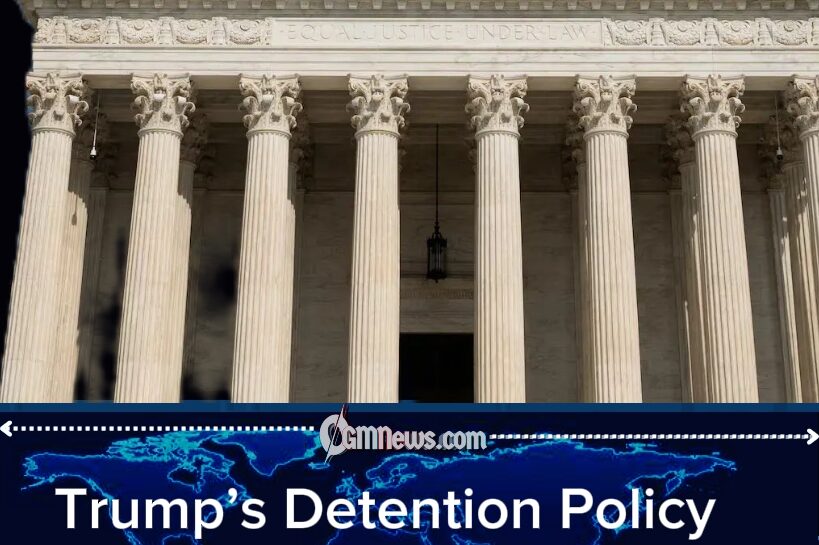














John Roberts has decried increasingly heated criticism directed at the Supreme Court of the United States, warning that intense political attacks on the judiciary risk undermining public confidence in one of the nation’s most important institutions. His remarks come amid ongoing national debates surrounding controversial court rulings and the growing polarization shaping public discourse in the United States.
The comments reflect broader concerns about the tone of criticism aimed at federal judges and the potential consequences such rhetoric may have on trust in the judicial system. Public scrutiny of the court has intensified in recent years as decisions on social, political, and constitutional matters have drawn strong reactions from both supporters and critics.
Roberts’ statement has therefore reignited discussion about the balance between legitimate public criticism and the preservation of institutional respect within a democratic system.
DEBATE OVER THE ROLE OF THE JUDICIARY
John Roberts has repeatedly emphasized the importance of judicial independence, arguing that courts must remain insulated from excessive political pressure in order to function effectively and fairly.
The judiciary occupies a unique role within the American constitutional framework, serving as an interpreter of the law rather than a political branch designed to reflect shifting public opinion.
John Roberts’ concerns highlight how growing political polarization has increasingly shaped public reactions to judicial decisions, particularly on issues involving national significance.
JOHN ROBERTS AND PUBLIC CONFIDENCE IN INSTITUTIONS
Roberts has suggested that sustained attacks against the court could weaken public trust in legal institutions that rely heavily on credibility and perceived impartiality.
Roberts’ remarks reflect longstanding concerns within the legal community about maintaining confidence in constitutional processes during periods of heightened political division.
John Roberts’ position underscores the idea that while criticism of rulings is expected in a democracy, broader attacks on legitimacy may carry long-term consequences.
POLITICAL REACTIONS AND NATIONAL DISCOURSE
Reactions to the chief justice’s comments have varied widely, with some political figures supporting his concerns while others argue that strong criticism of judicial decisions is a normal part of democratic debate.
Observers note that the Supreme Court has increasingly become a focal point in national political discussions, particularly as major rulings continue to shape contentious policy issues across the country.
The growing visibility of the court has also intensified scrutiny of individual justices, ethics standards, and the broader role of the judiciary in public life.
JOHN ROBERTS AND CONCERNS ABOUT POLARIZATION
John Roberts has frequently spoken about the dangers of viewing judges primarily through partisan lenses, warning that such perceptions can erode faith in judicial neutrality.
John Roberts’ comments come during a period in which many institutions, including courts, media organizations, and government agencies, face declining public trust and increasing political pressure.
John Roberts’ message reflects a broader effort to defend the judiciary as an institution separate from electoral politics and ideological conflict.
FUTURE OF PUBLIC TRUST IN THE COURTS
Legal experts suggest that maintaining confidence in the judiciary will require transparency, ethical accountability, and continued adherence to constitutional principles.
At the same time, public debate surrounding major court decisions is expected to remain intense as the judiciary continues to address highly divisive issues affecting millions of Americans.
As national conversations evolve, the challenge for both leaders and institutions will be balancing open criticism with the preservation of public trust in democratic governance and the rule of law.



[…] […]