



























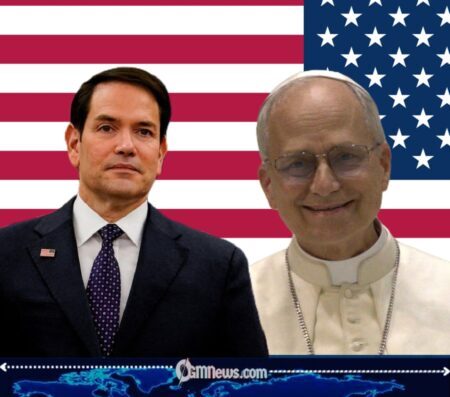
U.S. Secretary of State Marco Rubio is set to take center stage in Washington’s latest diplomatic engagement as he prepares to travel to Italy for a high-level meeting with Pope Leo. The visit positions Rubio as the principal envoy advancing U.S. foreign policy interests through both political and moral channels of influence.
The trip reflects a broader strategy under President Donald Trump, who is serving a second term, to expand diplomatic engagement beyond traditional state actors. Rubio’s role in this initiative underscores his growing prominence within the administration’s international agenda.
Marco Rubio’s Expanding Role in Global Diplomacy
Marco Rubio has increasingly emerged as a central figure in shaping U.S. foreign policy, particularly in engagements that require a blend of political strategy and diplomatic nuance. His planned meeting with Pope Leo highlights his responsibility in navigating complex international relationships.
Diplomatic observers note that Rubio’s involvement signals trust from the administration in his ability to represent U.S. interests at the highest levels. His participation also reflects an effort to project consistency and clarity in American foreign policy messaging.
Strategic Engagement With the Vatican
Marco Rubio’s visit to the Vatican underscores the importance of U.S. relations with the Holy See, an institution with significant moral and diplomatic influence worldwide. While not a conventional political power, the Vatican plays a key role in shaping conversations around peace, justice, and humanitarian issues.
Through his meeting with Pope Leo, Rubio is expected to explore areas of cooperation that extend beyond traditional diplomacy. This includes fostering dialogue on global stability and reinforcing shared values that influence international decision-making.
Key Issues Marco Rubio Is Expected to Address
At the heart of Rubio’s discussions are pressing global concerns such as armed conflicts, migration, and the protection of religious freedoms. These issues have consistently featured in both U.S. foreign policy priorities and Vatican advocacy.
Additionally, Rubio is likely to engage on topics such as climate responsibility and economic inequality. These areas, increasingly emphasized by the Vatican, intersect with broader global policy debates in which the United States remains a key participant.
Balancing Political Strategy and Moral Influence
Rubio’s diplomatic approach in this visit is expected to reflect a balance between political objectives and moral considerations. Engaging with the Vatican allows him to incorporate perspectives that may not emerge in traditional geopolitical negotiations.
The interaction also highlights how faith-based diplomacy can complement formal statecraft. By working with religious leaders, Rubio can potentially access alternative avenues for conflict resolution and humanitarian cooperation.
Italy’s Role in Rubio’s Diplomatic Mission
Italy provides a strategic and symbolic setting for Rubio’s engagement. As the host country of the Vatican, it serves as a natural venue for discussions involving the Holy See.
Beyond the Vatican meeting, Rubio’s presence in Italy may also strengthen ties with a key European ally. Such engagements reinforce the broader transatlantic relationships that remain central to U.S. foreign policy.
Implications of Rubio’s Visit
Rubio’s trip signals a continued effort by the United States to diversify its diplomatic outreach. By engaging directly with influential global institutions like the Vatican, he reinforces the administration’s commitment to addressing international challenges through multiple channels.
Analysts suggest that Rubio’s leadership in this effort could shape future diplomatic strategies, particularly in areas where moral authority and political influence intersect.
Rubio’s Diplomatic Trajectory
As Marco Rubio prepares for this high-profile meeting, attention is likely to focus on both the immediate outcomes and the long-term implications of his engagement. His role in this visit positions him as a key architect of evolving U.S. foreign policy.
Moving forward, Rubio’s continued involvement in such initiatives may define his tenure as Secretary of State, highlighting the importance of adaptable and multidimensional diplomacy in an increasingly complex global landscape.


Logging in is a breeze and the site stability is amazing even during peak hours....