









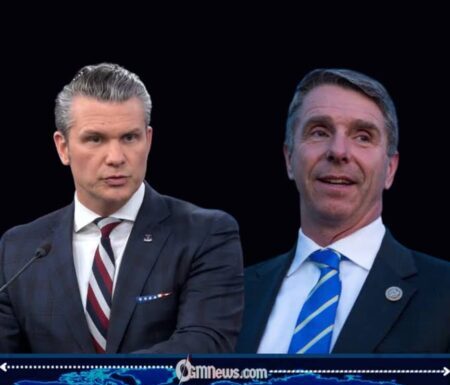
Defense Secretary Pete Hegseth delivered a forceful defense of the administration’s military campaign in Iran during a tense congressional hearing, sharply criticizing a Republican lawmaker for describing the conflict as a “quagmire” just two months after operations began.
The exchange quickly became one of the most dramatic moments of the hearing, highlighting growing divisions within Washington over the direction of the war and the language used to describe it.
Speaking before members of Congress, Hegseth argued that early public criticism of the mission risked damaging troop morale and weakening America’s strategic position. His comments reflected the administration’s increasingly aggressive response to concerns about the war, as lawmakers from both parties begin asking whether the conflict is moving toward a wider and more costly regional confrontation.
A Confrontation Inside Congress
The dispute began when Representative Rob Wittman referred to the Iran campaign as a possible “quagmire,” warning that the United States could be entering a prolonged conflict without a clearly defined endpoint. The remark immediately drew a strong reaction from Hegseth, who rejected the comparison and challenged the congressman’s characterization.
Hegseth told lawmakers that describing the mission in such terms only weeks after military operations began was unfair to the service members carrying out orders in the region. He said elected officials should be cautious in how they speak about active military operations, especially while troops remain deployed in dangerous conditions.
The exchange marked a rare moment in which a cabinet official openly confronted a member of the president’s own party during a public hearing, underlining the growing political strain surrounding the war.
Hegseth Defends the Military Mission
Throughout the hearing, Hegseth insisted the military campaign had already produced measurable battlefield gains. He pointed to strikes on Iranian infrastructure, disrupted command systems and increased protection of strategic shipping routes as evidence that the mission was achieving its objectives.
According to the defense secretary, troops in the region had shown professionalism under difficult conditions and deserved support rather than public skepticism. He argued that premature criticism could send the wrong message to both allies and adversaries watching the conflict unfold.
Hegseth repeatedly returned to the theme that the administration’s first obligation was to support the armed forces, framing criticism of the campaign as something that could unintentionally undermine those serving overseas.
Political Tensions Spill Into Security Debate
The hearing quickly moved beyond military policy and into broader political territory. At one point, Hegseth suggested that opposition to President Donald Trump, the current U.S. president serving a second term, may be influencing how some lawmakers describe the war.
He argued that political hostility toward the president was blurring what should be a serious national security discussion. By accusing critics of allowing personal opposition to shape their views, Hegseth turned a policy hearing into a wider debate about loyalty, accountability and wartime leadership.
That accusation drew immediate attention because it highlighted how deeply partisan divisions have become even in matters of foreign policy and military oversight.
Concerns About a Longer Conflict
Despite the administration’s defense of the campaign, lawmakers continue to question whether the conflict could expand into a broader regional crisis. Some members of Congress have warned that military success in the opening phase does not guarantee a clear long-term outcome.
Critics argue that history has shown how quickly limited military actions can evolve into prolonged engagements. They say Congress has a responsibility to ask difficult questions before the United States becomes more deeply involved in another Middle East conflict.
Those concerns have intensified as regional tensions remain high and analysts warn that the conflict could draw in neighboring countries if diplomatic efforts fail to contain the situation.
The Role of Congress in Wartime Oversight
The confrontation also raised renewed questions about the role of Congress during wartime. Lawmakers are expected to provide oversight of military operations, even while supporting service members in the field.
Some members defended Wittman’s right to question strategy, arguing that oversight should not be interpreted as disloyalty. They said Congress must continue examining the administration’s goals, costs and legal authority as the conflict develops.
Others sided with Hegseth, saying public language matters during active combat and that lawmakers should avoid rhetoric that could be interpreted as a loss of confidence in the mission before its outcome is clear.
A Defining Moment in the Iran Debate
The clash between Hegseth and Wittman may prove to be a defining moment in how the administration handles growing criticism of the war. It showed that debate over Iran is no longer limited to opposition voices but is now emerging within Republican ranks as well.
For supporters of the administration, Hegseth’s response demonstrated strong leadership and a clear defense of American troops. For critics, the exchange raised concerns about whether legitimate questions about strategy are being dismissed too quickly.
As the conflict continues, the hearing has become a powerful reminder that wars are not only fought on the battlefield but also in the political arena where public support can shape their future.
[…] […]