







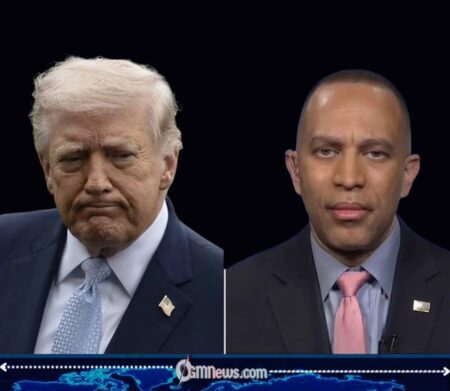
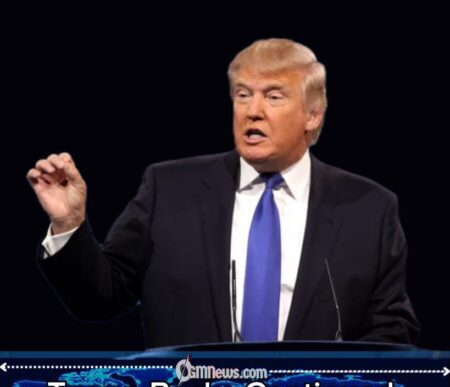
President Donald Trump has intensified his public criticism of House Democratic Leader Hakeem Jeffries by describing him as a “low IQ individual” in a sharply worded social media statement. The remarks quickly drew widespread attention in Washington, adding another chapter to the increasingly personal exchanges between the White House and Democratic leaders.
In the message, Trump accused Jeffries of supporting what he called high-tax and open-border policies, while questioning his ability to lead the Democratic Party. The president also assigned Jeffries a new political nickname, a tactic that has long been part of Trump’s public communication style.
The statement triggered immediate reactions across the political spectrum, with critics arguing that the language represented another example of personal attacks overshadowing substantive policy debate.
The Language That Prompted Reaction
Trump’s post focused less on policy differences and more on Jeffries personally, suggesting that the Democratic leader lacked the intelligence to play a major role in national leadership. The comments were issued publicly and circulated quickly through television broadcasts and digital platforms.
Political observers noted that the timing of the remarks drew additional scrutiny because they followed similar comments aimed at other Black public officials. That pattern has led some critics to question whether the repeated language carries broader implications beyond routine partisan conflict.
Supporters of the president rejected those claims, arguing that Trump has often used similar language against opponents from many backgrounds and that the comments should be understood within the context of his long-established political style.
Jeffries Responds With His Own Criticism
Jeffries responded forcefully, saying the president has increasingly relied on personal insults rather than direct engagement with policy criticism. He suggested the repeated attacks reveal an unwillingness to debate the issues facing the country.
The Democratic leader also said he would be willing to debate the president publicly “anytime, anyplace,” signaling a more confrontational tone from one of the party’s most senior figures. His remarks suggested Democrats may be increasingly prepared to challenge Trump directly.
The exchange has highlighted a broader shift in political strategy, with opposition leaders appearing less willing to ignore personal attacks from the White House.
A Familiar Trump Political Strategy
President Trump has long used nicknames and direct insults as part of his political identity. Supporters often describe the approach as evidence of bluntness and authenticity, while opponents say it contributes to a decline in political discourse.
Analysts say the strategy can be effective because it reshapes public discussion around personality rather than policy. By creating memorable labels, Trump often succeeds in controlling media attention even during serious political disputes.
However, critics argue that such tactics can deepen political divisions and distract from the substantive issues that voters expect elected officials to address.
Race and the Broader Conversation
The latest controversy has also reopened a wider discussion about race in political rhetoric. Some commentators have pointed to the fact that a similar language has recently been used against other Black officials, raising concerns about the implications of repeated intelligence-based attacks.
Civil rights advocates say language that questions intelligence can carry historical weight in American politics, especially when directed at minority leaders. They argue that public officials should be aware of how such remarks may be interpreted.
Others caution against assuming racial intent without clear evidence, emphasizing that Trump’s political style has frequently involved similar insults directed at a broad range of opponents.
What the Exchange Could Mean Ahead
The confrontation between Trump and Jeffries could have implications beyond a single political dispute. It may signal that Democratic leaders are becoming more willing to engage the president on the same aggressive rhetorical terrain he has often dominated.
Political strategists say such exchanges can energize supporters on both sides while also shaping how independent voters view leadership, temperament, and credibility. In a closely divided political environment, tone can matter almost as much as policy.
As President Trump continues his second term, the clash underscores how personal confrontation remains central to the political climate in Washington, with both parties increasingly using direct public messaging to define the national debate.
[…] […]